Senator Clayton Douglass Buck
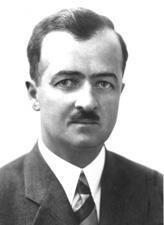
Here you will find contact information for Senator Clayton Douglass Buck, including email address, phone number, and mailing address.
| Name | Clayton Douglass Buck |
| Position | Senator |
| State | Delaware |
| Party | Republican |
| Status | Former Representative |
| Term Start | January 6, 1943 |
| Term End | January 3, 1949 |
| Terms Served | 1 |
| Born | March 21, 1890 |
| Gender | Male |
| Bioguide ID | B001013 |
About Senator Clayton Douglass Buck
Clayton Douglass Buck (March 21, 1890 – January 27, 1965) was an American engineer and Republican politician from New Castle Hundred, New Castle County, Delaware, who served two terms as governor of Delaware and one term as a United States Senator from Delaware. Known by his middle name, he was born at Buena Vista near New Castle, Delaware, the son of Francis N. Buck, originally from Philadelphia, and Margaret Douglass Buck, who was related to U.S. Senator and Secretary of State John M. Clayton. Raised in an Episcopal household, he and his family were members of Immanuel Episcopal Church in New Castle, a connection that continued throughout his life.
Buck received his early education at Wilmington Friends School in Wilmington, Delaware. He then attended the Engineering School of the University of Pennsylvania for two years, pursuing technical training that would later shape his professional career. With the onset of World War I, he entered military service and served in the U.S. Army during the conflict, gaining experience and perspective that would inform his later public service. After the war, he returned to Delaware, where his engineering background and family ties positioned him for a prominent role in the state’s developing transportation infrastructure.
In the early twentieth century, the Du Pont Company emerged as a major industrial force, and Buck’s life became closely intertwined with the du Pont family. He married Alice Hounsfield du Pont, daughter of U.S. Senator T. Coleman du Pont, and they had two children, Clayton Douglass Buck Jr. and Dorcas Van Dyke Farquhar. T. Coleman du Pont, one of the three principal owners of the Du Pont Company, envisioned and personally financed a modern highway running the length of Delaware. Construction on this project began in 1917, coinciding with the creation of a new State Highway Department to oversee road building. Drawing on his engineering training and supported by his family connections, Buck joined the project and, in 1921, became Chief Engineer of the Delaware State Highway Department. He held that position until 1929, during which time he helped oversee the construction and improvement of key roadways, while T. Coleman du Pont continued to underwrite the costs, which reached approximately $4 million by 1924.
Buck’s prominence as an engineer and public official led him into electoral politics. In 1928 he was elected Governor of Delaware as a Republican, defeating Democratic candidate Charles M. Wharton. He took office in January 1929, just months before the New York Stock Market crash in October 1929 signaled the beginning of the Great Depression. As economic hardship spread, Buck worked closely with leading Delaware industrialists to provide relief. Alfred I. du Pont, having failed to secure legislative approval for a public relief program, began on November 1, 1929, to mail personal checks of sixteen dollars to approximately eight hundred needy recipients, ultimately spending about $350,000 of his own funds. Buck appointed Alfred I. du Pont chairman of the Old Age Welfare Commission, and in late 1930 he successfully urged the Delaware General Assembly to assume responsibility for the program. As conditions worsened, Buck called the General Assembly into special session in November 1932 and persuaded legislators to enact a $2 million emergency relief measure to address unemployment and poverty.
In 1932 Buck was reelected governor, defeating Democratic candidate Landreth L. Layton and becoming the first governor to win a second term under the Delaware Constitution of 1897. His reelection was notable in a year of sweeping Democratic victories nationally: he was one of only two Republican governors elected that year, and Delaware was one of only six states to vote to reelect President Herbert Hoover. During his second term, Delaware became the seventh state to ratify the Twenty-first Amendment to the United States Constitution in June 1933, thereby ending national Prohibition and allowing the sale of alcoholic beverages. Buck appointed State Tax Commissioner Pierre S. du Pont to head the new State Liquor Commission, charged with regulating and taxing the renewed alcohol trade. Confronted with continuing economic distress, Buck in October 1933 again called the General Assembly into session to consider borrowing federal funds for relief. When it became clear that the legislature would not reach agreement, he took the unprecedented step of adjourning the session himself. In the ensuing fiscal strain, teachers and state employees experienced reductions in pay. Seeking administrative efficiency and improved infrastructure, Buck in 1935 arranged for the State Highway Department to assume responsibility for roads previously maintained by Delaware’s counties.
After leaving the governorship, Buck remained a leading figure in Delaware Republican politics. In 1942 he was elected to the United States Senate from Delaware, defeating Democratic nominee E. Ennalls Berl, a Wilmington lawyer. He took office on January 3, 1943, and served one term, from 1943 to 1949, representing Delaware during World War II and the immediate postwar period. As a member of the Senate, Buck participated in the legislative process during a significant era in American history, contributing to debates on wartime and domestic policy and representing the interests of his Delaware constituents. During the 80th Congress (1947–1949), he served as chairman of the Senate Committee on the District of Columbia, overseeing legislation affecting the governance and administration of the nation’s capital. A Republican throughout his Senate career, he completed his single term in office after losing his bid for reelection in 1948 to Democrat J. Allen Frear Jr., a businessman from Dover, Delaware.
Following his Senate service, Buck continued in public administration at the state level. From 1953 until 1957 he served as Tax Commissioner of Delaware, a post often associated with members of the du Pont family and central to the state’s fiscal and regulatory structure. In this capacity he oversaw tax policy and administration during a period of postwar economic growth, maintaining his influence in Delaware’s governmental affairs even after his national legislative career had ended. Throughout his later years he remained a conservative Republican, lending his support to like-minded national figures, including U.S. Senator Robert A. Taft of Ohio and U.S. Senator Barry Goldwater of Arizona in their presidential campaigns.
Clayton Douglass Buck died at his lifelong home, Buena Vista, near New Castle, Delaware, on January 27, 1965. He was buried in the cemetery of Immanuel Episcopal Church in New Castle, where he and his family had long worshiped. His estate, Buena Vista, was later donated to the State of Delaware and converted into a conference center; it was added to the National Register of Historic Places in 1971, preserving his family home as a historic site. His name is also commemorated in Buck Road in Greenville, Delaware, reflecting his enduring association with the state’s political and civic life.