Representative Clement Laird Brumbaugh
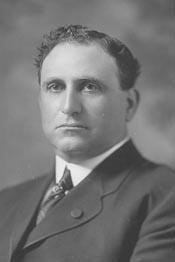
Here you will find contact information for Representative Clement Laird Brumbaugh, including email address, phone number, and mailing address.
| Name | Clement Laird Brumbaugh |
| Position | Representative |
| State | Ohio |
| District | 12 |
| Party | Democratic |
| Status | Former Representative |
| Term Start | April 7, 1913 |
| Term End | March 3, 1921 |
| Terms Served | 4 |
| Born | February 28, 1863 |
| Gender | Male |
| Bioguide ID | B000975 |
About Representative Clement Laird Brumbaugh
Clement Laird Brumbaugh (February 28, 1863 – September 28, 1921) was an American educator, lawyer, and Democratic politician who served as a U.S. Representative from Ohio for four consecutive terms from 1913 to 1921. His congressional service spanned a significant period in American history, including the Progressive Era and World War I, during which he participated in the national legislative process and represented the interests of his Ohio constituents in the House of Representatives.
Brumbaugh was born on a farm near Pikeville, in Darke County, Ohio, on February 28, 1863. Raised in a rural setting, he attended the local district schools and later Greenville High School in Greenville, Ohio. In his youth and early adulthood he worked on a farm, taught school, and tutored, experiences that grounded him in the concerns of ordinary Ohioans and fostered an early interest in education and public service. He was related to Dr. David Brumbaugh, a World War I aviator and barnstormer noted for his daring exploits, a connection that linked the family to another arena of national life in the early twentieth century.
Brumbaugh pursued formal training as an educator, graduating from National Normal University in Lebanon, Ohio, in 1887. Immediately after completing his studies there, he founded and conducted the Van Buren Academy, which he led from 1887 to 1891, reflecting both his entrepreneurial spirit and his commitment to expanding educational opportunities. Seeking further academic advancement, he attended Ohio Wesleyan University in Delaware, Ohio, from 1891 to 1893, and then enrolled at Harvard University. He graduated from Harvard in 1894, an achievement that placed him among the better-educated public figures of his generation and broadened his intellectual and professional horizons.
Following his graduation from Harvard, Brumbaugh began his professional career in education. From 1894 to 1896 he taught school in Washington, D.C., gaining experience in the nation’s capital and exposure to federal institutions and public affairs. He then returned to his home state and served as superintendent of schools in Greenville, Ohio, from 1896 to 1900. In that role he oversaw local educational administration at a time when public schooling was expanding and modernizing, further solidifying his reputation as an educator and community leader.
While engaged in educational work, Brumbaugh studied law and prepared for a career in the legal profession. He was admitted to the bar in 1900 and commenced the practice of law in Columbus, Ohio. That same year he entered state politics, winning election to the Ohio House of Representatives. He served in the state legislature from 1900 to 1904 and rose to the position of minority leader, a role that required him to organize and articulate the views of his party in a period of Republican dominance in Ohio politics. His combined experience as educator, lawyer, and legislative leader provided the foundation for his later service in the national government.
Brumbaugh was elected as a Democrat to the Sixty-third Congress and was subsequently reelected to the three succeeding Congresses, serving from March 4, 1913, to March 3, 1921. During his four terms in the U.S. House of Representatives, he contributed to the legislative process at a time marked by major federal reforms, the administration of President Woodrow Wilson, and the nation’s involvement in World War I. He served as chairman of the Committee on Railways and Canals during the Sixty-fifth Congress, a position that placed him at the center of legislative oversight and policy concerning transportation infrastructure, which was of particular importance during the wartime mobilization and the broader modernization of the American economy. A member of the Democratic Party throughout his career, he participated actively in the democratic process and worked to represent the interests of his Ohio constituents in national affairs. He was not a candidate for renomination in 1920, bringing his congressional service to a close at the end of his fourth term.
After leaving Congress in March 1921, Brumbaugh retired from public life and lived in retirement in Columbus, Ohio. He remained there until his death on September 28, 1921. Clement Laird Brumbaugh was interred in Greenville Union Cemetery in Greenville, Ohio, returning in death to the community and region where his education, professional life, and public service had first taken root.