Senator Clement Storer
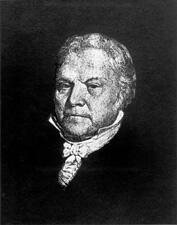
Here you will find contact information for Senator Clement Storer, including email address, phone number, and mailing address.
| Name | Clement Storer |
| Position | Senator |
| State | New Hampshire |
| Party | Republican |
| Status | Former Representative |
| Term Start | October 26, 1807 |
| Term End | March 3, 1819 |
| Terms Served | 2 |
| Born | September 20, 1760 |
| Gender | Male |
| Bioguide ID | S000972 |
About Senator Clement Storer
Clement Storer (September 20, 1760 – November 21, 1830) was a United States Representative and Senator from New Hampshire during the early national period of the United States. He was born in Kennebunk, in the Province of Maine, then part of Massachusetts Bay, where he completed preparatory studies before pursuing a professional career in medicine. Seeking advanced training, he studied medicine in Portsmouth, New Hampshire, and later in Europe, returning to establish a medical practice in Portsmouth. Alongside his medical work, he became active in the local militia, in which he served as a captain and subsequently rose through successive ranks to that of major general, reflecting both his prominence in the community and his involvement in the defense and civic life of the region.
Storer’s early public service grew out of his standing in Portsmouth and his militia leadership. As tensions and political realignments marked the early nineteenth century, he aligned with the Democratic-Republican Party, which was then emerging as the dominant national political force. His combination of professional training, military experience, and local reputation positioned him for elective office at both the state and national levels, and he became one of the New Hampshire figures who helped carry Democratic-Republican principles into federal policymaking during a formative period of the republic.
Clement Storer was elected as a Democratic-Republican to the Tenth Congress and served as a United States Representative from New Hampshire from March 4, 1807, to March 3, 1809. His service in the House of Representatives coincided with a significant period in American history, marked by rising international tensions and domestic debates over trade and national sovereignty in the years leading up to the War of 1812. As a member of the Republican (Democratic-Republican) Party in the national legislature, he contributed to the legislative process and participated in the democratic governance of the young nation, representing the interests of his New Hampshire constituents in the lower chamber of Congress.
After his term in the House, Storer continued his political career at the state level. He served in the New Hampshire House of Representatives from 1810 to 1812, during which time he held the influential position of speaker for one year. In this role he presided over the state’s lower legislative chamber, helping to guide debate and manage the legislative agenda at a time when New Hampshire, like other states, was grappling with the political and economic consequences of national policies and international conflict. His leadership in the state legislature reinforced his status as a prominent Democratic-Republican figure in New Hampshire politics.
Storer returned to federal office later in his career. He was elected as a Democratic-Republican to the United States Senate to fill the vacancy caused by the resignation of Senator Jeremiah Mason and served from June 27, 1817, to March 4, 1819. Although his Senate tenure did not extend to two full six-year terms, his service spanned portions of the Fifteenth Congress, a period that followed the War of 1812 and coincided with the so‑called “Era of Good Feelings,” when the Democratic-Republican Party dominated national politics. While in the Senate, he served as chairman of the Committee on the Militia during the Fifteenth Congress, a position that drew on his long-standing militia experience and placed him at the center of legislative oversight and policy concerning the organization and regulation of the nation’s citizen-soldiers. During these years, he again represented New Hampshire’s interests at the national level and took part in shaping federal policy in the postwar period.
In addition to his legislative and military roles, Storer held important local and county offices. From 1818 to 1824, overlapping with the latter part of his Senate service and extending beyond it, he served as high sheriff of Rockingham County, New Hampshire. As high sheriff, he was responsible for law enforcement and the execution of court orders in one of the state’s most significant counties, which included Portsmouth and its surrounding communities. This position reflected the continued trust placed in him by his fellow citizens and underscored his long engagement in public service at multiple levels of government.
Clement Storer spent his later years in Portsmouth, where he had long resided and practiced medicine. He died there on November 21, 1830. He was interred in North Cemetery in Portsmouth, a burial ground that contains the remains of many of the city’s notable early residents. His career, spanning medicine, militia leadership, state politics, and service in both houses of Congress, placed him among the New Hampshire leaders who helped shape the political life of the United States in the early decades after independence.