Representative Don Johnson
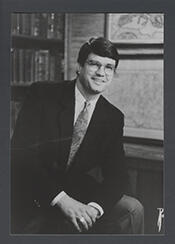
Here you will find contact information for Representative Don Johnson, including email address, phone number, and mailing address.
| Name | Don Johnson |
| Position | Representative |
| State | Georgia |
| District | 10 |
| Party | Democratic |
| Status | Former Representative |
| Term Start | January 5, 1993 |
| Term End | January 3, 1995 |
| Terms Served | 1 |
| Born | January 30, 1948 |
| Gender | Male |
| Bioguide ID | J000120 |
About Representative Don Johnson
Clete Donald Johnson Jr. (born January 30, 1948) is an American politician, diplomat, lawyer, and academic from Georgia who served as a Democratic Representative from Georgia in the United States Congress from 1993 to 1995. A member of the Democratic Party, he contributed to the legislative process during one term in the U.S. House of Representatives, representing Georgia’s 10th congressional district during a significant period in American political history.
Johnson was born in Atlanta, Georgia, and raised in Royston, Georgia, where he has lived for most of his life. He grew up in a family with a strong legal and public service background; his father, Clete D. Johnson, later served as Solicitor General. Johnson attended the University of Georgia in Athens, where he received his Bachelor of Arts degree in 1970. He then enrolled in the University of Georgia School of Law, earning his J.D. in 1973. During law school he served as articles editor for the Georgia Journal of International and Comparative Law, an early indication of his interest in international legal and economic issues.
Upon completing his law degree in 1973, Johnson entered active duty in the United States Air Force Judge Advocate General’s Corps (JAG Corps), serving until 1977. As a U.S. Air Force JAG officer, he was stationed for a year at Vandenberg Air Force Base in California, for two years at Incirlik Air Base in the Republic of Turkey, and for a final year at Lowry Air Force Base in Colorado. He served as a military prosecutor, was awarded the Air Force Commendation Medal, and was honorably discharged with the rank of captain. Following his military service, he worked on the trade staff of the U.S. House Ways and Means Committee, gaining early experience in federal legislative and trade policy. He continued his education abroad, earning a Master of Laws (LL.M.) degree from the London School of Economics in 1978 and obtaining a certificate in private and public international law from the Hague Academy of International Law in the Netherlands.
After completing his advanced legal studies, Johnson entered private practice with a focus on international and financial law. He practiced international banking law in the corporate counsel department of Continental Illinois National Bank in Chicago, one of the largest banks in the United States at the time. He then returned to Georgia to work as an associate at the Atlanta law firm of Powell, Goldstein, Frazer & Murphy LLP. In 1982, he moved back to Royston to practice law with his father, former Solicitor General Clete D. Johnson, further anchoring his professional and personal life in northeast Georgia.
Johnson’s formal political career began in the Georgia General Assembly. In 1987, he was elected as a Democrat to the Georgia State Senate from the 47th District to fill the unexpired term of the late Senator Parks Brown. The 47th District included Banks, Elbert, Franklin, Hart, Madison, and portions of Jackson counties. During his tenure in the Georgia Senate, Johnson rose to several leadership positions: he served as chairman of the Appropriations Committee, vice-chairman of the Judiciary Committee, and as a member of the Agriculture, Transportation, Finance, Reapportionment, Public Utilities, and Rules Committees. From 1989 until 1992, he served as Governor Joe Frank Harris’s assistant administration floor leader in the Senate. He was the original author of major legislation enacted to reform the state budget process, sovereign immunity, rural telecommunications, and the ethical standards of public officials, establishing a record as a reform-minded legislator with a focus on fiscal policy, infrastructure, and governmental ethics.
In 1992, Johnson was elected to the U.S. House of Representatives as a Democrat representing Georgia’s 10th congressional district, succeeding 16-year incumbent Doug Barnard of Augusta. He served in the 103rd Congress from January 3, 1993, to January 3, 1995. As a member of the House of Representatives, Johnson participated in the democratic process and represented the interests of his constituents during a period marked by debates over national security, economic policy, and deficit reduction. In Congress he served on the House Armed Services Committee and the House Committee on Science, Space and Technology, focusing particularly on national security and international economic policy. He was selected to serve as a member of Speaker Tom Foley’s Working Group on Policy, and he participated in international parliamentary and electoral observation activities, serving as a delegate to the North Atlantic Assembly (NATO’s legislative advisory body) in Berlin and Copenhagen and monitoring Russia’s first parliamentary (Duma) election in Moscow in December 1993.
Johnson’s congressional career coincided with the contentious budget battles of the early 1990s. He supported President Bill Clinton’s 1993 budget plan, a vote that tied him closely to the administration in a politically volatile environment in his largely conservative district. Although the 1993 budget was extremely controversial at the time, it is historically regarded as a major factor in ultimately balancing the federal budget and producing national surpluses later in the decade. In the 1994 elections, amid a nationwide Republican landslide, Johnson was defeated in his bid for reelection by Republican Charlie Norwood. He lost by a 31-point margin, the largest margin of defeat for a Democratic incumbent in that election cycle, and was one of several moderate Southern Democrats who were swept out of office that year.
Following his service in Congress, Johnson returned to legal practice and public policy work in Washington, D.C. He became a partner at the law firm Patton Boggs LLP, where he focused on international trade and government relations, and later served as vice-chairman of Fleishman-Hillard Government Relations, Inc. In 1998, President Bill Clinton appointed him to the rank of ambassador at the Office of the United States Trade Representative (USTR). For approximately two and a half years, he served as chief textile negotiator and principal adviser to both the President and the U.S. Trade Representative on all textile and apparel trade matters. In this capacity, he played a central role in several significant trade negotiations, including the U.S.-China World Trade Organization Accession Agreement and the U.S.-Cambodia Textile Agreement. The Cambodia agreement, which he negotiated with the Cambodian commerce minister, was considered a landmark because it included, for the first time, labor provisions explicitly linked to trade benefits. He also led the United States in World Trade Organization dispute cases involving textiles against the European Union and Pakistan and resolved other disputes through negotiation. During this period he was substantially involved in the development of trade legislation, including the Trade Act of 2000, which incorporated the Caribbean Basin Initiative and the African Growth and Opportunity Act.
In 2004, Johnson returned to academic and policy work in his home state, joining the Dean Rusk Center for International Law and Policy at the University of Georgia School of Law. There he contributed to scholarship and programs on international law, trade, and foreign policy, drawing on his experience in Congress, the military, and the executive branch. He retired from active duties at the Dean Rusk Center in 2015 and was named director emeritus. His official papers, documenting his legislative, diplomatic, and legal career, are housed at the Richard B. Russell Library for Political Research and Studies at the University of Georgia. Johnson has continued to engage in public discourse; on July 27, 2011, he authored an op-ed in The Atlanta Journal-Constitution titled “Show some courage on debt crisis – children are watching,” in which he drew on his experience with federal budget debates to argue that national interests should take precedence over narrow political considerations.
In later years, Johnson has remained closely connected to his roots in northeast Georgia. He resides on his family cattle farm outside Royston, Georgia, with his wife, Suzanne Spratlin Johnson. Together they have three children and two grandchildren. Through his work as a state legislator, member of Congress, trade ambassador, attorney, and academic, Clete Donald Johnson Jr. has maintained a career at the intersection of Georgia politics, national security, and international economic policy.