Representative Cleveland Dear
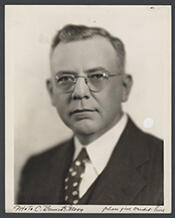
Here you will find contact information for Representative Cleveland Dear, including email address, phone number, and mailing address.
| Name | Cleveland Dear |
| Position | Representative |
| State | Louisiana |
| District | 8 |
| Party | Democratic |
| Status | Former Representative |
| Term Start | March 9, 1933 |
| Term End | January 3, 1937 |
| Terms Served | 2 |
| Born | August 22, 1888 |
| Gender | Male |
| Bioguide ID | D000177 |
About Representative Cleveland Dear
Cleveland Dear Sr. (August 22, 1888 – December 30, 1950) was a Louisiana lawyer, World War I Army officer, district attorney, state court judge, and a two-term Democratic U.S. Representative for Louisiana’s since-disbanded 8th congressional district. He also sought statewide office as an anti-Long candidate for governor of Louisiana in 1936. Over the course of his career, he played a significant role in local, state, and national public life, including service as chairman of the House Committee on Elections No. 1 during his tenure in Congress from 1933 to 1937.
Dear was born in Sugartown, Beauregard Parish, in western Louisiana, the youngest of eleven children of Mississippi natives James Mackburn Dear (1846–1925) and Sarah Jane Harper Dear (1849–1932). He received his early education in rural country schools before pursuing higher studies in Baton Rouge. Dear attended Louisiana State University and its Paul M. Hebert Law Center, where he completed his legal education and became a member of the Sigma Alpha Epsilon fraternity. In 1914 he received his law degree and was admitted to the Louisiana bar that same year, marking the beginning of a long legal and public-service career.
After admission to the bar, Dear established his practice in Alexandria, in Rapides Parish in central Louisiana. He first entered into partnership with Frank H. Peterman in the firm of Peterman & Dear. When V. H. Peterman, Frank Peterman’s father, joined the practice, it became Peterman, Dear & Peterman. The firm represented local interests of major rail carriers, including the Texas & Pacific Railway and the Louisiana Railway and Navigation Company, giving Dear early exposure to complex commercial and transportation-related legal matters that would inform his later public work.
With the United States’ entry into World War I, Dear entered military service. On April 8, 1917, two days after the American declaration of war, he reported to the United States Army officers’ training camp at Fort Logan H. Roots in Arkansas. He received a commission as a second lieutenant in the Field Artillery and was assigned to the 87th Division, then undergoing organization and training at Camp Pike, Arkansas. When the 87th Division departed for France, Dear and several other experienced soldiers were detached to help form the nucleus of a new unit, the 11th Division, organized at Fort Meade, Maryland. The Armistice intervened before the 11th Division could be transported overseas, and Dear was discharged from active duty on December 14, 1918. He later served as a captain in the Organized Reserve Corps and remained active in the newly established American Legion and other veterans’ organizations, maintaining close ties to the veteran community throughout his life.
Dear’s political and legal career advanced rapidly in the postwar period. In 1920 he was elected district attorney for the 9th Judicial District, based in Alexandria, a position he held for twelve years. As district attorney, he became a prominent figure in central Louisiana’s legal and political circles, handling criminal prosecutions and representing the state in significant local matters. His performance in that office helped lay the groundwork for his subsequent election to Congress. In April 1921, he married Marion Suzanne Anderson, a native of Chicago, Illinois, who had later resided in Milwaukee, Wisconsin. The couple had two children: a daughter, Marion Dear Weber (1923–2009), and a son, Cleveland “Cleve” Dear Jr. (1928–2015), who became a petroleum engineer, graduating from both the Colorado School of Mines in Golden, Colorado, and Louisiana State University, and who later lived with his family in Junction, Kimble County, Texas.
In 1932 Dear was elected as a Democrat to the U.S. House of Representatives from Louisiana’s 8th congressional district, beginning his service in the Seventy-third Congress on March 4, 1933. He served two terms, from 1933 to 1937, during a pivotal era in American history marked by the Great Depression and the early New Deal. As a member of the House of Representatives, Cleveland Dear participated in the legislative process and represented the interests of his central Louisiana constituents. During his time in Congress he served as chairman of the House Committee on Elections No. 1, a position that placed him at the center of adjudicating contested elections and overseeing matters related to the integrity of House membership. His congressional service reflected both his legal background and his commitment to the democratic process at a time of national economic and political transformation.
In 1936, rather than seek another term in the House, Dear entered the race for governor of Louisiana. The contest followed the death of Governor Oscar K. Allen of Winnfield and the brief tenure of his successor, Governor James A. Noe of Monroe, both political heirs of Huey P. Long, who had been assassinated at the Louisiana State Capitol in 1935. Dear ran as the principal anti-Long candidate, opposing the continuation of the Long political machine’s dominance in state government. He was defeated by the pro-Long candidate, Richard W. Leche of New Orleans, who prevailed by a margin of 67 percent to 33 percent. The loss ended Dear’s bid for statewide executive office but reinforced his standing as a leading figure in the anti-Long faction of Louisiana politics.
Following his gubernatorial campaign, Dear returned to private law practice in Alexandria. His legal expertise and longstanding reputation soon led to judicial service. He was appointed judge of the Ninth Judicial District Court, the same jurisdiction in which he had earlier served as district attorney. Dear subsequently secured his position on the bench through successful elections and remained in that office until his death. His last judicial nomination came in the Democratic primary held in August 1948, underscoring his continued electoral strength and public confidence in his judicial performance.
In his personal life, Dear was active in religious and fraternal organizations. A Baptist deacon, he was involved in the life of his church, while his wife was an Episcopalian, reflecting a household engaged with multiple Christian traditions. He also participated in the Masonic lodge, the Shriners, and the Benevolent and Protective Order of Elks, affiliations that connected him to civic and charitable endeavors beyond his formal public offices. Cleveland Dear died in Alexandria, Louisiana, on December 30, 1950. He was interred at Greenwood Memorial Park in Pineville, Louisiana, leaving a legacy as a lawyer, soldier, legislator, and judge who served his state and nation across several decades and in multiple capacities.