Representative Clifford R. Allen
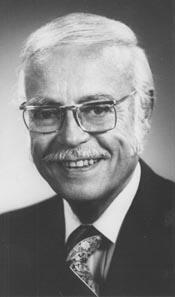
Here you will find contact information for Representative Clifford R. Allen, including email address, phone number, and mailing address.
| Name | Clifford R. Allen |
| Position | Representative |
| State | Tennessee |
| District | 5 |
| Party | Democratic |
| Status | Former Representative |
| Term Start | January 14, 1975 |
| Term End | January 3, 1979 |
| Terms Served | 2 |
| Born | January 6, 1912 |
| Gender | Male |
| Bioguide ID | A000118 |
About Representative Clifford R. Allen
Clifford Robertson Allen (January 6, 1912 – June 18, 1978) was an American attorney and Democratic politician who served as a member of the Tennessee Senate and later as a United States Representative from Tennessee. He was a prominent populist figure in mid‑twentieth‑century Tennessee politics, known for his advocacy on behalf of public education, tax reform, and low‑income and elderly citizens. Allen served in the Tennessee Senate from 1949 to 1951 and again from 1955 to 1959, and he represented a Tennessee district in the United States House of Representatives from November 25, 1975, until his death in 1978, completing two terms in Congress.
Allen was born in Jacksonville, Florida, on January 6, 1912. During his youth his family moved to Washington, D.C., where he attended Friends High School, now known as Sidwell Friends School, a Quaker institution noted for its rigorous academics and civic‑minded ethos. After completing high school, he moved to Tennessee to pursue legal studies. He enrolled at the Cumberland School of Law in Lebanon, Tennessee, and graduated in 1931. That same year he was admitted to the Tennessee bar, beginning a legal career that would underpin his later work as a legislator and public official.
Allen’s formal political career began in the late 1940s. He was elected to his first term in the Tennessee State Senate in 1948 and served from 1949 to 1951. In 1950 he sought higher office, entering the Democratic primary for governor of Tennessee against incumbent Gordon Browning. Running on a platform that prominently featured a proposal for the state to provide free school textbooks to all schoolchildren, he narrowly lost in a close contest. Undeterred, he ran again for governor in the 1952 Democratic primary, positioning himself as a representative of urban and progressive forces in contrast to more rural‑based candidates. In that race he finished third; Frank G. Clement won the nomination, with Browning placing second. During this period Allen emerged as a staunch opponent of Memphis political boss E. H. “Boss” Crump and was consistently opposed by the Crump political machine. His rivalry with Clement became a notable feature of Tennessee politics; in one widely discussed incident, health inspectors shut down a downtown Nashville restaurant owned by Allen, an action many Nashvillians viewed as politically motivated. Allen obtained a court order to reopen the establishment, which subsequently drew long lines of patrons in a show of public support.
In 1954 Allen returned to the Tennessee Senate, serving from 1955 to 1959. During this second tenure he became known as a strong advocate for teachers and public schools and urged enforcement of the Supreme Court’s decision in Brown v. Board of Education, placing him among the more outspoken Southern legislators in favor of school desegregation. He again sought the governorship in 1958, entering the Democratic primary and losing to Buford Ellington, a close associate of Clement who had served as Clement’s campaign manager and cabinet member. At a time when Tennessee politics were effectively dominated by the Democratic Party in the western and central parts of the state and by Republicans in East Tennessee, intra‑party factions often functioned like competing parties, organizing slates of candidates and pooling campaign resources. Allen was a significant figure within these factional struggles. In January 1957, after Allen had left the Senate, the Tennessee State Senate refused to seat Richard Fulton, who had been elected to the seat Allen had previously held but was several weeks short of the constitutionally required age of 30 at the start of the legislative session. As a result, Allen was appointed back to the seat, briefly returning to the chamber.
In 1960 Allen was elected Assessor of Property for Davidson County, Tennessee, an office commonly regarded as an unglamorous courthouse position focused on property assessments and tax rolls. Allen, however, transformed the role into a durable political base that he would hold for the next fifteen years. In 1962, following voter approval of a charter consolidating the City of Nashville and Davidson County into a metropolitan government, Allen ran for mayor of the new consolidated government. He finished second in the initial election behind Beverly Briley, the last county judge of Davidson County, forcing a runoff under the provisions of the new charter. Briley defeated Allen in the runoff, but Allen remained a major local political figure. Throughout this period he cultivated a reputation as a populist defender of the elderly, the poor, and “average people,” working to secure property‑tax exemptions for low‑income elderly homeowners.
Allen’s most enduring imprint on Tennessee public policy came through his leadership on property‑tax reform and the issue known as “Question 3.” The Tennessee Constitution of 1870 had been notoriously difficult to amend, and only beginning in the 1950s did limited constitutional conventions, called by the legislature and restricted to specified subjects, begin to modernize the document. In the late 1960s and early 1970s Allen focused on the longstanding problem of inconsistent property‑tax assessment ratios across Tennessee counties, where the percentage of appraised value subject to taxation varied widely and made comparisons among jurisdictions difficult. He successfully championed the call for a limited constitutional convention in 1971 devoted to property‑tax issues, which appeared on the ballot as “Question 3.” While other proposed subjects for the convention were rejected by voters, Question 3 passed by a large margin, aided in part by the fact that opponents of a state income tax preferred a convention confined to property‑tax matters, since another convention could not be called for six years. Elected as a delegate while continuing to serve as assessor, Allen quickly emerged as the leading figure at the convention. The convention ultimately adopted a plan largely shaped by him, establishing assessment at 25 percent of appraised value for residential and agricultural property, 40 percent for commercial property, and even higher rates for utilities. Tennessee voters approved the proposal, and it remained in effect into the twenty‑first century, although the higher rate on utilities was later overridden at the federal level at the urging of U.S. Senator Howard Baker. This success helped offset Allen’s disappointment earlier that year when he lost another race for mayor of Nashville, finishing a surprising fourth in a contest in which progressives such as Allen were hurt by a recent court‑ordered school‑busing decision that energized anti‑integration candidates.
Allen’s long‑standing involvement in Nashville and Tennessee politics set the stage for his election to Congress. In 1975, when Richard Fulton, then serving in the U.S. House of Representatives, was elected mayor of Nashville to succeed Briley and resigned his congressional seat, a special election was called. Allen entered a crowded Democratic primary that included District Attorney Thomas Shriver, legislator Mike Murphy, and attorney Gilbert Merritt, who would later become a judge on the U.S. Court of Appeals for the Sixth Circuit. Drawing on his extensive name recognition and running a populist campaign that attacked high rates charged by local electric and gas utilities, he won the Democratic nomination. As Republicans had largely ceased mounting competitive campaigns in that district, which had not elected a Republican since Reconstruction, his victory in the special general election was effectively assured. Allen won the seat and took office in the U.S. House of Representatives on November 25, 1975. He was reelected to a full term in November 1976, serving in Congress from 1975 to 1979 and contributing to the legislative process during two terms in office.
In Congress, Allen sought to establish a high profile despite being a freshman member, a style that drew both admiration and criticism. His principal issue was the rising cost of electricity charged by the Tennessee Valley Authority (TVA), particularly as TVA financed an ambitious nuclear‑energy program. Allen proposed that TVA adopt “lifeline rates,” under which low‑income, low‑volume residential users would pay a subsidized rate, with the utility’s largest customers effectively bearing a greater share of the cost. TVA management strongly objected, arguing that such a system would violate the TVA Self‑Financing Act of 1959, which required the agency’s power operations to be self‑supporting and unsubsidized, and warning that it would discourage large industrial customers from locating in TVA’s service area. Allen’s advocacy, however, resonated with many of his Nashville‑area constituents, reinforcing his image as a champion of ordinary ratepayers. At the same time, his discursive speaking style, rooted in the tradition of Southern country lawyers, led some colleagues and observers in Washington to regard him as a relic of an earlier era. He acquired the derisive nickname “The Tennessee Talking Horse,” a moniker previously applied to former Memphis Congressman Dan Kuykendall, reflecting perceptions of his verbosity on the House floor and in committee.
By 1978 some Tennessee politicians believed Allen might be vulnerable in the Democratic primary, and several candidates filed to challenge him. In early June of that year, only days before the deadline for withdrawing from the primary, Allen suffered a massive heart attack. Out of concern about the appearance of exploiting his illness, all but one of his opponents withdrew from the race before the deadline. On June 11, the day after the withdrawal deadline passed, Allen died, leaving State Senator Bill Boner as the only name on the Democratic primary ballot. Although one former opponent, Elliot Ozment, attempted a write‑in campaign, it was unsuccessful, and Boner went on to win the Democratic nomination and, effectively, the general election in the heavily Democratic district.
Clifford Robertson Allen died at St. Thomas Hospital in Nashville, Tennessee, on June 18, 1978, at the age of 66, from complications of the heart attack he had suffered earlier that month. His death brought to a close a career that had spanned local, state, and national office and that had been marked by persistent advocacy for public education, tax reform, and the interests of low‑income and elderly citizens. He was serving in the United States House of Representatives at the time of his death, concluding more than three decades of active engagement in Tennessee public life.