Representative Clifton Rodes Breckinridge
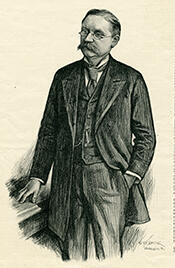
Here you will find contact information for Representative Clifton Rodes Breckinridge, including email address, phone number, and mailing address.
| Name | Clifton Rodes Breckinridge |
| Position | Representative |
| State | Arkansas |
| District | 2 |
| Party | Democratic |
| Status | Former Representative |
| Term Start | December 3, 1883 |
| Term End | March 3, 1895 |
| Terms Served | 6 |
| Born | November 22, 1846 |
| Gender | Male |
| Bioguide ID | B000784 |
About Representative Clifton Rodes Breckinridge
Clifton Rodes Breckinridge (November 22, 1846 – December 3, 1932) was an American politician, diplomat, and businessman who served as a Democratic Party alderman, U.S. Representative from Arkansas, and United States Minister to Russia. A member of the prominent Breckinridge family, he was the son of John C. Breckinridge, Vice President of the United States under James Buchanan and later a Confederate general, and the great-grandson of John Breckinridge, U.S. Senator and Attorney General of the United States. Born in Baltimore, Maryland, during a period of rising sectional tension, he grew up in a family deeply involved in national politics and public life.
During the American Civil War, Breckinridge served in both the Confederate States Army and the Confederate States Navy, reflecting his family’s allegiance to the Confederacy. As the son of a leading Confederate military and political figure, his youth was shaped by the upheavals of war and the collapse of the Confederate cause. After the war, he returned to civilian life in the reconstructed South, eventually settling in Arkansas, where he began to build a career in business and local politics. His postwar activities included work in commercial enterprises, which helped establish his standing in the community and provided a platform for his entry into public office.
Breckinridge’s formal political career began at the local level, where he served as a Democratic Party alderman. His work in municipal affairs introduced him to the practical concerns of governance and the needs of his constituents in a region still recovering from the economic and social dislocations of the Civil War and Reconstruction. As a member of the Democratic Party, he aligned with the dominant political force in the post-Reconstruction South, advocating policies that reflected the priorities of white Southern Democrats of his era.
In 1883, Breckinridge was elected as a Democrat to the United States House of Representatives from Arkansas, beginning a congressional career that extended until 1895. He served six terms in the House, representing his Arkansas constituents during a significant period in American history marked by industrial expansion, agrarian unrest, and the consolidation of the post-Reconstruction political order in the South. As a member of the House of Representatives, Clifton Rodes Breckinridge participated in the legislative process and contributed to debates on national policy, while working to represent the interests of his district. His service in Congress coincided with the presidencies of Chester A. Arthur, Grover Cleveland, and Benjamin Harrison, and he took part in the evolving Democratic response to issues such as tariffs, monetary policy, and federal involvement in the economy.
Breckinridge resigned from the House of Representatives in 1894, before the expiration of his final term, to accept President Grover Cleveland’s nomination as United States Minister to Russia. He served in that diplomatic post from 1894 until 1897, during a period of growing international tension in East Asia and internal change within the Russian Empire. As Minister in Saint Petersburg, he proved capable in the analytical and reporting aspects of diplomacy, sending detailed assessments of Russian aims and policies back to Washington, D.C. He warned that Russia’s expansion into China was undermining friendly relations between those two nations, but his reports did not significantly influence United States foreign policy, which remained largely isolationist in this period. Consequently, much of his official work focused on routine matters of trade and immigration between the two countries.
Breckinridge found the ceremonial and social dimensions of diplomatic life in the aristocratic Russian capital more challenging. The high cost of entertaining and maintaining appropriate social standing in Saint Petersburg strained his personal finances, particularly during the lavish festivities surrounding the coronation of Tsar Nicholas II and Empress Alexandra Fyodorovna in 1896. At that event, he was required by court protocol to wear ceremonial knee breeches, a formality that he feared his former constituents in Arkansas would neither understand nor appreciate, illustrating the cultural and social distance between his Southern political base and the European diplomatic milieu in which he briefly moved.
After his service as Minister to Russia ended in 1897, Breckinridge returned to private life and business, drawing on the experience he had gained in both legislative and diplomatic service. In his later years, he remained a figure of note as a former congressman and diplomat and as a member of a historically significant American political family. Clifton Rodes Breckinridge died on December 3, 1932, closing a life that spanned from the antebellum era through the Civil War, Reconstruction, the Gilded Age, and into the early twentieth century, and that encompassed service in the Confederate armed forces, local government, the United States Congress, and the diplomatic corps.