Representative Clifton Alexander Woodrum
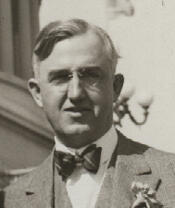
Here you will find contact information for Representative Clifton Alexander Woodrum, including email address, phone number, and mailing address.
| Name | Clifton Alexander Woodrum |
| Position | Representative |
| State | Virginia |
| District | 6 |
| Party | Democratic |
| Status | Former Representative |
| Term Start | December 3, 1923 |
| Term End | January 3, 1947 |
| Terms Served | 12 |
| Born | April 27, 1887 |
| Gender | Male |
| Bioguide ID | W000720 |
About Representative Clifton Alexander Woodrum
Clifton Alexander Woodrum (April 27, 1887 – October 6, 1950) was a Virginia pharmacist, lawyer, and U.S. Representative from Roanoke who was considered a Progressive Democrat for his support of President Franklin D. Roosevelt. Born in Roanoke, Virginia, he was the son of Robert H. Woodrum, Roanoke’s first elected Commonwealth’s Attorney, and Anna T. Woodrum, and was the younger brother of Robert J. Woodrum and Claudine J. Woodrum. He attended the local public schools in Roanoke, reflecting the family’s deep roots in the community and early exposure to public life and civic affairs.
After completing his primary education, Woodrum pursued professional training in the health sciences at the University College of Medicine in Richmond, Virginia, an institution later incorporated into the Medical College of Virginia. He became a registered pharmacist and initially engaged in that profession in Roanoke. Following his father’s example in the law, he then studied at Washington and Lee University in Lexington, Virginia. He was admitted to the bar in 1908 and commenced the practice of law in Roanoke, combining legal work with his pharmaceutical background and establishing himself as a young professional in the city.
Woodrum’s early public career closely followed the path laid out by his father. He served as Commonwealth’s Attorney of Roanoke from 1917 to 1919, holding the same office his father had first been elected to in the city. In 1919, the Virginia General Assembly elected him judge of Roanoke’s Hustings Court, a position he held until 1922. His service as both prosecutor and judge gave him broad experience in the administration of justice and enhanced his standing as a public figure in southwestern Virginia. During these years he also established a family life; he married Martha Lena Woodrum, formerly of Texas, and they had two children, Clifton A. Woodrum Jr. (1910–1959) and Martha Anne Woodrum (later Martha Anne Woodrum Zillhardt, 1916–2002).
In 1922, Woodrum successfully sought election to the United States House of Representatives as a Democrat. He was elected to the Sixty-eighth Congress with 77.95 percent of the vote, defeating Republican Fred W. McWane, and took his seat on March 4, 1923, as a Representative from Virginia. A member of the Democratic Party, he contributed to the legislative process during 12 terms in office, serving continuously from March 4, 1923, until his resignation on October 24, 1945, effective December 31, 1945. He was re-elected in 1924 with 69.01 percent of the vote, again defeating McWane; in 1926, 1928, and 1930 he was re-elected unopposed, demonstrating his strong political position in his district. In 1932, running in Virginia’s at-large district, he was re-elected along with the Democratic slate, receiving 8.39 percent of the vote in a 24-way race.
Woodrum’s congressional career unfolded during a significant period in American history, encompassing the Great Depression, the New Deal, and World War II. Considered a “Southern Progressive” in Washington, he often bucked the powerful Byrd Organization led by Senators Carter Glass and Harry F. Byrd, and became an ardent New Dealer and prominent supporter of President Franklin D. Roosevelt. As a member of the United States House Committee on Appropriations, he played a key role in directing federal resources to his district and state. In 1934 he was re-elected with 67.14 percent of the vote, defeating Republican Thomas J. Wilson Jr., Socialist W. L. Gibson, and Independent John Moffett Robinson. He won re-election in 1936 with 60.69 percent of the vote over Republican T. X. Parsons; in 1938 with 55.89 percent against Republican Fred W. McWane; in 1940 with 68.14 percent, defeating McWane and Socialist Lawrence S. Wilkes; in 1942 with 93.56 percent of the vote over Republican Stephen A. Moore; and in 1944 with 69.09 percent of the vote, defeating Republican John Strickler. Throughout these campaigns he consistently represented the interests of his constituents while participating actively in the national legislative process.
Among Woodrum’s most enduring achievements in Congress were his efforts to secure major federal projects for the Roanoke Valley and surrounding region. Through his work on Appropriations, he steered federal money for the purchase of land and development of Roanoke’s airport, which was activated in May 1930 and originally known as “Woodrum’s Field” in his honor. The facility, later expanded as a “National Defense Project” with federal funding he helped obtain, is now the Roanoke–Blacksburg Regional Airport (ROA). He was also instrumental in bringing a United States Department of Veterans Affairs hospital to his district in 1934, now known as the Salem Veterans Affairs Medical Center. This hospital provided critical medical services to veterans and created many jobs in the region during the Great Depression, underscoring his role in using federal programs to promote both social welfare and economic development.
Woodrum was known in Washington as a fierce promoter of his state and region and was particularly fond of the song “Carry Me Back to Old Virginny,” which he regarded as emblematic of the Commonwealth. Contemporary accounts noted that when Clifton A. Woodrum was in Congress, the House of Representatives could not adjourn until “the honorable Democrat from Roanoke, Virginia,” with his rich and varied baritone voice, led the body in a rendition of the song. This informal tradition reflected both his personal charisma and his strong identification with Virginia’s culture and heritage, even as he championed progressive economic policies and New Deal measures that sometimes put him at odds with the dominant conservative Democratic machine in his home state.
On October 24, 1945, Woodrum resigned from Congress, effective December 31, 1945, to become president of the American Plant Food Council, Inc., marking his transition from legislative service to a leadership role in the private sector. After leaving public office, he remained a respected figure in Virginia political and civic life. His family continued his legacy of public service: his son and namesake, Clifton A. Woodrum Jr., became a lawyer in Roanoke, though he survived his father by only nine years, dying in 1959. His grandson, Chip Woodrum, later served in the Virginia House of Delegates, where he became known, among other accomplishments, for his work in updating and strengthening Virginia’s Freedom of Information Act, continuing the family’s tradition of independence from the Byrd Organization and advocacy for open government.
Clifton Alexander Woodrum died of a heart attack in Washington, D.C., on October 6, 1950. He was interred in Fairview Cemetery in Roanoke, Virginia, returning in death to the city that had shaped his early life and that he had represented for more than two decades in Congress. His daughter, Martha Anne Woodrum Zillhardt, became a pilot after secretly taking flying lessons—unbeknownst to her father at first—and her aviation interests echoed his own role in establishing the regional airport that bears his name. Woodrum’s life and career thus linked local and national concerns, combining professional accomplishment in law and pharmacy, judicial and prosecutorial service, long tenure in the House of Representatives from 1923 to 1947, and a record of legislative advocacy that left a lasting imprint on the infrastructure and public institutions of southwestern Virginia.