Representative Clyde Gilman Doyle
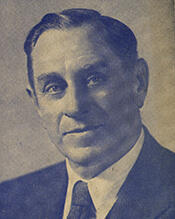
Here you will find contact information for Representative Clyde Gilman Doyle, including email address, phone number, and mailing address.
| Name | Clyde Gilman Doyle |
| Position | Representative |
| State | California |
| District | 23 |
| Party | Democratic |
| Status | Former Representative |
| Term Start | January 3, 1945 |
| Term End | January 3, 1965 |
| Terms Served | 9 |
| Born | July 11, 1887 |
| Gender | Male |
| Bioguide ID | D000481 |
About Representative Clyde Gilman Doyle
Clyde Gilman Doyle (July 11, 1887 – March 14, 1963) was an American lawyer and Democratic politician who served as a United States Representative from California in the mid-twentieth century. He was born in Oakland, Alameda County, California, and spent his early years on the West Coast, attending public schools in Oakland; Seattle, Washington; Los Angeles; and Long Beach, California. This geographically varied upbringing along the Pacific coast exposed him to several rapidly growing urban communities that would later form the core of his political base.
After completing his primary and secondary education, Doyle pursued legal studies at the College of Law of the University of Southern California in Los Angeles. He graduated in 1917 and was admitted to the bar the same year. Doyle then commenced the practice of law in Long Beach, California, where he established himself professionally and became active in civic affairs. His early legal career coincided with a period of significant growth and development in Long Beach, providing him with opportunities to engage in local governance and public service.
Doyle’s first major public role came in municipal government. He was elected a member of the Board of Freeholders of Long Beach, the body responsible for framing and revising the city charter, and served as its president in 1921 and 1922. In this capacity he participated in shaping the structure and powers of the local government at a time when Long Beach was evolving from a small coastal town into a substantial urban center. He later broadened his public service to the state level as a member of the California State Board of Education, contributing to the oversight and development of educational policy in California.
Building on his legal and public service background, Doyle entered national politics as a member of the Democratic Party. He was elected as a Democrat to the Seventy-ninth Congress and served his first term in the United States House of Representatives from January 3, 1945, to January 3, 1947, representing a California district during the closing months of World War II and the beginning of the postwar era. Although he failed to win reelection in 1946, he remained an active figure in state and local Democratic politics and successfully regained his seat in the 1948 election.
Doyle returned to Congress at the opening of the Eighty-first Congress on January 3, 1949, and then served continuously through the Eighty-second and the seven succeeding Congresses. In total, Clyde Gilman Doyle served as a Representative from California in the United States Congress from 1945 to 1965, contributing to the legislative process during nine terms in office. His long tenure in the House of Representatives spanned a significant period in American history, encompassing the early Cold War, the Korean War, the beginnings of the civil rights movement, and major domestic debates over internal security and civil liberties. Throughout these years he participated in the democratic process and represented the interests of his California constituents in national affairs.
A central aspect of Doyle’s congressional career was his service on the House Un-American Activities Committee (HUAC), on which he served from 1951 until his death in 1963. During this period HUAC played a prominent and controversial role in investigating alleged communist influence and subversive activities in the United States. Doyle’s participation on the committee placed him at the center of some of the most contentious political and cultural conflicts of the era. His role on HUAC entered the broader cultural consciousness and was recalled unflatteringly by Beat Generation poet and fellow Californian Lawrence Ferlinghetti in the 1958 poem “Dog,” published in the celebrated collection A Coney Island of the Mind, in which “Congressman Doyle” is invoked as a symbol of authority to be disregarded.
Clyde Gilman Doyle died in office in Arlington, Virginia, on March 14, 1963, at the age of 75, while still serving as a member of the House of Representatives. After funeral services were held in Long Beach, California, he was cremated and his ashes were given to his family. His death brought to a close a long career in law and public service that had begun in local government and extended through nearly two decades in Congress during a transformative period in American political and social history.