Senator Clyde LaVerne Herring
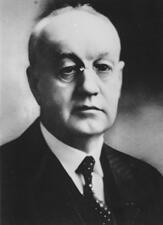
Here you will find contact information for Senator Clyde LaVerne Herring, including email address, phone number, and mailing address.
| Name | Clyde LaVerne Herring |
| Position | Senator |
| State | Iowa |
| Party | Democratic |
| Status | Former Representative |
| Term Start | January 5, 1937 |
| Term End | January 3, 1943 |
| Terms Served | 1 |
| Born | May 3, 1879 |
| Gender | Male |
| Bioguide ID | H000543 |
About Senator Clyde LaVerne Herring
Clyde LaVerne Herring (May 3, 1879 – September 15, 1945) was an American Democratic politician who served as the 26th governor of Iowa and later as a United States senator from Iowa during the last part of the Great Depression and the early years of World War II. Born in the late nineteenth century, he came of age in an era of rapid economic and social change that would shape his later political outlook and public service. His career ultimately placed him at the center of state and national policymaking during some of the most challenging years in modern American history.
Herring’s early life and formative years unfolded against the backdrop of a largely rural, agrarian Midwest, where questions of economic opportunity, agricultural stability, and social reform were central to public debate. These early experiences informed his understanding of the concerns of ordinary citizens and helped prepare him for a career in public life. As he moved into adulthood, he developed an interest in civic affairs and the workings of government, laying the groundwork for his eventual entry into politics as a member of the Democratic Party.
By the time Herring emerged as a leading figure in Iowa politics, the United States was grappling with the profound economic dislocation of the Great Depression. Elected as the 26th governor of Iowa, he assumed office at a time when state governments were under intense pressure to respond to widespread unemployment, farm foreclosures, and financial instability. As governor, he worked within the broader framework of New Deal–era reforms, seeking to coordinate state policies with federal initiatives designed to provide relief, recovery, and reform. His tenure placed him at the intersection of state and national efforts to stabilize the economy and support struggling communities.
Herring’s gubernatorial service elevated his profile within the Democratic Party and led to his election to the United States Senate from Iowa. A member of the Democratic Party throughout his public life, he was elected to a single term in the Senate and served from 1937 to 1943. His service in Congress occurred during a significant period in American history, encompassing the later years of the Great Depression and the nation’s gradual movement toward, and eventual entry into, World War II. In this capacity, he contributed to the legislative process during one term in office, participating in debates over domestic recovery, national defense, and foreign policy as the United States assumed an increasingly prominent role on the world stage.
As a United States senator, Herring represented the interests of his Iowa constituents while also engaging with the broader national agenda of the Roosevelt administration. He took part in the democratic process at a time when Congress was called upon to address issues ranging from agricultural support and industrial mobilization to social welfare and wartime preparedness. His work in the Senate reflected both the priorities of his home state and the demands of a country transitioning from economic crisis to global conflict.
After leaving the Senate in 1943, Herring’s public career drew to a close as the United States moved deeper into World War II. In his later years, he remained identified with the generation of Democratic leaders who had guided the nation through depression and war, and his record in both state and national office marked him as a significant figure in Iowa’s political history. Clyde LaVerne Herring died on September 15, 1945, not long after the end of World War II, leaving a legacy of service that spanned the governorship of Iowa and a term in the United States Senate during one of the most consequential eras in American public life.