Senator Clyde Roark Hoey
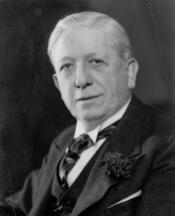
Here you will find contact information for Senator Clyde Roark Hoey, including email address, phone number, and mailing address.
| Name | Clyde Roark Hoey |
| Position | Senator |
| State | North Carolina |
| Party | Democratic |
| Status | Former Representative |
| Term Start | May 19, 1919 |
| Term End | January 3, 1955 |
| Terms Served | 3 |
| Born | December 11, 1877 |
| Gender | Male |
| Bioguide ID | H000679 |
About Senator Clyde Roark Hoey
Clyde Roark Hoey (December 11, 1877 – May 12, 1954) was an American Democratic politician from North Carolina who served in both houses of the state legislature, in the U.S. House of Representatives, as governor of North Carolina, and as a United States senator. Born near Shelby in Cleveland County, North Carolina, he was the son of Captain Samuel Alberta Hoey, a Confederate States Army officer, and Mary Charlotte Roark. He attended local schools until about age eleven, after which he worked on his family’s farm. Demonstrating an early interest in public affairs and communications, he purchased a weekly newspaper when he was sixteen, an experience that helped establish his public profile in his community and introduced him to state and local politics.
Hoey’s formal education was limited, but he quickly advanced in public life. At the age of twenty he was elected to the North Carolina House of Representatives, beginning a long career in elective office. Over the ensuing years he served as a state representative and later as a state senator, gaining a reputation as a skilled orator and a loyal Democrat. His legislative service in Raleigh positioned him as a prominent figure in North Carolina’s Democratic establishment during the early twentieth century, a period marked by the entrenchment of Jim Crow laws and one-party rule in the South.
In 1919 Hoey moved to the national stage when he was elected in a special election to the United States House of Representatives to fill the vacancy caused by the resignation of Representative Edwin Y. Webb, who had accepted a federal judgeship. In that campaign Hoey defeated a Republican opponent who opposed United States support for the League of Nations, aligning Hoey with the internationalist wing of the Democratic Party in the aftermath of World War I. He served in the U.S. House from 1919 to 1921. After leaving Congress he resumed his law practice and remained active in state affairs. In 1929, he came to wider attention in North Carolina when he prosecuted the leaders of the Loray Mill strike in Gastonia for the murder of the city’s police chief, a case that reflected the era’s intense conflicts over labor organizing and industrialization in the textile South.
Hoey reached the pinnacle of state politics when he was elected the 59th governor of North Carolina, serving from January 7, 1937, to January 9, 1941. In his inaugural address he delivered what one historian described as “an extended ode to the New Deal,” signaling his public support for many of President Franklin D. Roosevelt’s economic recovery measures, even as he remained fundamentally a conservative Democrat. As governor he pardoned Luke Lea, a Tennessee politician and former U.S. senator, in July 1937, after Lea had been paroled the previous year. Hoey’s appointment of an African American man to the board of trustees of a Black college set a limited but notable precedent in the governance of segregated higher education in the state. Following the 1938 Supreme Court decision in Missouri ex rel. Gaines v. Canada, which challenged racial segregation in higher education, Hoey urged the North Carolina legislature to provide for segregated graduate and professional education for Black citizens. While opposing integrated education, he declared that the people of North Carolina “do believe in equality of opportunity in their respective fields of service” and that “the white race cannot afford to do less than simple justice to the Negro.” At the same time, he was an avowed segregationist, and in a speech to the United Daughters of the Confederacy, an organization in which his wife was a member, he used explicitly racist language to affirm his opposition to civil rights for African Americans, stating that Black people were not entitled to civil rights and invoking the absence of Black passengers on the Mayflower as a justification for their exclusion.
During the late 1930s and early 1940s Hoey remained a key figure in Democratic politics. In 1940 he quietly opposed a third term for President Roosevelt. Believing at one point that Roosevelt might not seek another term, Hoey declined to serve as a “favorite son” presidential candidate as recommended by the North Carolina legislature and instead supported the presidential ambitions of Secretary of State Cordell Hull. After his gubernatorial term ended in 1941, Hoey returned to private law practice and party leadership, maintaining his influence in state and regional politics.
Hoey entered the United States Senate after winning election in 1944 and took his seat on January 3, 1945. He served as a senator from North Carolina from 1945 until his death in 1954, a period that encompassed the end of World War II, the onset of the Cold War, and the early stirrings of the modern civil rights movement. His service in Congress thus occurred during a significant period in American history, and as a member of the Senate he participated in the legislative process and represented the interests of his constituents over three terms in office. A conservative Democrat, he often aligned with business interests and the Southern wing of the party. He opposed President Harry S. Truman’s effort to make the Fair Employment Practices Commission (FEPC) permanent, promising to filibuster what he characterized as an attack on “the rights of every businessman in America.” Nonetheless, he supported Truman’s strong stance against striking railroad workers in December 1946 and backed Truman in the 1948 presidential election over States’ Rights (Dixiecrat) candidate Strom Thurmond. He also supported Truman’s refusal to grant Congress access to the records of government employees’ loyalty investigations, reinforcing executive-branch control over sensitive security information.
Hoey played a prominent role in congressional oversight during the early Cold War. From 1949 to 1952 he chaired the Investigations Subcommittee of the Senate Committee on Expenditures in Executive Departments, where he conducted inquiries into “five percenters,” or influence peddlers who allegedly took fees for securing government contracts. In 1950 he chaired an investigation into homosexuals in the federal government that culminated in a report released in December of that year, commonly known as the Hoey Report. The report asserted that all of the government’s intelligence agencies “are in complete agreement that sex perverts in Government constitute security risks,” a conclusion that helped underpin the broader federal purge of gay employees during the so‑called Lavender Scare. Historian Douglas Charles has characterized Hoey’s role in this investigation as somewhat reluctant, suggesting that chief counsel Francis Flanagan was the primary driving force behind the report. The Hoey Report was later criticized in the 1957 Crittenden Report, a U.S. Navy review that found no factual data from intelligence agencies to substantiate its sweeping claims. In 1950 Hoey also opposed statehood for Hawaii, arguing that it was “inconceivable” to admit a territory with “only a small percentage of white people” as a state and instead advocating independence for Hawaii, citing U.S. treatment of Cuba and the Philippines as precedents.
In his personal life, Hoey married Bessie Gardner, the sister of North Carolina Governor O. Max Gardner. The couple had three children. Bessie Hoey died in 1942, during the interval between his governorship and his Senate service. Hoey was a lifelong member of the Methodist Episcopal Church, South, where he taught Sunday school classes, and he was active in several fraternal organizations, including the Freemasons, the Independent Order of Odd Fellows, Woodmen of the World, and the Knights of Pythias. Journalist Jonathan Daniels later summarized Hoey’s political stance as “always satisfactory to conservative interests without being abrasive to New Dealers,” capturing his blend of traditional Southern conservatism with selective accommodation to national Democratic policies.
Clyde Roark Hoey died at his desk in his Washington, D.C., office on May 12, 1954, while still serving in the U.S. Senate, only days before the Supreme Court issued its landmark decision in Brown v. Board of Education. His death placed him among the members of the United States Congress who died in office in the mid‑twentieth century. North Carolina Governor William B. Umstead appointed Sam Ervin to fill Hoey’s vacant Senate seat in June 1954. In subsequent decades, Hoey’s legacy became increasingly controversial because of his segregationist record and racist public statements. Three university buildings in North Carolina were named in his honor but were later renamed. In July 2019 North Carolina Central University removed his name from its administration building, renaming it for the university’s African American founder, James E. Shepard, citing Hoey’s history of segregationist advocacy and racist language. In June 2020, amid the wave of institutional reassessments following the George Floyd protests, Hoey Hall, a dormitory at Appalachian State University, and Hoey Auditorium at Western Carolina University were also renamed; the trustees of Western Carolina University stated unanimously that “Hoey’s espoused racist views are contrary to this university’s core values of diversity and equality.” Hoey has also appeared as a character in popular culture, notably in the play “CONVENTION” by Danny Rocco, in which his outspoken racist and segregationist views, along with those of other Southern Democrats, are examined through the lens of the 1944 Democratic National Convention.