Senator Clyde Martin Reed
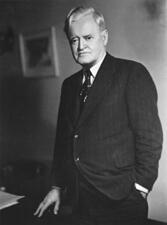
Here you will find contact information for Senator Clyde Martin Reed, including email address, phone number, and mailing address.
| Name | Clyde Martin Reed |
| Position | Senator |
| State | Kansas |
| Party | Republican |
| Status | Former Representative |
| Term Start | January 3, 1939 |
| Term End | November 8, 1949 |
| Terms Served | 2 |
| Born | October 19, 1871 |
| Gender | Male |
| Bioguide ID | R000112 |
About Senator Clyde Martin Reed
Clyde Martin Reed (October 19, 1871 – November 8, 1949) was an American politician from Kansas who served as the 24th governor of Kansas and as a United States senator from that state. A member of the Republican Party, he represented Kansas in the U.S. Senate from 1939 until his death in 1949, contributing to the legislative process during two terms in office and participating in the democratic process on behalf of his constituents during a significant period in American history.
Reed was born in Champaign County, Illinois, on October 19, 1871. When he was four years old, his family moved to Kansas, where he was raised and received a basic education in the public schools. After completing his schooling, he taught in a local school for one year before entering federal service. In 1891 he married Minnie E. Hart; the couple had ten children, and Kansas remained the center of his family and professional life for the rest of his career.
Following his brief period as a schoolteacher, Reed embarked on a long career in the federal postal service that lasted roughly three decades. He began as an employee in the railway mail service and advanced steadily through the system, ultimately becoming superintendent of several railway mail districts throughout the Midwest. He later rose to the position of superintendent in the Railway Adjustment Division of the Post Office Department, gaining extensive administrative and managerial experience. This work brought him into contact with transportation, labor, and regulatory issues that would later inform his public service in Kansas government.
Reed’s transition into state politics and journalism began in 1910, when he became the personal secretary to Kansas Governor Henry J. Allen in Topeka. Allen was also the owner and publisher of the Wichita Beacon, and Reed’s association with him introduced Reed to the newspaper business and to the inner workings of state government. In 1914 Reed purchased a controlling interest in the Parsons Sun newspaper in Parsons, Kansas. He became its publisher and maintained that role for the rest of his life, using the paper as both a business enterprise and a platform for civic engagement and public affairs commentary.
In addition to his newspaper work, Reed held several important state regulatory and judicial-administrative posts in the early 1920s. He served on the Kansas Industrial Court from 1920 to 1921, a body created to address industrial disputes and labor issues, and then as a member of the Kansas Public Utilities Commission from 1921 to 1924, where he dealt with the regulation of public service corporations. These positions enhanced his reputation as a progressive-minded public official with experience in labor relations and public regulation, and they helped lay the groundwork for his later statewide electoral success.
Reed was elected the 24th governor of Kansas in 1928 and took office in January 1929, having campaigned as an extremely progressive candidate within the Republican Party. His governorship coincided almost immediately with the onset of the Great Depression following the stock market crash of October 1929. In response to the mounting economic crisis and the hardships faced by Kansans, Reed called an extra session of the state legislature to address unemployment, financial distress, and related social problems. Despite his efforts, he was defeated in his bid for renomination in 1930 and left the governorship after a single term, returning to his work as editor and publisher of the Parsons Sun.
Reed’s return to high office came in the late 1930s amid a contentious political climate. In 1938, when the anti-Semitic preacher Gerald B. Winrod appeared likely to win the Republican nomination for the United States Senate from Kansas, mainstream Republican leaders and other political figures sought an alternative candidate who could unify the party and block Winrod’s nomination. Reed, by then a well-known former governor and newspaper publisher, was recruited to run. He secured the Republican nomination, defeated incumbent Democratic Senator George McGill in the general election, and entered the U.S. Senate in January 1939. He was reelected in 1944. During his Senate tenure, he served alongside fellow Kansas senator and former governor Arthur Capper. In 1942 Reed attempted to obtain the Republican nomination for governor of Kansas again but was unsuccessful, and he continued his service in the Senate instead.
As a United States senator from 1939 to 1949, Reed served during a period that encompassed the end of the Great Depression, the entirety of World War II, and the beginning of the postwar era. A Republican representing a largely agricultural state, he participated in debates and legislation affecting wartime mobilization, economic recovery, and the evolving role of the federal government. Throughout his two terms, he remained closely connected to Kansas through his ongoing involvement with the Parsons Sun and his regular returns to the state, maintaining a dual identity as both national legislator and local newspaper publisher.
Clyde Martin Reed died in office on November 8, 1949, while on a visit home to Kansas from his Senate duties in Washington, D.C. At the time of his death he was still serving his second term in the United States Senate. He was interred at Oakwood Cemetery in Parsons, Kansas. His career, spanning federal civil service, state regulatory bodies, the governorship, newspaper publishing, and a decade in the U.S. Senate, reflected a lifelong engagement with public affairs at both the state and national levels.