Representative Clyde Harold Smith
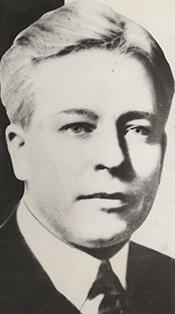
Here you will find contact information for Representative Clyde Harold Smith, including email address, phone number, and mailing address.
| Name | Clyde Harold Smith |
| Position | Representative |
| State | Maine |
| District | 2 |
| Party | Republican |
| Status | Former Representative |
| Term Start | January 5, 1937 |
| Term End | January 3, 1941 |
| Terms Served | 2 |
| Born | June 9, 1876 |
| Gender | Male |
| Bioguide ID | S000523 |
About Representative Clyde Harold Smith
Clyde Harold Smith (June 9, 1876 – April 8, 1940) was a United States Representative from Maine who served in Congress from 1937 until his death in 1940. A member of the Republican Party, he represented his constituents during two terms in the House of Representatives at a significant period in American history, contributing to the legislative process during the later years of the Great Depression and the early stages of the New Deal era.
Smith was born on a farm near Harmony, Maine, on June 9, 1876. In 1891 he moved with his parents to Hartland, Maine, where he attended the rural schools and Hartland Academy. After completing his schooling, he taught in local schools, beginning a lifelong involvement in public service and community affairs that would later characterize his political career.
Smith entered public life at an early age. He was first elected to the Maine House of Representatives, serving from 1899 to 1903. In 1901 he entered the retail clothing and hardware business in Hartland, combining commercial pursuits with his legislative responsibilities. From 1903 to 1906 he served as Hartland’s superintendent of schools, reflecting his continued interest in education. Between 1904 and 1907 he was also a member of the Hartland board of selectmen, further deepening his experience in local government.
In the mid-1900s Smith moved to Skowhegan, Maine, after being elected sheriff of Somerset County. He served as sheriff from 1905 to 1909, a position that broadened his experience in law enforcement and county administration. In Skowhegan he engaged in the retail sale of automobiles and in the hardware and plumbing business, and he also entered the newspaper publishing field. Over time he expanded his business interests to include banking and real estate, establishing himself as a prominent local businessman as well as a public official.
Smith returned to state-level politics in the 1910s and 1920s. He again served in the Maine House of Representatives from 1919 to 1923, and he was a member of the Skowhegan board of selectmen from 1914 to 1932, providing nearly two decades of continuous local leadership. He was elected to the Maine State Senate, serving from 1923 to 1929. During his Senate tenure he became known as an ardent opponent of the Ku Klux Klan, which was then in ascendency in parts of Maine and across the nation, and he took a public stand against its influence in state politics. From 1928 to 1932 he served as chairman of the Maine State Highway Commission, overseeing transportation and infrastructure matters, and from 1933 to 1937 he was a member of the Governor’s Council, advising the state’s chief executive on a wide range of governmental issues.
Building on this extensive record of local and state service, Smith was elected as a Republican to the Seventy-fifth and Seventy-sixth Congresses. He served in the U.S. House of Representatives from January 3, 1937, until his death on April 8, 1940. During his time in Congress, he participated in the democratic process and represented the interests of his Maine constituents as the federal government grappled with economic recovery measures and evolving domestic and international challenges. His tenure placed him among those members of Congress who served and died in office during the first half of the twentieth century.
Clyde Harold Smith died in Washington, D.C., on April 8, 1940, while still in office. He was interred in Pine Grove Cemetery in Hartland, Maine, returning to the community where he had grown up and begun his public career. Following his death, his wife, Margaret Chase Smith, was elected to fill the vacancy in the House of Representatives caused by his passing. She later went on to serve in the United States Senate, becoming one of the most prominent female legislators of her era and extending the Smith family’s influence in Maine and national politics.