Senator Coe Isaac Crawford
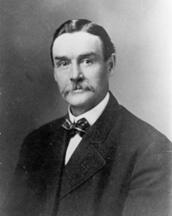
Here you will find contact information for Senator Coe Isaac Crawford, including email address, phone number, and mailing address.
| Name | Coe Isaac Crawford |
| Position | Senator |
| State | South Dakota |
| Party | Republican |
| Status | Former Representative |
| Term Start | March 15, 1909 |
| Term End | March 3, 1915 |
| Terms Served | 1 |
| Born | January 14, 1858 |
| Gender | Male |
| Bioguide ID | C000888 |
About Senator Coe Isaac Crawford
Coe Isaac Crawford (January 14, 1858 – April 25, 1944) was an American attorney and Republican politician from South Dakota who served as the sixth Governor of South Dakota and as a United States Senator. He represented South Dakota in the U.S. Senate from 1909 to 1915, serving one term in Congress during a significant period in American political and economic development. Over the course of his career, he played a prominent role in the early political life of South Dakota, both before and after it achieved statehood.
Crawford was born near Volney, in Allamakee County, Iowa, where he attended the common schools and received additional instruction from a private tutor. Pursuing a legal education, he enrolled at the University of Iowa College of Law and graduated in 1882 with an LL.B. degree. Shortly after his admission to the bar, he began the practice of law in Independence, Iowa. In 1883, seeking new opportunities on the frontier, he moved to Pierre in the Dakota Territory, where he continued his legal practice and entered public life.
Active in Republican politics, Crawford quickly emerged as a local leader in the Dakota Territory. He served as prosecuting attorney for Hughes County in 1887 and 1888, gaining experience in public prosecution and county affairs. In 1889, he was elected to the Territorial Council, the upper house of the Dakota Territorial Legislature, participating in the final phase of territorial governance before statehood. When South Dakota was admitted to the Union later in 1889, Crawford was elected as a member of the first South Dakota State Senate, helping to shape the initial legislative framework of the new state. He subsequently served as Attorney General of South Dakota from 1893 to 1897, a period in which he was responsible for representing the state’s legal interests and enforcing its laws.
Crawford sought to extend his public service to the national level when he ran for a seat in the United States House of Representatives from South Dakota in 1896, but he was unsuccessful in that election. After this defeat, he moved to Huron, South Dakota, where he continued his legal career. From 1897 to 1903 he served as an attorney for the Chicago & North Western Railway, advising one of the major rail carriers in the region. He resigned that position in 1903, returning more fully to independent legal practice and political activity, and became identified with reform elements within the state Republican Party.
In 1906, Crawford secured the Republican nomination for Governor of South Dakota and won the general election. He served as the sixth Governor from 1907 to 1909, a tenure that coincided with the broader Progressive Era in American politics. As governor, he was part of the movement to modernize state government and address issues arising from rapid economic growth and railroad expansion. In 1908, while still serving as governor, he successfully ran for a seat in the United States Senate as a Republican. He entered the Senate in 1909, representing South Dakota in the 61st through 63rd Congresses, and served one term until 1915. During his time in the Senate, he contributed to the legislative process and represented the interests of his South Dakota constituents at a time marked by debates over tariffs, regulation of business, and other progressive reforms. He was an unsuccessful candidate for renomination in 1914, bringing his Senate career to a close at the end of his term.
After leaving the Senate in 1915, Crawford returned to Huron, South Dakota, where he resumed the practice of law. He remained active in his profession until 1934, when he retired from active business and political life. His long legal and political career had spanned the transition from territorial governance to statehood and the emergence of South Dakota as a settled agricultural and railroad state.
In his personal life, Crawford was married twice, first to May Robinson and later to Lavinia Robinson, and he was the father of five children. He spent his final years in South Dakota and died in Yankton on April 25, 1944. He was buried in Oakland Cemetery in Iowa City, Iowa, returning in death to the state where he had received his legal education and begun his professional life.