Representative Compton Ignatius White
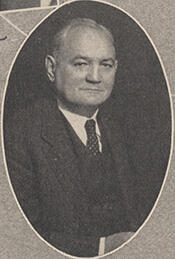
Here you will find contact information for Representative Compton Ignatius White, including email address, phone number, and mailing address.
| Name | Compton Ignatius White |
| Position | Representative |
| State | Idaho |
| District | 1 |
| Party | Democratic |
| Status | Former Representative |
| Term Start | March 9, 1933 |
| Term End | January 3, 1951 |
| Terms Served | 8 |
| Born | July 31, 1877 |
| Gender | Male |
| Bioguide ID | W000361 |
About Representative Compton Ignatius White
Compton Ignatius White, Sr. (July 31, 1877 – March 31, 1956), was a Democratic U.S. Representative from northern Idaho who represented Idaho’s 1st congressional district for a total of eight terms between 1933 and 1951 and chaired a committee of the House. Born in Baton Rouge, Louisiana, he moved with his family in early childhood to Rankin County, Mississippi, and then, in 1890, to Clark Fork, Idaho. Growing up in the rural West, he delivered newspapers while attending public schools, an experience that helped support his family and introduced him to the communities he would later represent. Seeking further education, he attended Metropolitan Business College in Chicago, Illinois, and then Gonzaga College in Spokane, Washington, from which he graduated in 1897.
After completing his education, White embarked on a varied early career closely tied to the developing infrastructure and natural resource economy of the Pacific Northwest. He worked on railroads in a number of capacities—trainman, conductor, and telegraph operator—until 1910, gaining practical experience in transportation and communications at a time when both were critical to regional growth. Leaving railroad work, he turned to lumber, mining, and livestock raising, occupations that rooted him firmly in Idaho’s extractive and agricultural sectors. He also entered local public service as a member of the Clark Fork Board of Trustees, building a base of civic experience and local recognition.
White’s fortunes changed dramatically in 1925 when a valuable galena ore deposit was discovered on his property. The mine provided his family with a small fortune and gave him the financial independence and prominence necessary to become a significant figure in Idaho politics. He emerged as an active Democrat and was selected as a delegate to the Democratic National Conventions in 1928, 1932, and 1936, during which he rose to statewide and then national prominence within the party. His growing influence reflected both his personal wealth and his close identification with the interests of miners, farmers, and other rural constituents in northern Idaho.
White first sought national office in the 1930 election, when he secured the Democratic nomination for Idaho’s 1st congressional district but was decisively defeated by the longtime Republican incumbent, Burton L. French of Moscow. Undeterred, he ran again in 1932, a year marked by Franklin D. Roosevelt’s sweeping victory and the onset of the New Deal realignment. In that election, White again faced French, and this time he unseated the veteran congressman as Roosevelt’s landslide extended deep into traditionally Republican areas. Compton Ignatius White served as a Representative from Idaho in the United States Congress from 1933 to 1951. A member of the Democratic Party, he contributed to the legislative process during eight terms in office, representing the interests of his constituents during a period that encompassed the Great Depression, the New Deal, World War II, and the early Cold War.
During his congressional service, White became closely associated with New Deal policies and with efforts to support rural and agricultural communities. Like many rural politicians during the Great Depression, he sought legislation that would enable farmers in Idaho to stabilize their finances and enhance their agricultural output. He was a strong supporter of President Franklin D. Roosevelt’s New Deal, which brought federal relief, recovery, and reform programs to thousands of families in Idaho between 1933 and 1939. Reflecting his deep interest in water development and agricultural reclamation, he chaired the now-defunct House Committee on Irrigation and Reclamation and also served on the Committee on Coins, Weights and Measures. His leadership on irrigation and reclamation issues helped direct federal investment toward transforming arid lands into productive farmland in Idaho and the broader Pacific Northwest.
One of White’s major legislative accomplishments was his role in securing federal acceptance and use of silver certificates by the Department of the Treasury. He was a key advocate for the American Silver Purchase Act of 1934, which required the federal government to purchase silver at prices above the prevailing market rate. This policy was a significant victory for White and for the silver mining industry in Idaho, Montana, and Colorado, as it enabled many mine operators to remain in business during the depths of the Great Depression. In addition to his work on silver policy, he was instrumental in advancing large-scale irrigation and hydroelectric projects in the region. He played a notable role in bringing the Bonneville Dam project, authorized in 1938, and the Grand Coulee Dam project, advanced in 1941, to fruition, helping to secure cheap power, irrigation water, and economic development for the Pacific Northwest.
White’s congressional record also reflected the racial attitudes of his upbringing in the post-Reconstruction South. Although he had left Mississippi with his family at a relatively early age, he deeply internalized the racial views of his birthplace. During the 1943 congressional debate over the repeal of the Chinese Exclusion Act, he vehemently opposed repeal and railed against Chinese immigrants, asserting that “There is no melting pot in America that can change their habits or change their mentality.” This stance placed him among those legislators who resisted liberalization of U.S. immigration policy during World War II and underscored the persistence of racial prejudice in mid‑twentieth‑century American politics.
Politically resilient but not invulnerable, White’s long tenure in Congress was punctuated by electoral setbacks. He sought re-election to what would have been an eighth consecutive term in the 1946 race but was narrowly defeated by Republican Abe M. Goff of Moscow, reflecting the broader national Republican resurgence in the immediate postwar period. In the 1948 election, however, White defeated Goff and returned to the House, though he had lost the seniority that had previously enhanced his influence and committee standing. In 1950, he attempted to advance to the U.S. Senate by seeking the Democratic nomination, but the nomination went instead to D. Worth Clark of Pocatello. At age seventy-five, he made one final bid for elective office in 1952, seeking the Democratic nomination to regain his House seat in the 1st District, but he lost the primary to Gracie Pfost of Nampa. After this defeat, he retired from public life.
In his later years, White resided in Spokane, Washington, where he lived for the last three years of his life. He died there on March 31, 1956, and was buried in the family cemetery in Clark Fork, Idaho, returning in death to the community that had shaped his early life and political identity. His public legacy in Idaho politics was extended through his only son, Compton I. White, Jr. (1920–1998), who was elected as a Democrat to represent Idaho’s 1st congressional district in Congress in 1962 and 1964. The younger White was defeated in subsequent elections in 1966 and 1968, but his service underscored the family’s continuing role in the political life of northern Idaho.