Representative Constantine Buckley Kilgore
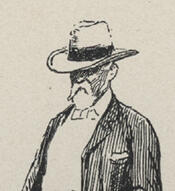
Here you will find contact information for Representative Constantine Buckley Kilgore, including email address, phone number, and mailing address.
| Name | Constantine Buckley Kilgore |
| Position | Representative |
| State | Texas |
| District | 3 |
| Party | Democratic |
| Status | Former Representative |
| Term Start | December 5, 1887 |
| Term End | March 3, 1895 |
| Terms Served | 4 |
| Born | February 20, 1835 |
| Gender | Male |
| Bioguide ID | K000173 |
About Representative Constantine Buckley Kilgore
Constantine Buckley Kilgore (February 20, 1835 – September 23, 1897) was a Democratic politician, jurist, and U.S. Representative from Texas who served four consecutive terms in Congress from 1887 to 1895. His public career spanned the Reconstruction and post-Reconstruction eras, during which he held local, state, and federal offices and became known as a forceful and sometimes dramatic participant in legislative proceedings.
Kilgore was born on February 20, 1835. Details of his early life and formal education are not extensively documented in the surviving public record, but he came of age in the antebellum South and entered adulthood in a period of profound political and social upheaval. By the late 1860s, in the years following the Civil War, he had established himself sufficiently in his community to begin a career in public service.
In 1869, Kilgore was elected justice of the peace, marking his first known public office and introducing him to the practical administration of local law and governance during Reconstruction. His prominence in the region grew rapidly. In 1872, the city of Kilgore, Texas, was named in his honor after the International–Great Northern Railroad acquired land for a depot, reflecting his standing and influence in the area. He further advanced his political career as a delegate to the Texas constitutional convention of 1875, where he participated in framing the state’s post-Reconstruction constitutional order.
Kilgore’s state-level career culminated in his election to the Texas Senate in 1884 for a four-year term. In 1885 he was chosen president of the Senate, a position he held for two years. As presiding officer of the upper chamber of the Texas Legislature, he exercised significant influence over legislative procedure and the shaping of state policy. He resigned from the State Senate in 1886 after winning election to the United States House of Representatives, transitioning from state to national office at a time when Texas was consolidating its political and economic position in the postwar South.
Elected as a Democrat, Kilgore served in the Fiftieth and the three succeeding Congresses, holding office from March 4, 1887, to March 3, 1895. During these four terms, he represented Texas in the U.S. House of Representatives and contributed to the legislative process in a period marked by debates over tariffs, monetary policy, and federal authority. His service in Congress occurred during a significant period in American history, and he participated actively in the democratic process, representing the interests of his constituents. Kilgore became particularly noted for his role in the procedural struggles of the House under Speaker Thomas Brackett Reed. In 1890, when Reed moved to end the “silent filibuster” by counting members present but not voting toward a quorum, Kilgore famously attempted to avoid being counted by kicking through a locked door to escape the House chamber, an incident that underscored both his opposition to the new rules and his reputation for physical and political vigor.
After leaving Congress in 1895, Kilgore continued his public service in the federal judiciary. President Grover Cleveland appointed him judge for the southern district of the United States Court for the Indian Territory, a jurisdiction encompassing a large area that would later become part of the state of Oklahoma. He assumed this office on March 20, 1895, and served on the bench until his death. In this role, he presided over a wide range of civil and criminal matters in a frontier legal environment, applying federal law in a region undergoing rapid demographic and economic change.
Constantine Buckley Kilgore died in Ardmore, Indian Territory (now Oklahoma), on September 23, 1897, while still serving as a federal judge. He was interred at White Rose Cemetery in Wills Point, Texas. His career, spanning local office, state legislative leadership, four terms in the U.S. House of Representatives, and a federal judgeship, reflected the trajectory of a Southern Democrat who helped shape both Texas and national institutions in the late nineteenth century.