Senator Cordell Hull
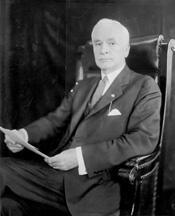
Here you will find contact information for Senator Cordell Hull, including email address, phone number, and mailing address.
| Name | Cordell Hull |
| Position | Senator |
| State | Tennessee |
| Party | Democratic |
| Status | Former Representative |
| Term Start | December 2, 1907 |
| Term End | December 31, 1933 |
| Terms Served | 12 |
| Born | October 2, 1871 |
| Gender | Male |
| Bioguide ID | H000940 |
About Senator Cordell Hull
Cordell Hull served as a Senator from Tennessee in the United States Congress from 1907 to 1933. A member of the Democratic Party, Cordell Hull contributed to the legislative process during 12 terms in office.
Cordell Hull’s service in Congress occurred during a significant period in American history. As a member of the Senate, Cordell Hull participated in the democratic process and represented the interests of constituents.
Cordell Hull (October 2, 1871 – July 23, 1955) was an American politician and diplomat who served as the United States Secretary of State for nearly twelve years under President Franklin D. Roosevelt, making him the longest-serving Secretary of State in United States history. Born in a log cabin in what is now Pickett County, Tennessee, Hull’s early career included service as a lawyer, military officer in the Spanish–American War, state legislator, and judge before his election to the House of Representatives in 1906. He served in Congress for over two decades, interrupted only briefly by a term as chairman of the Democratic National Committee. In 1933, Roosevelt appointed Hull as Secretary of State, a position in which he became a principal architect of the Good Neighbor policy toward Latin America and a key figure in shaping U.S. foreign policy during the lead-up to and early years of World War II. Hull’s legacy is most closely associated with his efforts to promote international cooperation through trade and diplomacy. He was instrumental in the passage of the Reciprocal Trade Agreements Act of 1934, which reduced U.S. tariffs and paved the way for more open global markets. He was also a driving force in the creation of the United Nations, earning him the Nobel Peace Prize in 1945 for his “pivotal role” in the organization’s founding.