Representative Cornelius Amory Pugsley
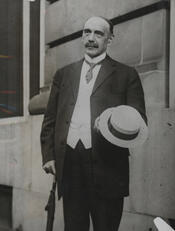
Here you will find contact information for Representative Cornelius Amory Pugsley, including email address, phone number, and mailing address.
| Name | Cornelius Amory Pugsley |
| Position | Representative |
| State | New York |
| District | 16 |
| Party | Democratic |
| Status | Former Representative |
| Term Start | December 2, 1901 |
| Term End | March 3, 1903 |
| Terms Served | 1 |
| Born | July 17, 1850 |
| Gender | Male |
| Bioguide ID | P000565 |
About Representative Cornelius Amory Pugsley
Cornelius Amory Pugsley Sr. (July 17, 1850 – September 10, 1936) was an American banker, civic leader, and Democratic politician who served as a Representative from New York in the United States Congress from 1901 to 1903. He was born in Peekskill, Westchester County, New York, where he spent much of his life and became closely identified with the civic and financial development of the region. Raised in the mid-nineteenth century in a growing Hudson River community, he entered the workforce at a young age, gaining early experience that would shape his later career in banking, public service, and conservation.
Pugsley was educated in the public schools of Peekskill and, like many of his contemporaries, combined formal schooling with practical employment. As a young man he worked in various local positions, including in the postal service, where he served as assistant postmaster and later postmaster of Peekskill. These early roles introduced him to public administration and the needs of his community, and they helped establish his reputation as a capable and trustworthy local official. His experience in local government and business affairs laid the groundwork for his later prominence in banking and politics.
Transitioning from public administration into finance, Pugsley became active in the banking industry in Westchester County. Over time he rose to positions of leadership in local financial institutions, reflecting both his business acumen and his growing influence in New York’s banking circles. His standing in the profession culminated in his election as President of the New York State Bankers Association in 1913, a role in which he represented the interests of banks across the state during a period of significant economic and regulatory change. His leadership in the association underscored his expertise in financial matters and his stature among his peers in the banking community.
Pugsley’s political career reached its peak with his election as a Democrat to the United States House of Representatives. A member of the Democratic Party, he was elected from New York’s 16th congressional district and served one term in the Fifty-seventh Congress, from March 4, 1901, to March 3, 1903. During this significant period in American history, marked by the nation’s emergence as an international power and the early stirrings of the Progressive Era, Pugsley contributed to the legislative process and participated in the democratic governance of the country. As a member of the House of Representatives, he represented the interests of his constituents from the lower Hudson Valley region, engaging in debates and votes on issues of national importance. Although he served only a single term, his tenure placed him among the ranks of New York Democrats who helped shape federal policy at the turn of the twentieth century.
After leaving Congress, Pugsley returned to his business and civic pursuits in New York. He remained active in banking and continued to be involved in public affairs, philanthropy, and community development. His interests extended beyond finance and politics to include public parks and conservation, areas in which he became a notable advocate. Drawing on his belief in the public value of open spaces and recreation, he supported efforts to preserve and enhance parklands for the benefit of future generations.
In 1928, Pugsley created what became known as the Pugsley Medal to honor champions of parks and conservation. This award, established late in his life, reflected his commitment to the conservation movement and his recognition of the importance of public parks in American civic life. The medal was conceived as a means of acknowledging individuals who made outstanding contributions to the development, protection, and improvement of parks and recreational spaces. Through this initiative, Pugsley helped to encourage and celebrate leadership in conservation at a time when public awareness of environmental and recreational issues was steadily increasing.
Cornelius Amory Pugsley spent his later years continuing his involvement in civic and conservation causes while maintaining his ties to the financial and political communities of New York. He remained a respected figure in Peekskill and in state circles, known for his service in Congress, his leadership in banking, and his advocacy for parks. He died on September 10, 1936, leaving a legacy that combined public service, professional achievement, and a lasting contribution to the conservation of public spaces through the Pugsley Medal.