Representative Curtis Hussey Gregg
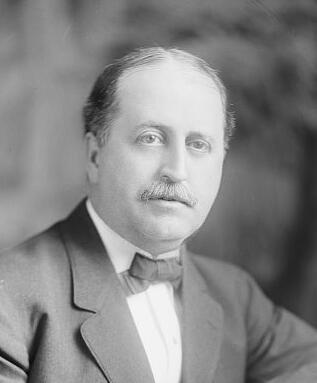
Here you will find contact information for Representative Curtis Hussey Gregg, including email address, phone number, and mailing address.
| Name | Curtis Hussey Gregg |
| Position | Representative |
| State | Pennsylvania |
| District | 22 |
| Party | Democratic |
| Status | Former Representative |
| Term Start | April 4, 1911 |
| Term End | March 3, 1913 |
| Terms Served | 1 |
| Born | August 9, 1865 |
| Gender | Male |
| Bioguide ID | G000443 |
About Representative Curtis Hussey Gregg
Curtis Hussey Gregg (August 9, 1865 – January 18, 1933) was a Democratic member of the U.S. House of Representatives from Pennsylvania. He was born in Adamsburg, Pennsylvania, and spent his formative years in Westmoreland County. He attended Greensburg Seminary in Greensburg, Pennsylvania, receiving an education that prepared him for a career in teaching, journalism, law, and public service.
After completing his studies, Gregg was engaged in teaching and entered the field of journalism, serving as associate editor of the Greensburg Evening Press from 1883 to 1887. During this period he became closely acquainted with local affairs and public issues, experience that would later inform his political career. He subsequently studied law, was admitted to the bar in 1888, and commenced the practice of law in Greensburg, Pennsylvania.
Gregg quickly became active in local public life. He served as district attorney of Westmoreland County, Pennsylvania, in 1891, gaining prosecutorial and administrative experience. He was a member of the school board of Greensburg from 1892 to 1896, reflecting his continuing interest in education. Within the Democratic Party, he emerged as an influential local leader, serving as a delegate to the Democratic State conventions in 1892, 1894, and 1896. He also became chairman of the Democratic county committee in Westmoreland County in 1896, a position he held continuously until 1913, overseeing party organization and strategy at the county level.
In addition to his party and legal work, Gregg held municipal office. He was a member of the council of the borough of Greensburg from 1901 to 1905, participating in the governance and development of the community where he lived and practiced law. He sought higher office as a Democrat, but was an unsuccessful candidate in 1900 for election to the Fifty-seventh Congress and again in 1904 for election to the Pennsylvania State Senate. His prominence in party affairs extended beyond the state level, and he served as a delegate to the Democratic National Convention in 1908, taking part in the national deliberations of his party.
Gregg was elected as a Democrat to the Sixty-second Congress and served as a Representative from Pennsylvania in the United States Congress from March 4, 1911, to March 3, 1913. During this single term in office, he contributed to the legislative process as a member of the House of Representatives, participating in the democratic process and representing the interests of his constituents during a significant period in American history. A member of the Democratic Party, he was part of the congressional delegation during the transition from the Taft administration to the Wilson era. He was an unsuccessful candidate for renomination in 1912, which ended his service in Congress after one term.
Following his departure from Congress, Gregg returned to Greensburg and reengaged in the practice of law. He remained active in Democratic politics and continued to be recognized as a party figure, later serving again as a delegate to the Democratic National Conventions in 1928 and 1932. He continued his legal and civic activities in Greensburg until his death there on January 18, 1933, at the age of 67. Curtis Hussey Gregg was interred in St. Clair Cemetery in Greensburg, Pennsylvania.