Representative Cyrus Cline
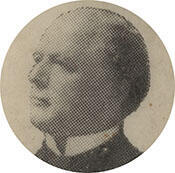
Here you will find contact information for Representative Cyrus Cline, including email address, phone number, and mailing address.
| Name | Cyrus Cline |
| Position | Representative |
| State | Indiana |
| District | 12 |
| Party | Democratic |
| Status | Former Representative |
| Term Start | March 15, 1909 |
| Term End | March 3, 1917 |
| Terms Served | 4 |
| Born | July 12, 1856 |
| Gender | Male |
| Bioguide ID | C000521 |
About Representative Cyrus Cline
Cyrus Cline (July 12, 1856 – October 5, 1923) was an American lawyer, educator, and Democratic politician who served four terms as a U.S. Representative from Indiana from 1909 to 1917. His congressional service took place during a significant period in American history, as the nation confronted rapid industrialization, progressive-era reforms, and the approach of World War I. Throughout his tenure in the House of Representatives, he participated in the legislative process and represented the interests of his Indiana constituents.
Cline was born near Mansfield, Richland County, Ohio, on July 12, 1856. In 1858, when he was still a small child, he moved with his parents to Steuben County, Indiana, where the family settled near the town of Angola. Growing up in northeastern Indiana, he was educated in the local schools and attended Angola High School. His early life in a rural Midwestern community helped shape his familiarity with the concerns of small-town and agricultural voters whom he would later represent in Congress.
Pursuing higher education, Cline enrolled at Hillsdale College in Hillsdale, Michigan, an institution known for its classical curriculum and emphasis on civic responsibility. He graduated from Hillsdale College in 1876. Soon after completing his degree, he embarked on a career in education. From 1877 to 1883, he served as superintendent of schools for Steuben County, Indiana. In this role, he oversaw the administration and improvement of local public schools, gaining experience in public service and local governance that would inform his later political career.
While working in education, Cline studied law, preparing for admission to the bar. In 1884 he was admitted to the bar and commenced the practice of law in Angola, Indiana. Establishing himself as a practicing attorney, he became a well-known figure in the community. His legal practice, combined with his earlier experience as an educator and school administrator, provided him with a broad understanding of both the legal system and the needs of his fellow citizens, positioning him for entry into elective office as a member of the Democratic Party.
Cline was elected as a Democrat to the Sixty-first Congress and was subsequently reelected to the three succeeding Congresses, serving from March 4, 1909, to March 3, 1917. During his four terms in the U.S. House of Representatives, he contributed to the legislative process at a time when Congress was addressing issues such as tariff reform, banking and currency legislation, and regulatory measures associated with the Progressive Era. He took part in debates and votes that shaped national policy in the years leading up to American involvement in World War I, and he worked to represent the interests of his Indiana district within the broader national context.
During the Sixty-second Congress, which met from 1911 to 1913, Cline held a leadership role as chairman of the Committee on Expenditures on Public Buildings. In this capacity, he was responsible for overseeing federal spending related to the construction, maintenance, and improvement of public buildings, reflecting both his party’s concern with governmental accountability and his own interest in efficient public administration. His committee work placed him at the center of efforts to supervise and scrutinize federal expenditures during a period of expanding governmental activity.
Cline’s congressional career came to an end when he was an unsuccessful candidate for reelection in 1916. After leaving office on March 3, 1917, he returned to Angola, Indiana, and resumed the practice of law. He continued to be a respected member of the local bar and community, drawing on decades of experience in education, law, and public service. Cyrus Cline died in Angola on October 5, 1923. He was interred in Circle Hill Cemetery in Angola, Indiana, closing a life marked by sustained engagement in public affairs at the local and national levels.