Representative Dan Benishek
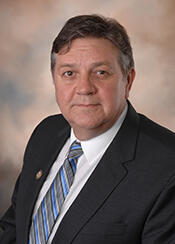
Here you will find contact information for Representative Dan Benishek, including email address, phone number, and mailing address.
| Name | Dan Benishek |
| Position | Representative |
| State | Michigan |
| District | 1 |
| Party | Republican |
| Status | Former Representative |
| Term Start | January 5, 2011 |
| Term End | January 3, 2017 |
| Terms Served | 3 |
| Born | April 20, 1952 |
| Gender | Male |
| Bioguide ID | B001271 |
About Representative Dan Benishek
Daniel Joseph Benishek (April 20, 1952 – October 15, 2021) was an American physician and politician who served three terms as the U.S. representative for Michigan’s 1st congressional district from 2011 to 2017. A member of the Republican Party, he represented a vast, largely rural district encompassing Michigan’s Upper Peninsula and much of the northern Lower Peninsula, contributing to the legislative process during a significant period in American history.
Benishek was born in Iron River, Michigan, on April 20, 1952, the son of Helen (née Kovaleski) and Joseph Benishek. Three of his paternal great-grandparents were Bohemian (Czech) immigrants, while his maternal grandparents were Polish immigrants, giving him deep roots in the region’s Central European immigrant community. His father was killed in a local iron mine accident in 1957, when Benishek was a small child, and he was subsequently raised by his widowed mother and extended family. Growing up in Iron River, he worked in the family business, the Iron River Hotel, until he left for college, experiences that helped shape his identification with small-town life and working-class concerns.
Benishek attended the University of Michigan, where he graduated in 1974 with a Bachelor of Science in medicine. He then enrolled at Wayne State University School of Medicine in Detroit, earning his medical degree in 1978. Following medical school, he completed his training and established himself as a practicing physician in northern Michigan. Prior to his election to Congress, Benishek worked as a general surgeon in the Dickinson County Healthcare System, serving patients across a wide geographic area in the Upper Peninsula. His long medical career, centered in a rural region with limited access to specialized care, later informed his views on health policy and veterans’ health services.
Benishek’s entry into electoral politics was closely tied to national debates over federal spending and health care reform. He was inspired to run for Congress after the American Recovery and Reinvestment Act of 2009 was signed into law and became more widely known following the contentious passage of the Patient Protection and Affordable Care Act in March 2010. On March 16, 2010, he formally announced his candidacy for Congress, challenging incumbent Democrat Bart Stupak in Michigan’s 1st congressional district. Stupak’s vote in support of the Affordable Care Act sparked an outpouring of conservative and grassroots support for Benishek, who at the time had only a basic campaign website and virtually no Internet presence. In the 48 hours following Stupak’s vote on March 21, 2010, Benishek received more than $50,000 in unsolicited donations. The American Spectator, reflecting the surge of attention, dubbed him “The Most Popular Republican in America” on March 21, 2010. Stupak announced his retirement on April 9, 2010, leaving the seat open. In the Republican primary, Benishek narrowly defeated State Senator Jason Allen by 15 votes. In the general election on November 2, 2010, he prevailed over Democratic State Representative Gary McDowell, Independent Glenn Wilson, Libertarian Keith Shelton, Green Party candidate Ellis Boal, and U.S. Taxpayers Party candidate Patrick Lambert. Benishek was sworn into office on January 5, 2011, as a member of the 112th United States Congress, succeeding Bart Stupak.
During his three terms in Congress, from 2011 to 2017, Benishek participated actively in the legislative process and represented the interests of his largely rural and veteran-heavy constituency. He served on the House Committee on Natural Resources, including the Subcommittee on Energy and Mineral Resources and the Subcommittee on Indian and Alaska Native Affairs, reflecting the district’s extensive federal lands, natural resources, and tribal communities. He also served on the House Committee on Veterans’ Affairs, where he sat on the Subcommittee on Health and the Subcommittee on Oversight and Investigations, roles that drew directly on his medical background and his focus on improving services for veterans. In the 2012 election cycle, Benishek again faced Gary McDowell. A Public Policy Polling survey on September 20, 2012, showed the race as a statistical dead heat, with McDowell leading 44 percent to 42 percent, but Benishek was re-elected by a margin of 2,297 votes, less than 1 percent of the total votes cast. He endorsed Herman Cain in the 2012 Republican presidential primary. In 2014, his Democratic opponent was Jerry Cannon. That October, the Rothenberg Political Report shifted its rating of the district from “tilts Republican” to “Republican favored,” and Benishek won reelection with 52 percent of the vote, which was the closest race for a victorious Republican incumbent in the 2014 cycle.
Benishek sponsored and supported legislation that reflected both his district’s environmental assets and his policy priorities on government accountability. On January 4, 2013, he introduced H.R. 163, a House bill identical to the Sleeping Bear Dunes National Lakeshore Conservation and Recreation Act (S. 23; 113th Congress), introduced in the Senate by Senator Carl Levin. The legislation designated approximately 32,500 acres of the Sleeping Bear Dunes National Lakeshore in Michigan as wilderness, creating the Sleeping Bear Dunes Wilderness as a new component of the National Wilderness Preservation System. Benishek praised the measure as having been “developed locally,” calling it “the ideal way federal land management should occur, with input from the local communities.” The Senate version, S. 23, passed the Senate and was signed into law by President Barack Obama on March 13, 2014. On May 21, 2013, Benishek introduced the Demanding Accountability for Veterans Act of 2013 (H.R. 2072; 113th Congress), which required the Inspector General of the Department of Veterans Affairs to take additional action if the department failed to respond appropriately to IG reports addressing public health or safety issues. The bill directed the Secretary of Veterans Affairs to act swiftly on such reports and prohibited bonuses for managers with unresolved problems. Benishek said the bill targeted “bureaucrats in Washington who drag their feet and don’t do their jobs,” underscoring his emphasis on oversight and accountability within the VA.
Ideologically, Benishek favored reduced government spending and a smaller federal government, and he consistently identified as pro-life and pro–gun rights. He opposed federal funding for elective abortions and supported tort reform and allowing health insurance companies to compete across state lines without additional federal regulation. He advocated lower taxes and increased border security and was skeptical of the scientific consensus on climate change. In 2012, he was endorsed by the National Rifle Association Political Victory Fund, and in 2014 he received an A+ rating and continued endorsement from the NRA. He was a vocal supporter of term limits, stating before his 2010 election that “three terms and you’re retired seems about right to me,” and signing a pledge backed by U.S. Term Limits to support a three-term cap for members of the House. In March 2015, however, he announced that he would break that pledge and run for a fourth term, before reversing himself in September 2015 and declaring that he would retire at the end of his third term rather than seek re-election in 2016. He subsequently endorsed Republican State Senator Tom Casperson as his preferred successor in the 1st district.
Outside of his public career, Benishek maintained close ties to his home region in Michigan’s Upper Peninsula. He lived with his wife, Judy, in Iron County, and the couple had five children. His extended family included investigative journalist Tony Kovaleski, who was his cousin. After leaving Congress in January 2017, Benishek returned to private life in northern Michigan, remaining identified with both his medical profession and his years of public service. He died suddenly on October 15, 2021, at the age of 69, from heart-related issues. His career placed him among the notable physicians who have served in the United States Congress, reflecting a blend of medical expertise and legislative service that shaped his approach to national policy and representation of Michigan’s 1st congressional district.