Representative Daniel Dewey Barnard
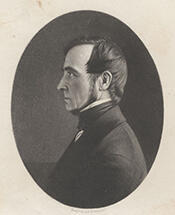
Here you will find contact information for Representative Daniel Dewey Barnard, including email address, phone number, and mailing address.
| Name | Daniel Dewey Barnard |
| Position | Representative |
| State | New York |
| District | 13 |
| Party | Whig |
| Status | Former Representative |
| Term Start | December 3, 1827 |
| Term End | March 3, 1845 |
| Terms Served | 4 |
| Born | July 16, 1797 |
| Gender | Male |
| Bioguide ID | B000152 |
About Representative Daniel Dewey Barnard
Daniel Dewey Barnard (July 16, 1797 – April 24, 1861) was an American politician, lawyer, diplomat, and a U.S. Representative from New York who served in the House of Representatives between 1827 and 1845. A prominent member of the Whig Party and an influential political intellectual of his era, he contributed to the legislative process during four terms in Congress and later represented the United States abroad as Envoy to Prussia.
Barnard was born in Sheffield, Massachusetts, the son of Timothy and Phebe (Dewey) Barnard. He attended local common schools before enrolling at Williams College in Williamstown, Massachusetts, from which he graduated in 1818. After college he studied law, was admitted to the bar in 1821, and commenced legal practice. He married Sara Livingstone in 1825, and following her death or the dissolution of that marriage, he married Catherine Walsh in 1832. Over the course of his life he was recognized for his learning and public service with honorary Doctor of Laws (LL.D.) degrees from Hobart College in 1834, Columbia College in 1845, and Brown University in 1853. He was also active in the intellectual life of New York as a member of the New-York Historical Society.
Barnard began his legal career in Rochester, New York, where he quickly gained prominence. In 1826 he was elected district attorney of Monroe County, New York, a position that brought him into public life and helped establish his reputation as a capable lawyer and advocate. His early legal and prosecutorial work in western New York laid the foundation for his subsequent entry into national politics.
Elected as an Adams candidate to the Twentieth Congress, Barnard served as U.S. Representative for the twenty-seventh district of New York from March 4, 1827, to March 3, 1829. His initial term in Congress occurred during a formative period in American political realignment following the presidency of John Quincy Adams. He was an unsuccessful candidate for reelection in 1828 to the Twenty-first Congress and, after leaving office, traveled in Europe in 1831. Upon his return he moved to Albany, New York, in 1832, where he continued the practice of law and became increasingly involved in state and national Whig politics. He served as a member of the New York State Assembly in 1838, further solidifying his role in public affairs.
Barnard returned to the U.S. House of Representatives as a member of the Whig Party, which he had joined as that party emerged in opposition to Jacksonian Democracy. He was elected to the Twenty-sixth, Twenty-seventh, and Twenty-eighth Congresses, serving from March 4, 1839, to March 3, 1845. During these three consecutive terms he represented New York in the House at a time of intense national debate over economic policy, executive power, and territorial expansion. He served as chairman of the Committee on the Judiciary during the Twenty-seventh Congress, a position that placed him at the center of legislative consideration of legal and constitutional issues. As a member of the House of Representatives, Daniel Dewey Barnard participated in the democratic process and represented the interests of his constituents during a significant period in American history. Not a candidate for reelection in 1844, he concluded his congressional career after eight years of continuous service in this later period and four terms in office overall.
A leading intellectual in the Whig Party, Barnard was widely regarded for his oratory and literary interests. He delivered notable addresses to the literary societies of Amherst College in 1839 and to the Phi Beta Kappa Society at Yale in 1846, reflecting his engagement with questions of education, republican virtue, and national development. He also gave the dedication address for Albany Rural Cemetery in 1844, an oration that underscored his stature as a public speaker and his connection to the civic life of Albany.
After leaving Congress, Barnard resumed the practice of law in Albany. In recognition of his abilities and experience, he was appointed Envoy to the Kingdom of Prussia, serving from September 3, 1850, to September 21, 1853. In this diplomatic post he represented American interests in one of the leading states of the German Confederation during a period of political and social change in Europe following the revolutions of 1848. Upon his return to the United States in 1853, he retired from active business pursuits and devoted himself to literary and intellectual activities while continuing to reside in Albany, New York.
Barnard died in Albany on April 24, 1861, at the age of 63. He was interred at Albany Rural Cemetery in Menands, New York, the same cemetery whose dedication he had addressed in 1844. His career as a lawyer, legislator, Whig Party leader, and diplomat, as well as his recognized contributions to American intellectual and civic life, made him a notable figure in New York and national politics in the decades preceding the Civil War.