Senator Daniel Baugh Brewster
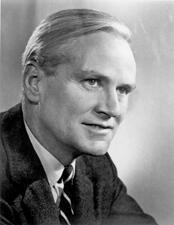
Here you will find contact information for Senator Daniel Baugh Brewster, including email address, phone number, and mailing address.
| Name | Daniel Baugh Brewster |
| Position | Senator |
| State | Maryland |
| Party | Democratic |
| Status | Former Representative |
| Term Start | January 7, 1959 |
| Term End | January 3, 1969 |
| Terms Served | 3 |
| Born | November 23, 1923 |
| Gender | Male |
| Bioguide ID | B000813 |
About Senator Daniel Baugh Brewster
Daniel Baugh Brewster Sr. (November 23, 1923 – August 19, 2007) was an American attorney and Democratic politician from Maryland who served in both chambers of the United States Congress. He represented Maryland’s 2nd congressional district in the U.S. House of Representatives from 1959 to 1963 and served as a United States Senator from Maryland from 1963 to 1969. Previously, he was a member of the Maryland House of Delegates from 1950 to 1958. His service in Congress, which included three terms in office across both chambers, occurred during a significant period in American history marked by the civil rights movement and the Vietnam War. After his Senate career, and following a lengthy court battle, Brewster pleaded no contest to a misdemeanor charge of accepting an illegal gratuity.
Brewster was born on November 23, 1923, in Baltimore County, Maryland, in the Green Spring Valley region. He was the oldest of six children of Ottolie Y. (Wickes) and Daniel Baugh Brewster. Born into a wealthy family, he was raised “in comfort on a beautifully appointed farm in Maryland fox-hunting country,” and was described by The Washington Post as an inheritor of the Baugh Chemical fortune. His privileged upbringing was tempered by early loss; his father died when he was ten years old. This background rooted him in Maryland’s social and economic elite while also shaping his later public persona as a decorated veteran and public servant.
Brewster received his early education at the Gilman School in Baltimore and at St. Paul’s School in Concord, New Hampshire. He went on to attend Princeton University and Johns Hopkins University prior to the United States’ entry into World War II. In 1942, he enlisted in the United States Marine Corps and was commissioned from the ranks in 1943. During World War II he served in the Pacific theater, participating in the Battle of Guam and the Battle of Okinawa. For his actions in combat he was awarded the Bronze Star. He was wounded seven times, receiving the Purple Heart and a Gold Star in lieu of a second Purple Heart. Brewster left active duty in 1946 but remained in the Marine Corps Reserve until 1972, ultimately attaining the rank of colonel.
After the war, Brewster returned to Johns Hopkins University and then enrolled in the University of Maryland School of Law. He graduated with an LL.B. degree in June 1949, was admitted to the bar in November 1949, and began practicing law in Towson, Maryland. His legal training and experience provided the foundation for his subsequent legislative career at both the state and federal levels. At age twenty-six, he entered elective office, becoming one of the youngest members in the history of Maryland’s state legislature.
A Democrat, Brewster was elected to the Maryland House of Delegates in 1950 and served there until 1958. In 1958, he successfully ran for the U.S. House of Representatives from Maryland’s 2nd congressional district, defeating Republican J. Fife Symington Jr. He served in the Eighty-sixth (1959–1961) and Eighty-seventh (1961–1963) Congresses. In the House, he served on the Committee on Armed Services and on its subcommittee on Military Personnel, Manpower Utilization, and Emergency Defense Transportation, roles that drew on his military background. During his House tenure he voted for the Civil Rights Act of 1960, aligning himself with emerging federal civil rights protections.
In 1962, Brewster ran for the United States Senate seat vacated by retiring Republican Senator John Marshall Butler. He defeated Congressman Edward Tylor Miller, becoming the first Democrat elected to the Senate from Maryland since 1946. Brewster served in the Senate from January 3, 1963, to January 3, 1969. During this period he participated actively in the legislative process and represented the interests of his Maryland constituents at a time of profound national change. He voted in favor of the Civil Rights Act of 1964, the Voting Rights Act of 1965, the Civil Rights Act of 1968, and the confirmation of Thurgood Marshall to the Supreme Court of the United States, and he was described as instrumental in the passage of the Civil Rights Act of 1964. In 1964, he also served as a “favorite son” candidate for President in the Maryland Democratic primary, running in place of President Lyndon B. Johnson against segregationist George Wallace. Although Brewster won the primary, Wallace’s strong showing—receiving 43 percent of the vote and nearly carrying Baltimore County—was considered an embarrassment for the state’s Democratic establishment.
Brewster’s Senate career was increasingly affected by his support for the Vietnam War and by personal difficulties, particularly with alcohol. His backing of the war, which he later called the greatest mistake of his public life in a 1978 reflection, became politically costly as public opinion shifted. By his own account, his drinking began to spiral out of control in 1964, and by 1969 he was “drinking with a vengeance,” culminating in what he described as an “alcoholic collapse” that nearly killed him. These issues, combined with what contemporaries described as a complicated personal life, contributed to his defeat in his 1968 bid for Senate re-election by Republican Charles Mathias.
In 1969, after leaving the Senate, Brewster was indicted on ten criminal counts of solicitation and acceptance of bribes while serving as a United States senator, as well as two counts of accepting illegal gratuities. The charges arose from campaign contributions by Spiegel, Inc., a mail-order firm. Brewster maintained his innocence. At trial, the judge dismissed five of the charges on the ground that Brewster’s actions were protected by the Speech or Debate Clause of the U.S. Constitution. The prosecution appealed directly to the U.S. Supreme Court, which heard the case in 1971 and 1972. In June 1972, in United States v. Brewster, the Court held by a 6–3 vote that the taking of illegal bribes was not protected legislative activity under the Speech or Debate Clause. The charges were reinstated, and Brewster was tried again. He was acquitted of the bribery charges but convicted of accepting an unlawful gratuity “without corrupt intent.” In August 1974, however, his conviction was overturned on appeal because of improper jury instructions by the trial judge. In 1975, Brewster pleaded no contest to a single misdemeanor charge of accepting an illegal gratuity “without corrupt intent.” He was fined, allowed to retain his law license, and the government dropped the remaining charges. This lengthy court battle marked a significant and controversial chapter in his post-congressional life.
Following his departure from the Senate, Brewster returned to private pursuits in Maryland. He took up farming in Glyndon, Maryland, and by 1978 was operating his farm while also working as an alcoholism counselor at a veterans’ hospital. He chaired the Governor’s Advisory Council on Alcoholism and worked at what he described as a “quarter-way house” in Baltimore, using his own experience with addiction to assist others in recovery. He reportedly achieved sobriety in 1973 after multiple inpatient rehabilitation efforts. In the 1980s, Brewster survived serious health challenges, including large cell lymphoma and leukemia, further underscoring the turbulent but resilient character of his later years.
Brewster’s personal life was marked by three marriages and five children. In 1954, he married Carol Leiper DeHavenon of Philadelphia. They had two sons, Daniel Baugh Brewster Jr. (born 1956) and Gerry Leiper Brewster (born 1958). In 1967, while attending the funeral of former U.S. Ambassador to France William Bullitt, he became reacquainted with Bullitt’s daughter, Anne Bullitt, who had been his first fiancée before jilting him during World War II. Brewster divorced his first wife and married Anne Bullitt (1924–2007) on April 29, 1967, in Glyndon, Maryland; this second marriage also ended in divorce. In 1976, he married Judy Lynn Aarsand, whom he met at an alcohol treatment facility. They had three children: Danielle (born 1977) and twins Jennilie and Dana (born 1979). Judy Brewster later died on October 11, 2024, at her home in Stuart, Florida.
Daniel Baugh Brewster died of liver cancer on August 19, 2007, at the age of eighty-three. At the time of his death, he was the last living former U.S. senator whose service had ended in the 1960s. He was buried at Saint Thomas’ Episcopal Church Cemetery in Owings Mills, Maryland.