Representative Daniel Carroll
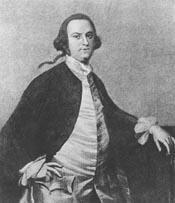
Here you will find contact information for Representative Daniel Carroll, including email address, phone number, and mailing address.
| Name | Daniel Carroll |
| Position | Representative |
| State | Maryland |
| District | 6 |
| Party | Unknown |
| Status | Former Representative |
| Term Start | March 4, 1789 |
| Term End | March 3, 1791 |
| Terms Served | 1 |
| Born | July 22, 1730 |
| Gender | Male |
| Bioguide ID | C000187 |
About Representative Daniel Carroll
Daniel Carroll Jr. (July 22, 1730 – May 7, 1796) was one of the Founding Fathers of the United States, a Maryland politician, and a plantation owner. He supported the American Revolution, served in the Confederation Congress, was a delegate to the Philadelphia Convention of 1787 which penned the Constitution of the United States, and was a U.S. Representative in the First Congress. Carroll was one of five men to sign both the Articles of Confederation and the Constitution, and he was one of the few Catholics among the Founders, a fact that gave his public career particular significance in an era when Catholics still faced social and political disabilities in the Anglo-American world.
Carroll was born in Marlborough Town in the Province of Maryland on July 22, 1730. He was the son of wealthy planters Daniel Carroll (c. 1696–1751) and Eleanor Darnall Carroll (1703–1796). His parents’ home was Darnall’s Chance, a large plantation of some 27,000 acres that his mother had inherited from her grandfather, reflecting the substantial landholdings and influence of the Carroll and Darnall families in colonial Maryland. Raised in a prominent Catholic family at a time when Maryland’s earlier tradition of religious toleration had eroded under Protestant rule, Carroll’s background shaped both his commitment to religious liberty and his later advocacy for constitutional protections that would prevent religious tests for public office.
As a youth, Carroll was sent abroad for his education, in part because legal restrictions and prejudice limited opportunities for Catholics in the British colonies. Between 1742 and 1748 he studied under the Jesuits at the English College of St. Omer in France, an institution established specifically for the education of English and colonial Catholics who could not be openly educated at home. After completing his studies and undertaking a tour of Europe, he returned to Maryland, where he soon married Eleanor Carroll, apparently a first cousin, whose great-grandparents were Daniel Carroll and Dorothy Kennedy from Ireland. His family connections placed him within a powerful network of Catholic gentry: his younger brother John Carroll became the first Catholic bishop in the United States as Bishop of Baltimore in 1790 and later founded Georgetown University, and his cousin Charles Carroll of Carrollton signed the Declaration of Independence.
Carroll’s public career developed gradually in the years leading up to the American Revolution. As a substantial landowner and member of the colonial elite, he was involved in local affairs and supported the American cause as tensions with Great Britain escalated. During the Revolutionary era he emerged as a supporter of independence and republican government, aligning with other Maryland patriots who sought to replace imperial authority with representative institutions. His standing in Maryland and his reputation for prudence and learning led to his selection for higher responsibilities as the colonies moved toward confederation and nationhood.
Carroll served in the Confederation Congress, the national governing body under the Articles of Confederation, where he participated in the difficult work of managing the war’s aftermath and the young republic’s financial and political challenges. As a delegate, he signed the Articles of Confederation, placing him among the limited number of leaders who formally endorsed both the nation’s first constitutional framework and, later, its replacement. His experience under the Articles convinced him, like many of his contemporaries, that the existing federal structure was too weak to secure the common defense, regulate commerce, or provide for the general welfare of the states.
In 1787, Carroll was named a Maryland delegate to the Philadelphia Convention, which had been convened to revise the Articles but ultimately produced the Constitution. At the convention he aligned closely with his friend James Madison of Virginia in believing that a strong central government was necessary to regulate commerce among the states and with other nations. Carroll spoke about 20 times during the summer debates, a modest but significant contribution, and he served on the Committee on Postponed Matters, which addressed some of the most contentious unresolved issues late in the convention. He repeatedly opposed proposals that would have left members of the United States Congress dependent on the individual states for their salaries, arguing that such an arrangement would undermine the strength and independence of the new federal government because “the dependence of both Houses on the state Legislatures would be complete … The new government in this form is nothing more than a second edition of [the Continental] Congress in two volumes, instead of one, and perhaps with very few amendments.”
Carroll also took an important stand on the method of choosing the executive. When it was suggested that the president should be elected by the Congress, he, seconded by James Wilson of Pennsylvania, moved that the words “by the legislature” be replaced with “by the people,” reflecting his belief that the legitimacy of the new government should rest directly on popular sovereignty rather than on the mediation of state or national legislatures. He and Thomas Fitzsimons of Pennsylvania were the only Catholics to sign the Constitution, but their presence and signatures symbolized the growing acceptance of religious diversity and the advancement of religious freedom in the United States. Carroll played an essential role in formulating the principle that powers not specifically delegated to the federal government were reserved to the states or to the people, a presumption later enshrined in the Constitution’s closing structure and in the Tenth Amendment. After the convention adjourned, he returned to Maryland and campaigned actively for ratification of the Constitution, though he did not serve as a delegate to the Maryland state convention that formally approved it.
Following the adoption of the Constitution, Carroll continued his national service as a member of the First United States Congress. Elected as a U.S. Representative from Maryland, he served in the House of Representatives from 1789 to 1791, participating in the initial implementation of the new constitutional system he had helped to frame. During this period Congress organized the executive departments, established the federal judiciary, and adopted key measures on revenue and finance. Carroll’s legislative work reflected his long-standing support for a vigorous but limited federal government, and his presence in the First Congress helped ensure that Maryland’s interests and the concerns of Catholic citizens were represented in the formative years of the republic.
In his later years, Carroll remained a respected figure in Maryland political and social life, continuing to manage his plantation interests and to lend his influence to public affairs, even as younger leaders came to the fore. He lived to see the new constitutional order take root and his brother John’s ecclesiastical leadership and educational initiatives, including the founding of Georgetown, begin to shape American Catholic life. Daniel Carroll Jr. died on May 7, 1796, closing the career of a statesman whose contributions bridged the colonial, revolutionary, and early national periods and whose dual role as a framer of the Articles of Confederation and the Constitution placed him among the central architects of the United States.