Representative Daniel Webster Comstock
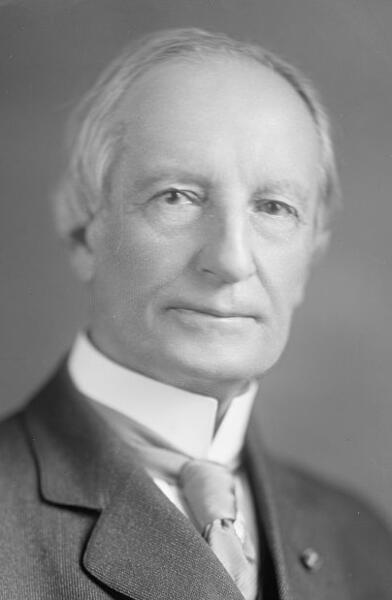
Here you will find contact information for Representative Daniel Webster Comstock, including email address, phone number, and mailing address.
| Name | Daniel Webster Comstock |
| Position | Representative |
| State | Indiana |
| District | 6 |
| Party | Republican |
| Status | Former Representative |
| Term Start | April 2, 1917 |
| Term End | March 3, 1919 |
| Terms Served | 1 |
| Born | December 16, 1840 |
| Gender | Male |
| Bioguide ID | C000663 |
About Representative Daniel Webster Comstock
Daniel Webster Comstock (December 16, 1840 – May 19, 1917) was an American lawyer, jurist, Civil War veteran, and Republican politician who briefly served as a U.S. Representative from Indiana in 1917. His congressional service, though short, took place during a significant period in American history, as the United States entered World War I and confronted major questions of national policy and governance.
Comstock was born on December 16, 1840, in Germantown, Montgomery County, Ohio. He attended the common schools of his native state and pursued higher education at Ohio Wesleyan University in Delaware, Ohio. He was graduated from Ohio Wesleyan University in 1860, receiving a classical education that prepared him for a career in the law. Shortly after completing his studies, he began reading law and preparing for admission to the bar.
Comstock was admitted to the bar in 1861 and commenced the practice of law in New Castle, Indiana. Early in his legal career he gained public responsibilities, serving as district attorney in 1862. His professional life was soon interrupted by the Civil War, in which he took an active part. During the conflict he enlisted in the Ninth Indiana Cavalry and was successively promoted through the ranks, serving as regimental sergeant major, first lieutenant, captain, and ultimately acting assistant adjutant general in the Military Division of the Mississippi. His wartime service provided him with administrative and leadership experience that would later inform his judicial and legislative work.
After the war, Comstock settled in Richmond, Indiana, in 1866, where he resumed and expanded his legal career. In the same year he became city attorney of Richmond, marking the beginning of a long period of public service in Indiana. He served as prosecuting attorney of the Wayne Circuit Court from 1872 to 1874, handling criminal and civil matters on behalf of the state. His growing reputation in legal and political circles led to his election as a member of the Indiana State Senate in 1878, where he participated in shaping state legislation during the post-Reconstruction era.
Comstock’s judicial career was extensive and influential. He served as judge of the seventeenth judicial circuit of Indiana from 1886 to 1895, presiding over a wide range of trial matters and contributing to the development of state jurisprudence. In 1896 he was elevated to the bench of the Indiana appellate court, where he served as judge from 1896 to 1911. During these fifteen years on the appellate court he participated in reviewing and deciding significant cases that helped define Indiana law at the turn of the twentieth century. After leaving the appellate bench in 1911, he resumed the private practice of law, continuing to be an active figure in the legal community of Richmond and the broader region.
A member of the Republican Party, Comstock entered national politics in the 1910s. He was elected as a Republican to the Sixty-fifth Congress, representing Indiana in the United States House of Representatives. His term began on March 4, 1917, and he served as a Representative from Indiana in the United States Congress from 1917 to 1919, although his service was cut short by his death later in 1917. During his brief tenure in the House of Representatives, Daniel Webster Comstock contributed to the legislative process during one term in office and participated in the democratic process at a moment when Congress was addressing the nation’s entry into World War I and related domestic and foreign policy issues. As a member of the House, he represented the interests of his Indiana constituents while the country faced profound economic, military, and social challenges.
Comstock’s congressional service ended abruptly when he died in office in Washington, D.C., on May 19, 1917, after serving less than three months in the Sixty-fifth Congress. His death placed him among the members of the United States Congress who died in office in the early twentieth century. Following his death, he was interred in Earlham Cemetery in Richmond, Indiana, reflecting his long-standing ties to that community, where he had lived, practiced law, and held public office for more than half a century.