Representative Daniel Dewey
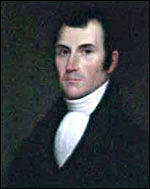
Here you will find contact information for Representative Daniel Dewey, including email address, phone number, and mailing address.
| Name | Daniel Dewey |
| Position | Representative |
| State | Massachusetts |
| District | 12 |
| Party | Federalist |
| Status | Former Representative |
| Term Start | May 24, 1813 |
| Term End | March 3, 1815 |
| Terms Served | 1 |
| Born | January 29, 1766 |
| Gender | Male |
| Bioguide ID | D000293 |
About Representative Daniel Dewey
Daniel Dewey (January 29, 1766 – May 26, 1815) was a U.S. Representative from Sheffield, Massachusetts, and a jurist who served as an associate justice of the Massachusetts Supreme Judicial Court. A member of the Federalist Party, he represented Massachusetts in the Thirteenth Congress during a significant period in early American history, participating in the legislative process and representing the interests of his constituents.
Dewey was born on January 29, 1766, in Sheffield, in the Province of Massachusetts Bay, during the colonial era. Little is recorded in detail about his family background or early upbringing, but his subsequent education and professional achievements indicate that he received a solid preparatory education that enabled him to enter one of the leading colleges of New England.
Dewey attended Yale College, one of the principal institutions of higher learning in the new republic. After completing his studies there, he pursued the study of law. He was admitted to the bar in 1787 and commenced the practice of law in Williamstown, Massachusetts. His legal practice established him as a prominent figure in the community and laid the foundation for his later roles in education, state government, and the federal legislature.
In addition to his legal work, Dewey was closely associated with Williams College in Williamstown. He served as treasurer of Williams College from 1798 to 1814, overseeing the financial affairs of the institution during its formative years. His long tenure in this position reflected both the trust placed in him by the college’s leadership and his standing in the local community. Dewey also entered public service in state government, serving as a member of the Massachusetts Governor’s Council from 1809 to 1812, where he participated in advising the governor and helping to oversee executive and administrative matters in the Commonwealth.
Dewey was elected as a Federalist to the Thirteenth Congress and served one term in the U.S. House of Representatives. His congressional service extended from March 4, 1813, until February 24, 1814. Serving during the War of 1812, a turbulent and consequential period in American history, he contributed to the legislative process as a representative of Massachusetts, aligning with the Federalist Party’s positions and advocating for the interests of his constituents. His tenure in Congress, though relatively brief, placed him at the center of national debates over war, commerce, and federal power.
Dewey resigned from Congress on February 24, 1814, upon receiving a judicial appointment. On that same date, he was appointed by Governor Caleb Strong as an associate judge of the Massachusetts Supreme Judicial Court. In this capacity, he shifted from legislative to judicial service, bringing his legal expertise and public experience to the highest court of the Commonwealth. He served on the bench from February 24, 1814, until his death, participating in the development of Massachusetts jurisprudence during a critical period in the state’s legal history.
Daniel Dewey died in Williamstown, Massachusetts, on May 26, 1815, while still serving as an associate justice of the Massachusetts Supreme Judicial Court. He was interred in West Lawn Cemetery in Williamstown. His career encompassed significant contributions to the legal profession, higher education, state governance, and national legislative service, reflecting the multifaceted public roles often undertaken by early American statesmen.