Senator Daniel Stevens Dickinson
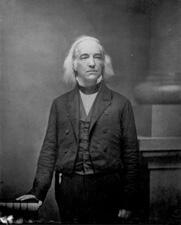
Here you will find contact information for Senator Daniel Stevens Dickinson, including email address, phone number, and mailing address.
| Name | Daniel Stevens Dickinson |
| Position | Senator |
| State | New York |
| Party | Democratic |
| Status | Former Representative |
| Term Start | November 30, 1844 |
| Term End | March 3, 1851 |
| Terms Served | 2 |
| Born | September 11, 1800 |
| Gender | Male |
| Bioguide ID | D000317 |
About Senator Daniel Stevens Dickinson
Daniel Stevens Dickinson (September 11, 1800 – April 12, 1866) was an American politician and lawyer, most notable as a United States senator from New York from 1844 to 1851. A member of the Democratic Party, he served two terms in the United States Senate and played a prominent role in state and national politics during a significant period in American history, participating actively in the legislative process and representing the interests of his New York constituents.
Dickinson was born in Goshen, Connecticut, and in 1806 moved with his parents to Guilford, Chenango County, New York. He attended the common schools and was apprenticed to a clothier in his youth. As a young man he taught school at Wheatland, New York, beginning in 1821, while also engaging in land surveying. On February 27, 1822, he married Lydia Knapp; the couple had four children—Virginia, Manco, Lydia, and Mary. Two of his children died relatively young: Virginia at age twenty in 1846, and Manco in 1851. While supporting his family, Dickinson studied law, and he was admitted to the bar in 1828.
After his admission to the bar, Dickinson commenced the practice of law in Guilford. He also held local office, serving as postmaster of Guilford from 1827 to 1832. Seeking broader opportunities, he moved to Binghamton, New York, where he quickly became a leading citizen and in 1834 was chosen as the first village president of Binghamton. His growing prominence in local affairs led naturally into state politics. A Democrat, he was elected to the New York State Senate from the 6th District and served from 1837 to 1840, sitting in the 60th, 61st, 62nd, and 63rd New York State Legislatures. He subsequently rose to statewide office as lieutenant governor of New York, serving from 1843 to 1844. In the presidential election of 1844 he was a presidential elector, casting his votes for James K. Polk and George M. Dallas.
Dickinson entered national office in 1844 when he was appointed as a Democrat to the United States Senate to fill the vacancy caused by the resignation of Senator Nathaniel P. Tallmadge. He was later elected to a full term and held office from November 30, 1844, to March 3, 1851. During his tenure in the Senate, he became one of the most influential Democratic leaders from New York. He served as chairman of the Senate Committee on Finance from 1849 to 1850, and he was also a member of the Committee on Manufactures during the Twenty-ninth and Thirtieth Congresses and of the Committee on Private Land Claims during the Thirty-first Congress. As a senator and afterward, Dickinson emerged as the leader of the conservative “Hunker” faction of the New York Democratic Party and later of the “Hards,” who opposed reconciliation with the more radical “Barnburner” faction that had broken with the party in 1848 to join the Free Soil movement. His years in the Senate coincided with mounting sectional tensions over slavery and territorial expansion, and he was a significant figure in the intraparty struggles of that era.
Upon leaving the Senate in 1851, Dickinson resumed the practice of law in New York. He remained active in national Democratic politics and served as a delegate to the Democratic National Convention of 1852. At that convention, after repeated unsuccessful efforts to nominate Franklin Pierce, the Virginia delegation dramatically shifted its votes from Pierce to Dickinson on the forty-eighth ballot, provoking an enthusiastic reaction that suggested a possible stampede in his favor. Dickinson, however, personally addressed the convention and eloquently withdrew his own name from consideration, clearing the way for Pierce to secure the nomination on the next ballot. In 1853 President Pierce appointed him collector of the Port of New York, one of the most important federal patronage posts in the country, but Dickinson declined to accept the office. In the presidential election of 1860 he supported Southern Democrat John C. Breckinridge for president, reflecting his continued alignment with the more conservative wing of the party.
During the American Civil War, Dickinson broke with many former Democratic allies by firmly supporting the Union war effort. In November 1861 he was elected New York State Attorney General on a ticket nominated by the Independent People’s state convention of War Democrats and endorsed by the Republican Party, underscoring his stature as a prominent pro-war Democrat. In 1864 he was appointed United States commissioner for the final settlement of the Hudson Bay and Puget Sound agricultural claims, a specialized international claims assignment arising from disputes in the Pacific Northwest. That same year, as President Abraham Lincoln sought a pro-war Democrat as a running mate to broaden his base of support, Dickinson was seriously considered as a possible vice-presidential candidate; the nomination ultimately went instead to Andrew Johnson. Dickinson supported Lincoln’s reelection in 1864 and was rewarded in 1865 with appointment as United States Attorney for the Southern District of New York, a powerful federal prosecutorial post he held until his death.
Daniel Stevens Dickinson died suddenly on April 12, 1866, in New York City at the residence of his son-in-law, Samuel G. Courtney. His death was reported as resulting from a hernia. He was buried in Spring Forest Cemetery in Binghamton, New York, the community where he had first risen to prominence. His memory has been preserved in several place names: the village of Port Dickinson, New York (and the encompassing town), as well as Dickinson County, Iowa, and Dickinson County, Kansas, were named in his honor, and Dickinson Street in Binghamton also bears his name. In 1924 a bronze statue of Dickinson by sculptor Allen George Newman was erected in front of the Broome County Courthouse in Binghamton, commemorating his contributions to the state and nation. His family’s public legacy extended into the twentieth century through his great-granddaughter Tracy Dickinson Mygatt, a Socialist playwright and noted pacifist.