Representative Daniel Larned Davis Granger
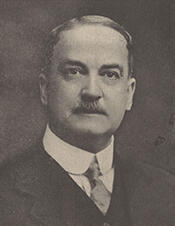
Here you will find contact information for Representative Daniel Larned Davis Granger, including email address, phone number, and mailing address.
| Name | Daniel Larned Davis Granger |
| Position | Representative |
| State | Rhode Island |
| District | 1 |
| Party | Democratic |
| Status | Former Representative |
| Term Start | November 9, 1903 |
| Term End | March 3, 1909 |
| Terms Served | 3 |
| Born | May 30, 1852 |
| Gender | Male |
| Bioguide ID | G000375 |
About Representative Daniel Larned Davis Granger
Daniel Larned Davis Granger (May 30, 1852 – February 14, 1909) was a U.S. Representative from Rhode Island, a three-term member of the United States Congress from 1903 to 1909, and mayor of Providence, Rhode Island. A member of the Democratic Party, he contributed to the legislative process during a significant period in American history, representing the interests of his constituents in the U.S. House of Representatives.
Granger was born on May 30, 1852, in Providence, Rhode Island, to Dr. James N. Granger and Anna Brown Davis Granger. He was educated in the public schools of Providence, reflecting the city’s growing system of common schooling in the mid-nineteenth century. Raised in a professional household headed by a physician, he came of age in a community that was both an industrial center and the political hub of the state, influences that would shape his later public career.
Granger pursued higher education at Brown University in Providence, from which he was graduated in 1874. He then studied law at the law department of Boston University, receiving his degree in 1877. That same year he was admitted to the bar and commenced the practice of law in Providence, establishing himself in the legal profession in his native city. Brown University later recognized his accomplishments by awarding him an A.M. (Master’s) degree in 1902, underscoring his continued association with the institution and his standing in Rhode Island’s civic and intellectual life.
Before entering national politics, Granger built a substantial record in state and municipal service. From 1887 to 1890 he served as reading clerk of the Rhode Island House of Representatives, a position that placed him at the center of legislative proceedings and familiarized him with parliamentary practice and state governance. He then served as treasurer of the city of Providence from January 1890 to January 1901, overseeing the city’s finances during a period of urban growth and modernization. His performance in that office helped establish his reputation as a capable municipal administrator.
Granger’s prominence in Providence culminated in his election as mayor of the city, a post he held in 1901 and 1902. As mayor of Providence, he presided over the municipal government of Rhode Island’s capital at the turn of the twentieth century, a time marked by expanding infrastructure, public services, and civic institutions. His mayoralty, following more than a decade as city treasurer, positioned him as one of the leading Democratic figures in the state and provided a springboard to national office.
In 1902, Granger was elected as a Democrat to the Fifty-eighth Congress and subsequently re-elected to the Fifty-ninth and Sixtieth Congresses. He served in the U.S. House of Representatives from March 4, 1903, until his death on February 14, 1909. During his three terms in office, he participated in the democratic process and contributed to the legislative work of Congress at a time when the nation was grappling with issues of industrial regulation, economic development, and international engagement. As a Representative from Rhode Island, he represented the interests of his constituents in Providence and the surrounding areas, bringing to national debates the perspective of a New England industrial and commercial center.
Outside of his formal public offices, Granger was active in a wide range of civic, social, and professional organizations. He belonged to the Rhode Island Historical Society, reflecting his interest in the state’s heritage. He served as president of the Churchman’s Club of Rhode Island, indicating his involvement in religious and ecclesiastical affairs, and as vice president of the American Group of the Inter-parliamentary Union for the Promotion of International Arbitration, aligning himself with contemporary efforts to resolve international disputes through peaceful means. In the business sphere, he was treasurer of the Dorilton Corporation of New York. He was also a member of the Psi Upsilon fraternity, the University Club of Providence, and the Manhattan Club of New York, associations that connected him to broader professional and political networks. Granger never married and made his home at 328 Thayer Street in Providence, maintaining close ties to the city throughout his life.
Granger’s final months were marked by illness that interrupted his congressional service. He became sick in November 1908 while in Albany, New York, and was subsequently moved first to New York City and then to Washington, D.C., as his condition worsened. By January 2, 1909, his health had become serious, and he died of heart failure in Washington at 7:15 p.m. on February 14, 1909, while still in office as a member of the Sixtieth Congress. His death placed him among the members of the United States Congress who died in office in the early twentieth century. His funeral was held in Providence, and he was interred in Swan Point Cemetery in Providence, Rhode Island, closing a life spent largely in service to his native city and state.