Representative Daniel Brodhead Heiner
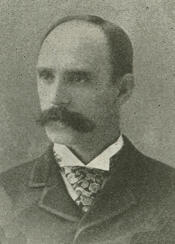
Here you will find contact information for Representative Daniel Brodhead Heiner, including email address, phone number, and mailing address.
| Name | Daniel Brodhead Heiner |
| Position | Representative |
| State | Pennsylvania |
| District | 21 |
| Party | Republican |
| Status | Former Representative |
| Term Start | August 7, 1893 |
| Term End | March 3, 1897 |
| Terms Served | 2 |
| Born | December 30, 1854 |
| Gender | Male |
| Bioguide ID | H000453 |
About Representative Daniel Brodhead Heiner
Daniel Brodhead Heiner (December 30, 1854 – February 14, 1944) was an American lawyer and politician who served as a two-term Republican member of the U.S. House of Representatives from Pennsylvania from 1893 to 1897. A member of the Republican Party, he represented his constituents during a significant period in American history, contributing to the legislative process in the aftermath of the Civil War and during the economic and political realignments of the late nineteenth century.
Heiner was born on December 30, 1854, and came of age as the United States was undergoing Reconstruction and rapid industrialization. Details of his early life, including his family background and upbringing, placed him within the broader context of Pennsylvania’s evolving political and economic landscape, in which questions of industry, infrastructure, and postwar development were increasingly central. These formative years helped shape his later interest in law and public service.
Pursuing higher education at a time when formal legal training was becoming more systematized, Heiner studied law and prepared for admission to the bar. His legal education provided him with the grounding in constitutional principles, statutory interpretation, and civil procedure that would later inform his work as a legislator. After completing his studies, he was admitted to the bar and began practicing law, building a professional reputation that supported his entry into political life.
Heiner’s legal career and involvement in Republican Party affairs led to his election to the United States House of Representatives. He was elected as a Republican to the U.S. Congress and served from 1893 to 1897, encompassing the Fifty-third and Fifty-fourth Congresses. During these two terms, he participated in the democratic process at the national level, representing the interests of his Pennsylvania constituents in debates over economic policy, federal authority, and the role of government in regulating commerce and industry. His service coincided with the economic turmoil of the 1890s, including the Panic of 1893, which shaped much of the legislative agenda of the period.
As a member of the House of Representatives, Heiner contributed to the legislative process through committee work, floor debate, and the consideration of bills affecting both his district and the nation. He took part in the routine but essential work of Congress—reviewing proposed legislation, responding to constituent concerns, and engaging with the broader policy questions facing the country as it transitioned into a more industrial and urban society. His tenure reflected the priorities of the Republican Party of his era, including support for economic development and a strong national government.
After leaving Congress in 1897, Heiner returned to private life and continued his professional pursuits, drawing on his experience as both a lawyer and a former member of Congress. His post-congressional years were spent away from the national spotlight but remained informed by his long engagement with public affairs and the law. He lived to see profound changes in American society, including two world wars, the Progressive Era, and the Great Depression, which marked a dramatic transformation from the political environment in which he had first been elected.
Daniel Brodhead Heiner died on February 14, 1944. His life spanned nearly nine decades of American history, from the immediate post–Civil War period through the middle of the twentieth century. Remembered primarily for his service as a Republican representative from Pennsylvania from 1893 to 1897, he left a record of participation in the national legislature during a formative era in the development of the modern United States.