Representative Daniel T. Kildee
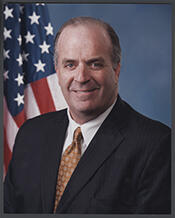
Here you will find contact information for Representative Daniel T. Kildee, including email address, phone number, and mailing address.
| Name | Daniel T. Kildee |
| Position | Representative |
| State | Michigan |
| District | 8 |
| Party | Democratic |
| Status | Former Representative |
| Term Start | January 3, 2013 |
| Term End | January 3, 2025 |
| Terms Served | 6 |
| Born | August 11, 1958 |
| Gender | Male |
| Bioguide ID | K000380 |
About Representative Daniel T. Kildee
Daniel Timothy Kildee (born August 11, 1958) is an American politician who served as a U.S. representative from Michigan from 2013 to 2025. A member of the Democratic Party, he represented a Flint- and Saginaw-area district in Congress for six terms, contributing to the legislative process during a significant period in American history and representing the interests of his constituents. He succeeded his uncle, Dale Kildee, who had long represented Michigan’s 5th congressional district in the U.S. House of Representatives.
Kildee was born in Flint, Michigan, and raised in the surrounding area. He attended Flint Northern High School and became involved in public affairs at a young age. His early exposure to the economic and social challenges facing Flint and other industrial communities in Michigan helped shape his later focus on urban redevelopment, economic fairness, and public infrastructure. His family’s deep involvement in public service, particularly through his uncle Dale Kildee’s congressional career, provided an early model of political engagement and constituent-focused representation.
Kildee pursued higher education at Central Michigan University, where he studied philosophy and political science. While he did not complete a bachelor’s degree, he combined his academic work with early and sustained involvement in local politics. Beginning in 1977, he embarked on a long tenure as a municipal elected official, serving in various local offices through 2009. During this period, he developed expertise in local governance, budgeting, and land-use policy, and became known for his interest in addressing urban decline and neighborhood blight in older industrial cities.
Kildee’s most prominent pre-congressional role was as Genesee County Treasurer, a position he held from 1996 to 2013. As county treasurer, he managed property tax collections and oversaw efforts to address tax-foreclosed and abandoned properties. He became a leading advocate for innovative land-use and redevelopment strategies, helping to pioneer the concept of county land banks to acquire, manage, and repurpose vacant and blighted properties. His work in this role drew national attention as communities across the country confronted the aftermath of deindustrialization and the housing crisis. From 1977 to 2009, overlapping with his tenure as treasurer, he continued to serve in municipal elected positions, reinforcing his reputation as a hands-on local official.
In July 2011, Dale Kildee announced that he would retire from Congress, opening a seat that had been held by the Kildee family for decades. On November 1, 2011, Dan Kildee declared his candidacy for the U.S. House of Representatives. He ran as a Democrat in a district centered on Flint and its surrounding communities and was unchallenged in the Democratic primary. In the November 2012 general election, he defeated Republican State Representative Jim Slezak by a substantial margin, winning approximately 65% of the vote to Slezak’s 31%. He took office in January 2013, marking the beginning of his service in the U.S. House of Representatives.
Upon entering Congress in 2013, Kildee quickly assumed roles within the Democratic leadership structure. Then–House Minority Whip Steny Hoyer appointed him an assistant whip, giving him responsibilities in helping to marshal votes and communicate leadership priorities to rank-and-file members. His fellow freshman Democratic members elected him to serve as their representative to the Democratic Caucus’s Steering and Policy Committee, which plays a key role in committee assignments and in shaping the party’s legislative agenda. Throughout his six terms, he participated actively in the democratic process, working on issues related to economic development, manufacturing, infrastructure, and urban revitalization.
Kildee became particularly prominent in responding to the Flint water crisis, which emerged as a national issue during his tenure. In a September 2016 speech on the House floor, he charged that House Republican leaders were refusing to approve emergency aid to Flint because a majority of the city’s residents are Black, framing the crisis as both a public health emergency and a matter of environmental justice and racial equity. After protracted negotiations, Congress passed a funding measure that provided $170 million in aid to Flint and other communities seeking infrastructure improvements for their water systems. Kildee’s advocacy on this issue helped define his national profile as a defender of communities facing environmental and infrastructural neglect.
In addition to his work on Flint, Kildee focused on broader economic and community redevelopment efforts in mid-Michigan. In 2019, he helped secure $11.2 million in federal funding to demolish blighted homes in Saginaw, continuing his long-standing emphasis on combating urban decay and stabilizing neighborhoods. He supported Steny Hoyer’s “Make it in America” initiative, which sought to bolster domestic manufacturing and remove tax breaks for companies that move jobs overseas, reflecting his commitment to revitalizing the industrial base and protecting American workers. His voting record aligned closely with Democratic leadership and, during the 117th Congress, he voted with President Joe Biden’s stated position 100% of the time, according to an analysis by FiveThirtyEight.
Kildee also engaged in debates over voting rights and democratic participation. He voted for an amendment offered by Representative Ayanna Pressley to H.R. 1, a major voting rights and election reform bill, which proposed lowering the federal voting age to 16, signaling his openness to expanding youth participation in the electoral process. On February 9, 2023, he voted against H.J.Res. 24, a resolution disapproving the District of Columbia Council’s Local Resident Voting Rights Amendment Act of 2022, which had allowed noncitizens to vote in local elections; his vote placed him in opposition to congressional efforts to overturn the District’s local law. Over the course of his six terms, from 2013 to 2025, he remained an active participant in legislative debates on democracy, representation, and local self-governance.
On November 16, 2023, Kildee announced that he would not seek re-election in 2024, signaling the end of his congressional career at the conclusion of his sixth term in January 2025. His decision marked the close of more than four decades in public office, from his first municipal election in 1977 through his long service as Genesee County Treasurer and his twelve years in the U.S. House of Representatives. After leaving Congress in 2025, he concluded a career that had been closely tied to the fortunes of Flint, Saginaw, and the surrounding communities, and to broader national debates over economic renewal, environmental justice, and democratic participation.