Representative Daniel Newton Lockwood
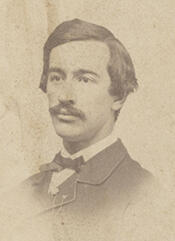
Here you will find contact information for Representative Daniel Newton Lockwood, including email address, phone number, and mailing address.
| Name | Daniel Newton Lockwood |
| Position | Representative |
| State | New York |
| District | 32 |
| Party | Democratic |
| Status | Former Representative |
| Term Start | October 15, 1877 |
| Term End | March 3, 1895 |
| Terms Served | 3 |
| Born | June 1, 1844 |
| Gender | Male |
| Bioguide ID | L000392 |
About Representative Daniel Newton Lockwood
Daniel Newton Lockwood (June 1, 1841 – June 1, 1906) was an American lawyer and Democratic politician from New York who served as the 18th District Attorney of Erie County and as a Representative from New York in the United States Congress from 1877 to 1879 and again from 1891 to 1895. Over the course of three terms in the U.S. House of Representatives, he contributed to the legislative process during a significant period in American history, representing the interests of his constituents and participating actively in the democratic process.
Lockwood was born on June 1, 1841, in the rural town of Hamburg, New York, the son of Martha (née Phillips) Lockwood and Harrison Lockwood. He was the grandson of Ebenezer Lockwood and the great-grandson of Timothy Lockwood, who fought in the American Revolutionary War. His early life was marked by hardship; his father died when he was young, and the family was poor. As a result, he moved to Buffalo to live with a relative, Timothy T. Lockwood, who served as mayor of Buffalo from 1858 to 1859. Despite these challenges, he obtained a common school education that laid the foundation for his later academic and professional achievements.
Pursuing higher education, Lockwood attended Union College in Schenectady, New York, from which he graduated in 1865. While at Union College he became a member of the Alpha charge of the Theta Delta Chi fraternity, an affiliation that connected him with a broader network of professional and political contacts. After graduation, he returned to western New York to study law in the office of Judge James M. Humphrey in Buffalo. He was admitted to the New York bar in 1866 and commenced practice in Buffalo as part of the firm Humphrey, Lockwood & Hoyt, quickly establishing himself as a capable attorney in Erie County.
Lockwood’s public career began at the local level. He was elected District Attorney of Erie County, New York, and served as the 18th District Attorney from January 1, 1875, until October 1, 1877. His performance in that office enhanced his reputation within the Democratic Party and prepared him for national office. In 1876 he was elected as a Democrat to the 45th United States Congress, serving from March 4, 1877, to March 3, 1879. During this first term in the House of Representatives, he represented a New York district at a time of post–Civil War reconstruction and industrial expansion, participating in the legislative deliberations of the era. After leaving Congress in 1879, he remained active in party affairs and was chosen as a delegate to the Democratic National Conventions of 1880 and 1884.
Lockwood’s close friendship with Grover Cleveland, then a rising figure in New York politics, became a defining feature of his mid-career. At the 1884 Democratic National Convention, he formally placed Cleveland’s name in nomination for President of the United States. Following Cleveland’s election, Lockwood was appointed United States Attorney for the Northern District of New York, a post he held from 1886 to 1889. In this capacity he represented the federal government in significant civil and criminal matters across the northern part of the state, further solidifying his standing as a prominent Democratic lawyer and public servant.
Returning to electoral politics, Lockwood was again elected to Congress as a Democrat, this time to the 52nd and 53rd United States Congresses. He served from March 4, 1891, to March 3, 1895, thus completing a total of three terms in the House of Representatives. His congressional service during the 1890s coincided with debates over tariffs, monetary policy, and economic reform in the wake of rapid industrialization. While serving in Congress, he was nominated in 1894 as the Democratic candidate for Lieutenant Governor of New York. Running on three Democratic tickets—alongside David B. Hill and Everett P. Wheeler, each a candidate for governor on different Democratic slates—he was defeated by the Republican candidate, Charles T. Saxton. Lockwood continued his involvement in national party politics as a delegate to the 1896 Democratic National Convention.
After the close of his congressional service and statewide campaign, Lockwood resumed the practice of law in Buffalo. His legal and political experience led to a series of important administrative and corporate responsibilities. In 1901, New York Governor Theodore Roosevelt selected him to serve as the general manager from New York at the Pan-American Exposition in Buffalo, the international fair that became historically notable as the site of President William McKinley’s assassination. In the business sphere, Lockwood served as president and manager of the Akron Cement Works, the Buffalo Sewer Pipe Company, and the Buffalo, New York & Erie Railroad Company. He was also a director of the New York and New Jersey Bridge Company, the Merchants’ Bank, and the Third National Bank, reflecting his prominence in the commercial and financial life of Buffalo and the region. In 1903, Governor Benjamin Odell appointed him to the New York State Lunacy Commission, where he served until his death, overseeing matters related to the administration and oversight of mental health institutions in the state.
On October 18, 1870, Lockwood married Sarah Brown (1847–1898), the daughter of Thomas Brown. The couple resided in a mansion on Niagara Street in Buffalo and had two children. Their daughter, Elizabeth Lockwood (1873–1919), married Bronson C. Rumsey (1851–1946) in 1899. Their son, Thomas Brown Lockwood (1873–1947), married Marion Birge, sister-in-law of architect George Cary, in 1904 and later pursued a political career of his own, including an unsuccessful run for Lieutenant Governor of New York in 1914. Through his family connections and professional stature, Daniel N. Lockwood was firmly embedded in the civic and social elite of Buffalo.
Daniel Newton Lockwood died on his sixty-fifth birthday, June 1, 1906, at his home in Buffalo, New York, after suffering from diabetes and gangrene. He was buried in Forest Lawn Cemetery in Buffalo. His career as a lawyer, district attorney, congressman, federal prosecutor, party leader, corporate officer, and state commissioner reflected the breadth of public and private responsibilities undertaken by leading figures in New York during the late nineteenth and early twentieth centuries.