Representative Daniel E. Lungren
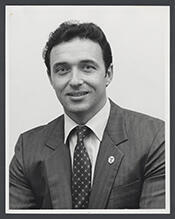
Here you will find contact information for Representative Daniel E. Lungren, including email address, phone number, and mailing address.
| Name | Daniel E. Lungren |
| Position | Representative |
| State | California |
| District | 3 |
| Party | Republican |
| Status | Former Representative |
| Term Start | January 15, 1979 |
| Term End | January 3, 2013 |
| Terms Served | 9 |
| Born | September 22, 1946 |
| Gender | Male |
| Bioguide ID | L000517 |
About Representative Daniel E. Lungren
Daniel Edward Lungren (born September 22, 1946) is an American lawyer, lobbyist, and former politician who served nine terms as a Representative from California in the United States Congress between 1979 and 2013. A member of the Republican Party, he was a prominent figure in national debates over crime, immigration, and homeland security and also served two terms as attorney general of California. Over the course of his career, Lungren held office during a significant period in American political history, participating in the legislative process and representing the interests of his constituents in both Southern and Northern California.
Lungren was born in Long Beach, California, to a family of Irish, Swedish, and Scottish descent. Beginning in 1952, his father, Dr. John Lungren, served as the personal physician and close friend of future President Richard Nixon, a relationship that exposed Daniel Lungren at an early age to national politics and public life. He attended St. Anthony High School in Long Beach, graduating in 1964. Lungren then enrolled at the University of Notre Dame in Indiana, where he earned an A.B. degree with honors in English in 1968. While still a young man, he became active in Republican politics, returning to California to chair Youth for Nixon during Nixon’s first successful presidential campaign in 1968. He anticipated military service during the Vietnam War but was ruled ineligible because of a knee injury sustained while playing high school football.
After college, Lungren pursued legal studies, initially attending the University of Southern California Law School before transferring to Georgetown University Law Center in Washington, D.C. He received his J.D. degree from Georgetown in 1971. During his time in Washington, he worked for Republican U.S. Senators George Murphy of California and Bill Brock of Tennessee, gaining early experience in federal legislative affairs. From 1971 to 1972, he served as Special Assistant to the co-chair of the Republican National Committee, further deepening his involvement in national party politics. His wife, Bobbi Kolls, whom he married in 1969, worked in the Nixon White House during this period. After completing law school, Lungren returned to Long Beach, joined a law firm, and briefly practiced civil law before entering electoral politics. He made an unsuccessful bid for Congress in 1976 but ran again in 1978 and was elected.
Lungren first served in the U.S. House of Representatives from January 3, 1979, to January 3, 1989, representing portions of the Long Beach area and Orange County. Rising in prominence after the election of President Ronald Reagan in 1980, he became closely identified with the “tough on crime” agenda and the emerging moral majority movement. He was a founding member of the Conservative Opportunity Society and one of Representative Newt Gingrich’s chief lieutenants in the House. Serving on the House Judiciary Committee, Lungren sponsored and supported major criminal justice legislation. In 1984, he sponsored the Comprehensive Crime Control Act, then regarded as one of the most sweeping anti-crime measures in U.S. history. He was a strong proponent of asset forfeiture as a tool in the war on drugs and advocated aggressive measures against businesses that knowingly accepted money from drug traffickers. On immigration, he supported sanctions against employers who hired undocumented immigrants while also favoring a temporary guest-worker program. He was the principal House cosponsor of the Simpson–Mazzoli immigration bill, which became the Immigration Reform and Control Act of 1986, and he independently sponsored a guest-worker bill designed to allow the importation of temporary immigrant laborers.
At the end of his first decade in Congress, Lungren briefly stepped away from elective office amid a failed bid for statewide appointment. In late 1987, California Governor George Deukmejian attempted to appoint him as California State Treasurer to fill a vacancy. The California State Assembly confirmed the appointment, but the State Senate rejected it. Contending that confirmation by only one legislative chamber was sufficient, Lungren challenged the decision before the California Supreme Court. While pursuing this case, he chose not to seek re-election to the House in 1988. On June 23, 1988, the court ruled that both houses of the Legislature were required to confirm the appointment, leaving Lungren without a position in either Washington, D.C., or Sacramento. He returned to private life briefly before reemerging on the statewide political stage.
In 1990, Lungren was elected attorney general of California and took office in January 1991; he was re-elected in 1994, serving until January 1999. As attorney general, he was a staunch supporter of capital punishment, and executions in California resumed in 1992 after a 25-year hiatus, with a total of five carried out during his tenure. He played a central role in advancing major criminal justice initiatives, including “Megan’s Law,” the “Three-Strikes-and-You’re-Out” law, the “Sexual Anti-Predator Act,” and “California’s Safe Schools Plan.” He sponsored legislation allowing minors as young as 14 accused of murder to be tried as adults and led a national effort to limit prisoner lawsuits, contributing to the passage of the federal Prison Litigation Reform Act of 1996. In 1993, Lungren wrote to major video game publishers and retailers urging them to stop producing or selling games that portrayed graphic and gratuitous violence, a move described by the gaming press as one of the strongest anti-violence statements by a top government official, even as he emphasized that he was appealing to corporate responsibility rather than advocating censorship. In 1996, he was mentioned as a possible vice-presidential running mate for Republican presidential nominee Bob Dole. That same year, he vigorously opposed California’s Proposition 215, which legalized medical marijuana.
In 1998, Lungren was the Republican nominee for governor of California, running against Democratic Lieutenant Governor Gray Davis. Presenting himself as the political heir to former Governor and President Ronald Reagan, he emphasized his record on crime and the economic performance of the preceding Republican administrations of Governors George Deukmejian and Pete Wilson. Davis countered that Lungren was too conservative for the state’s electorate and criticized his reluctance, as attorney general, to enforce certain assault weapons restrictions and his delay in joining a multistate class action lawsuit against the tobacco industry. In the general election, held November 3, 1998, Davis defeated Lungren, winning 57.9 percent of the vote to Lungren’s 38.4 percent. Following this loss, Lungren moved to the Sacramento-area community of Gold River and spent several years out of public office.
The September 11, 2001, terrorist attacks rekindled Lungren’s desire to return to Congress, particularly on issues of national security and homeland defense. When six-term Republican Representative Doug Ose announced his retirement from California’s 3rd congressional district, Lungren entered the 2004 race. After a come-from-behind victory in a three-way Republican primary against Mary Ose, the incumbent’s sister, and State Senator Rico Oller, he won the general election and returned to the House on January 3, 2005. The 3rd district at that time included most of Sacramento County, portions of Solano County, and all of Alpine, Amador, and Calaveras Counties, encompassing a mix of suburban, exurban, and rural areas east of Sacramento. He was reappointed to the House Judiciary Committee with seniority based on his earlier five terms and also joined the Committee on Homeland Security. In 2005, he supported the reauthorization of the USA PATRIOT Act, backing expanded federal surveillance authorities, including wiretaps and monitoring of computer networks, as tools to prevent terrorism.
During his second period in Congress, Lungren took a leading role in homeland security and criminal justice legislation. In 2006, he and Representative Jane Harman co-authored the SAFE Port Act, aimed at improving security at U.S. ports through enhanced maritime facility requirements, foreign port assessments, container security initiatives, and the Customs-Trade Partnership Against Terrorism; the bill passed the House with bipartisan support and became a key component of post-9/11 security policy. That same year, he sponsored the Streamlined Procedures Act, which sought to limit federal court review of habeas corpus petitions in state death penalty cases. In 2007, Lungren was appointed to the House Administration Committee. Over these years he also served on the Subcommittee on Crime, Terrorism, and Homeland Security and the Subcommittee on Immigration Policy and Enforcement of the Judiciary Committee; the Subcommittee on Transportation Security and the Subcommittee on Cybersecurity, Infrastructure Protection, and Security Technologies—chairing the latter—on the Homeland Security Committee; and on the Joint Committee on Printing and the Joint Committee on the Library. He was a member of the Republican Study Committee and participated in the Task Force on Judicial Impeachment.
Lungren’s positions in his later congressional service reflected his longstanding conservative views on immigration and fiscal policy. He stated that he opposed any bill brought to the House floor that included an amnesty provision conferring citizenship status on undocumented immigrants, citing concern for the millions of legal immigrants who waited years to obtain permanent residence and citizenship. He was a vocal critic of the growth of congressional earmark spending and was sometimes described as a “maverick” within his party for urging more stringent fiscal conservatism. On July 29, 2008, the House passed H.R. 6295, legislation introduced by Lungren to criminalize the use of submersible and semi-submersible vessels to transport drugs and other contraband, which he argued posed a serious threat to communities and national security. After the 2008 elections, he mounted an unsuccessful challenge to John Boehner for the position of House Minority Leader; Boehner subsequently appointed him Ranking Member of the House Administration Committee, prompting Lungren to relinquish his seat on the Budget Committee. When Republicans regained control of the House in January 2011, Lungren became Chairman of the House Administration Committee. The Cook Political Report later identified him as the Republican member most vulnerable to redistricting in the 2012 cycle.
Lungren’s electoral fortunes in his Sacramento-area district became increasingly competitive over time. In 2010, he was challenged by Democratic nominee Ami Bera, a physician, as well as candidates from the American Independent, Peace and Freedom, and Libertarian parties. Lungren was re-elected with 50.6 percent of the vote, while Bera received 42.7 percent and the remaining candidates shared 6.7 percent. Following the 2010 U.S. Census, California’s congressional districts were redrawn, and Lungren’s district was renumbered as the 7th district. The new district lost all territory outside Sacramento County and had a more evenly balanced partisan registration, making it a classic swing district. Lungren again faced Bera in the November 2012 general election in what was widely regarded as one of the most closely watched House races in the country, with both parties and outside groups investing heavily. The Cook Political Report and other observers described the contest as a potential “PAC battlefield.” In the final tally, Bera defeated Lungren, winning 51.1 percent to Lungren’s 48.9 percent, a margin of about 5,700 votes; other accounts placed the final percentages at 51.7 percent for Bera and 48.3 percent for Lungren. His defeat ended his second tenure in Congress on January 3, 2013.
After leaving Congress, Lungren transitioned to work in law and government relations. He co-founded the lobbying firm Lungren Lopina LLC, drawing on his decades of experience in federal and state government, particularly in the areas of criminal justice, homeland security, and legislative procedure. In 2018, he joined the international law firm King & Spalding, working from its offices in Washington, D.C., San Francisco, and Los Angeles, where he has focused on public policy, regulatory, and advisory matters. Throughout his post-congressional career, he has remained engaged in public affairs and legal practice.
In his personal life, Lungren married Bobbi Kolls in 1969, and the couple had three children. During his years in Congress and afterward, they maintained a residence in Alexandria, Virginia. Bobbi Lungren died in 2022. Daniel Lungren is a Roman Catholic, and his faith has been a notable aspect of his public and private life.