Senator Daniel Sheldon Norton
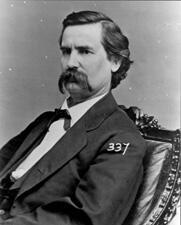
Here you will find contact information for Senator Daniel Sheldon Norton, including email address, phone number, and mailing address.
| Name | Daniel Sheldon Norton |
| Position | Senator |
| State | Minnesota |
| Party | Democratic |
| Status | Former Representative |
| Term Start | December 4, 1865 |
| Term End | March 3, 1871 |
| Terms Served | 1 |
| Born | April 12, 1829 |
| Gender | Male |
| Bioguide ID | N000145 |
About Senator Daniel Sheldon Norton
Daniel Sheldon Norton (April 12, 1829 – July 14, 1870) was an American lawyer and politician who served in the Minnesota State Senate and as a United States Senator from Minnesota. He served as a senator from Minnesota in the United States Congress from 1865 to 1871, completing one term in office during a significant period in American history. Over the course of his career, he contributed to the legislative process at both the state and federal levels and represented the interests of his constituents during the tumultuous years of the Civil War and Reconstruction.
Norton was born on April 12, 1829, in Mount Vernon, Ohio, to Daniel Sheldon and Sarah Sheldon (née Banning). He was part of a politically active family; his brother, Anthony Banning Norton, also became a politician. Norton attended Kenyon College in Ohio, but left before graduating in order to serve in the Mexican–American War. He enlisted with the 2nd Ohio Volunteers, gaining early military experience that interrupted his formal education but helped shape his public career.
After returning from the war, Norton turned to the study of law. He read law under the guidance of his brother-in-law, Judge Rollin C. Hurd, in Ohio. In the early 1850s he spent several years traveling and living in California and Nicaragua, reflecting the broader westward and international movements of Americans in that era. By 1852 he had returned to Ohio, and shortly thereafter he was admitted to the bar. He practiced law in his hometown of Mount Vernon for several years before deciding to move farther west.
In 1855 Norton relocated to the Minnesota Territory, initially settling in St. Paul before establishing himself in Winona, Minnesota. As the territory moved toward statehood, he quickly became involved in public affairs. In 1857 he was elected to the Minnesota State Senate for the first legislative session following the adoption of the state constitution. He was reelected in 1860 and again in 1863, ultimately serving four terms over a seven-year period. During this time he built a reputation as a capable legislator and lawyer, active in shaping the early legal and political framework of the new state.
Norton’s state-level service led to his selection for national office. In 1865 the Minnesota legislature elected him to the United States Senate, where he served in the 39th and 40th Congresses. His term extended from 1865 to 1871, encompassing the final months of the Civil War and the early years of Reconstruction. Initially elected as a Unionist, he later aligned himself with the more moderate Republican faction in the Senate. Although the existing record identifies him as a member of the Democratic Party, in practice he occupied a centrist position in the shifting party alignments of the Reconstruction era, participating actively in the democratic process and contributing to national debates over the restoration of the former Confederate states and the redefinition of federal authority.
During his congressional service, Norton became particularly noted for his stance on Reconstruction policy. He supported President Andrew Johnson’s more lenient approach toward the former Confederate states and opposed Johnson’s impeachment in 1868. This position placed him at odds with many of the more radical Republicans in Minnesota, who favored stricter terms for readmission and stronger protections for newly freed African Americans. In response to his votes and public positions, radical Republicans in his home state pushed through a resolution formally censuring Norton and calling for his resignation, illustrating the intense intraparty conflicts of the period and the political risks he assumed in following a moderate course.
Norton remained in the Senate until his death in office on July 14, 1870. In the weeks leading up to his death, he suffered from tuberculosis, which ultimately proved fatal while he was still serving his term. His passing placed him among the members of the United States Congress who died in office in the nineteenth century. Norton’s career, spanning military service in the Mexican–American War, early legal practice in Ohio, formative legislative work in Minnesota’s first years of statehood, and a single but eventful term in the United States Senate, reflected the broader currents of American expansion, civil conflict, and Reconstruction in the mid-nineteenth century.