Representative Daniel Joseph Riordan
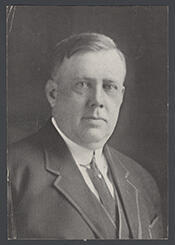
Here you will find contact information for Representative Daniel Joseph Riordan, including email address, phone number, and mailing address.
| Name | Daniel Joseph Riordan |
| Position | Representative |
| State | New York |
| District | 11 |
| Party | Democratic |
| Status | Former Representative |
| Term Start | December 4, 1899 |
| Term End | March 3, 1925 |
| Terms Served | 11 |
| Born | July 7, 1870 |
| Gender | Male |
| Bioguide ID | R000264 |
About Representative Daniel Joseph Riordan
Daniel Joseph Riordan (July 7, 1870 – April 28, 1923) was an American politician who served as a Democratic Representative from New York in the United States Congress from 1899 to 1901 and again from 1906 until his death in 1923. Over the course of 11 terms in office, he contributed to the legislative process during a significant period in American history, representing the interests of his New York constituents and participating actively in the democratic process. A loyal Democrat and a prominent member of the Tammany Hall organization, he was closely associated with the political life of New York City in the late nineteenth and early twentieth centuries.
Riordan was born in New York City on July 7, 1870. He attended the city’s public schools until 1886, when he entered Manhattan College, a Catholic institution in New York. He graduated from Manhattan College in 1890. Following his graduation, Riordan engaged in the real estate business, an occupation that rooted him in the economic and civic affairs of New York City and helped establish the local connections that would support his later political career.
Riordan’s entry into national politics came at the close of the nineteenth century. He was elected as a Democrat to the Fifty-sixth United States Congress, serving from March 4, 1899, to March 3, 1901. During this initial term, he represented a New York district in the U.S. House of Representatives at a time when the nation was grappling with the aftermath of the Spanish–American War and the onset of a new era of American expansion and industrial growth. Although he left Congress at the end of that term, his early service marked the beginning of what would become a long and sustained career in public office.
After his first period in Congress, Riordan continued his political advancement at the state level. He served as a member of the New York State Senate from 1903 to 1906, representing the 10th District. In that capacity he sat in the 126th, 127th, 128th, and 129th New York State Legislatures. His work in the State Senate further solidified his standing within the Democratic Party and Tammany Hall, and positioned him as an influential figure in New York politics during the Progressive Era.
Riordan returned to the national legislature in 1906. He was elected as a Democrat to the Fifty-ninth United States Congress to fill the vacancy caused by the resignation of Representative Timothy D. Sullivan, and on the same day was elected to the Sixtieth Congress. He was subsequently re-elected to the Sixty-first and to the seven succeeding Congresses, holding office from November 6, 1906, until his death on April 28, 1923. In total, Daniel Joseph Riordan served in the House of Representatives for one term from 1899 to 1901 and for eight additional terms from 1906 to 1923, encompassing 11 terms in Congress. His long tenure coincided with major national developments, including the Progressive reform period, World War I, and the early postwar years, during which he consistently represented his New York constituency as a Democratic member of the House.
Riordan remained in office until his death in Washington, D.C., on April 28, 1923, while still serving in the Sixty-eighth Congress. His passing placed him among the members of the United States Congress who died in office during the first half of the twentieth century. He was buried in Calvary Cemetery in Queens, New York, returning in death to the city that had shaped his life, career, and long service in both state and national government.