Senator Daniel Rodney
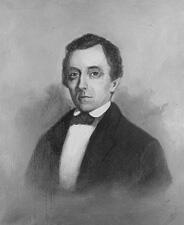
Here you will find contact information for Senator Daniel Rodney, including email address, phone number, and mailing address.
| Name | Daniel Rodney |
| Position | Senator |
| State | Delaware |
| Party | Adams |
| Status | Former Representative |
| Term Start | December 3, 1821 |
| Term End | December 31, 1827 |
| Terms Served | 2 |
| Born | September 10, 1764 |
| Gender | Male |
| Bioguide ID | R000378 |
About Senator Daniel Rodney
Daniel Rodney (September 10, 1764 – September 2, 1846) was an American merchant and politician from Lewes in Sussex County, Delaware, who became a prominent public figure in the early national period and the first decades of the nineteenth century. Born in the Delaware Colony at Lewes, he was the son of John and Ruth Hunn Rodney and the brother of future Governor Caleb Rodney. He was also distantly related to Caesar Rodney, the signer of the Declaration of Independence and Revolutionary War leader. Rodney married Sarah Fisher, and together they had eight children: Hannah, George, John, William, Henry, Nicholas, Susan, and Mary. The family resided at 231 Second Street in Lewes and were members of St. Peter’s Episcopal Church there, reflecting his longstanding ties to the community in which he was born.
Rodney received little formal schooling in his youth and entered working life at an early age. He became a sailor and merchant, occupations that connected him to the maritime commerce of the Delaware coast. According to contemporary accounts, before he was 21 years old he commanded his own ship, an indication of both his early responsibility and his success in trade. During the American Revolution he was reportedly twice captured by the British, experiences that would have exposed him directly to the hazards of war and the vulnerabilities of American shipping. After the Revolution, he continued in mercantile pursuits, building the economic and social standing that later underpinned his entry into public service.
By the 1790s Rodney had begun a parallel career in local judicial and civic affairs. From 1793 to 1806 he served as a judge in the Court of Common Pleas, a key trial court in Delaware that handled a wide range of civil matters. During roughly the same period he also served as a Trustee of the Poor, participating in the administration of relief and social welfare at the county level. His civic involvement extended to educational matters as well; he was a trustee of Wilmington College, reflecting an interest in the institutional development of the state. These roles established him as a respected figure in Sussex County and prepared him for higher office.
Rodney’s political career developed initially within the Federalist Party, which was the principal national opposition to the Jeffersonian Republicans in the early nineteenth century. As the Federalist Party declined, he later aligned with the National Republican Party, also known as the Adams Party, which supported the policies of President John Quincy Adams. Over the course of his public life he held several of Delaware’s most important offices. He served as Governor of Delaware, guiding the state during a period of transition in national politics, and later represented Delaware in the United States House of Representatives as a U.S. Representative from Delaware. In these roles he participated in the legislative process at both the state and national levels, advocating for the interests of his constituents and contributing to debates over economic policy and federal authority that characterized the era.
Rodney’s service in the United States Senate formed a significant part of his national career. He served as a Senator from Delaware in the United States Congress from 1821 to 1827, completing two terms in office. Identified in contemporary terms with the Adams Party and in broader historical context with the National Republican movement, he sat in the Senate during a formative period in American history that included the aftermath of the War of 1812, the “Era of Good Feelings,” and the emergence of new party alignments. As a member of the Senate, Daniel Rodney participated in the democratic process and represented the interests of Delaware’s citizens, contributing to the legislative deliberations that shaped national policy in the 1820s.
In his later years, Rodney remained a respected elder statesman in Delaware. Having moved from a modestly educated sailor and merchant to a judge, governor, U.S. Representative, and U.S. Senator, his life traced the opportunities available in the early republic to men of ability and perseverance. He continued to reside in Lewes, maintaining his connections to the town and church community that had framed his early life. Daniel Rodney died on September 2, 1846, just days short of his eighty-second birthday. His long career in commerce, local administration, state leadership, and national office left a durable imprint on Delaware’s political history and on the broader story of public service in the early United States.