Representative D. French Slaughter Jr.
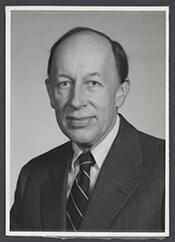
Here you will find contact information for Representative D. French Slaughter Jr., including email address, phone number, and mailing address.
| Name | D. French Slaughter Jr. |
| Position | Representative |
| State | Virginia |
| District | 7 |
| Party | Republican |
| Status | Former Representative |
| Term Start | January 3, 1985 |
| Term End | January 3, 1993 |
| Terms Served | 4 |
| Born | May 20, 1925 |
| Gender | Male |
| Bioguide ID | S000479 |
About Representative D. French Slaughter Jr.
Daniel French Slaughter Jr. (May 20, 1925 – October 2, 1998) was an American lawyer and politician who represented Virginia in the United States House of Representatives from January 3, 1985, until his resignation on November 5, 1991. A member of the Republican Party during his congressional tenure, he served four terms in the House and participated actively in the legislative process during a significant period in late twentieth-century American political history, representing the interests of his constituents from Virginia’s 7th congressional district.
Slaughter was born in Culpeper, Virginia, and was educated in the public schools of Culpeper County. As a young man, he entered military service during the Second World War. From 1943 to 1947 he served in the United States Army in combat infantry, and for his service he was awarded the Purple Heart. Following his military service, he pursued higher education, first attending the Virginia Military Institute. He then enrolled at the University of Virginia, where he completed both a Bachelor of Arts degree and a Bachelor of Laws (LL.B.) in 1953. While at the University of Virginia he was a member of the Raven Society, an honorary organization recognizing academic and civic achievement, and of St. Anthony Hall, a social and literary fraternity.
After his admission to the bar, Slaughter established a law practice in his hometown of Culpeper. His legal career ran in parallel with an early and sustained engagement in state politics. In 1958 he was elected to the Virginia House of Delegates, where he would serve for two decades, until 1978. During most of this period he was affiliated with the Democratic Party, reflecting the prevailing partisan alignment in Virginia at mid-century. In the early 1960s, he supported the policy of “massive resistance” to court-ordered public school integration, a stance that placed him within a significant and controversial current of Virginia politics during the civil rights era. In 1974 he left the Democratic Party and continued his service in the House of Delegates as an independent, maintaining his legislative role until the end of his tenure in 1978.
Following his long service in the Virginia House of Delegates, Slaughter remained closely connected to public affairs and higher education in the Commonwealth. From 1978 to 1982 he served on the board of visitors of the University of Virginia, the governing body of his alma mater. Within that body he rose to the position of rector, serving in that capacity from 1980 to 1982 and helping to oversee institutional governance and policy. He then moved into federal executive-branch service when, from 1981 to 1984, he served as an aide to John Otho Marsh Jr., the Secretary of the Army, drawing on both his military background and legislative experience to assist in the administration of the Department of the Army.
Slaughter entered national electoral politics in 1984 as a Republican candidate for Congress from Virginia’s 7th congressional district. In the general election that year, he was elected to the U.S. House of Representatives with 56.5 percent of the vote, defeating Democrat Lewis M. Costello and independent candidate R. E. Frazier. He took office on January 3, 1985, formally beginning his service in the 99th Congress. He was subsequently reelected three times: in 1986 and 1988 he was returned to office unopposed, and in 1990 he won reelection with 58.19 percent of the vote, defeating Democratic challenger David M. Smith. As a member of the House of Representatives, Daniel French Slaughter contributed to the legislative process over four consecutive terms, participating in debates, committee work, and floor votes during an era marked by the final years of the Cold War and significant domestic policy debates.
Slaughter’s congressional service came to an early close due to health concerns. After suffering a series of strokes, he resigned his seat in the House of Representatives on November 5, 1991, before the completion of his fourth term. His departure ended more than three decades of continuous public service at the state and federal levels, encompassing legislative work in Richmond, institutional leadership at the University of Virginia, executive-branch service in the Department of the Army, and representation of Virginia in Congress.
In his later years, Slaughter lived in Virginia and remained associated with the communities and institutions that had shaped his career. He died in Charlottesville, Virginia, on October 2, 1998. His life and career, spanning military service, the practice of law, state and national legislative office, and higher-education governance, reflected the evolving political landscape of Virginia and the United States from the mid-twentieth century through the early 1990s.