Senator Daniel Frederic Steck
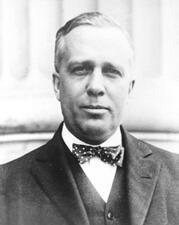
Here you will find contact information for Senator Daniel Frederic Steck, including email address, phone number, and mailing address.
| Name | Daniel Frederic Steck |
| Position | Senator |
| State | Iowa |
| Party | Democratic |
| Status | Former Representative |
| Term Start | April 12, 1926 |
| Term End | March 3, 1931 |
| Terms Served | 1 |
| Born | December 16, 1881 |
| Gender | Male |
| Bioguide ID | S000826 |
About Senator Daniel Frederic Steck
Daniel Frederic Steck (December 16, 1881 – December 31, 1950) was an American lawyer, World War I veteran, and Democratic politician who served as a United States Senator from Iowa from 1926 to 1931. A member of the Democratic Party, he was the only Iowa Democrat to serve in the U.S. Senate between the American Civil War and the Great Depression, and Iowa’s first Democratic senator since George Wallace Jones left office in 1859. His tenure in the Senate was notable both for the extraordinary election contest that seated him and for his role as a rare Democrat representing a state that consistently voted Republican during this era.
Steck was born in Ottumwa, Wapello County, Iowa, on December 16, 1881. He attended the public schools in Ottumwa before pursuing legal studies at the University of Iowa College of Law. He graduated from the law college in 1906, was admitted to the bar that same year, and immediately commenced the private practice of law in his hometown of Ottumwa. Early in his legal career, he served as Wapello County Attorney for four years, establishing himself as a capable local prosecutor and attorney. On April 4, 1909, he and his wife, Lucile Oehler of Iowa City, Iowa, welcomed a daughter, Edith Margaret, who died the following day on April 5, 1909; the couple had no other children.
During the First World War, Steck left his law practice to serve in the military. He served in France as a captain of Company C, an outpost signal company of the Iowa National Guard’s Third Infantry. Following his wartime service, he returned to Ottumwa and resumed the practice of law. In the postwar years he became active in veterans’ affairs and was a prominent early leader in the American Legion, which had been formed in 1919 by World War I veterans. Steck was elected to several leadership roles in the organization, including a term as commander of the Iowa department of the American Legion and service on national Legion committees. At the Legion’s 1923 National Convention, he led efforts to condemn the Ku Klux Klan at a time when the Klan was near the height of its national influence. The convention ultimately adopted a resolution that did not mention the Klan by name but denounced organizations that fostered racial, religious, or class strife.
Steck’s prominence in veterans’ affairs and Democratic politics led to his candidacy for the United States Senate in 1924. That year he secured the Democratic nomination to run against incumbent Senator Smith W. Brookhart, a Republican who had been elected in a 1922 special election. Although Brookhart had won as a Republican, he alienated many in his party by crusading against business interests, demanding the withdrawal of Charles Dawes as President Calvin Coolidge’s running mate, and endorsing Progressive Party presidential candidate Robert M. La Follette. By mid-October 1924, all but one of Iowa’s major Republican daily newspapers urged Republicans to vote for Steck over Brookhart. On the day after the election, newspapers reported that Steck had won. However, late returns from rural districts, reported two days after the election, appeared to give Brookhart a narrow lead, with unofficial totals showing Brookhart receiving 447,706 votes to Steck’s 446,951. Brookhart was certified the winner, retained his seat, and was sworn in on March 4, 1925.
Steck promptly filed an election challenge with the Senate Committee on Privileges and Elections, contending that he had in fact received more lawful votes than Brookhart. After an extended investigation and deliberation, the Republican-controlled U.S. Senate voted on April 12, 1926, by a margin of 45 to 41, to declare Steck the victor. He was then sworn in as senator from Iowa, displacing Brookhart more than seventeen months after the election. This episode was extraordinary in Senate history: while the Senate had previously resolved election disputes before a senator took office, this was the only instance in which the results were overturned after the initially seated senator had already begun serving. Brookhart immediately filed as a candidate for Iowa’s other Senate seat and won election to that seat later in 1926. Steck’s service in Congress thus began in the midst of intense partisan and intra-party conflict, during a significant period in American history marked by postwar adjustment, agricultural distress, and the approach of the Great Depression.
As a United States Senator, Steck served one term, from April 12, 1926, until March 3, 1931. During his tenure he participated in the legislative process and represented the interests of his Iowa constituents at a time when the state’s economy was heavily dependent on agriculture and increasingly affected by national and international market conditions. Steck maintained a relatively low profile in the Senate; during the 71st Congress, which met from March 1929 to March 1931, he spoke on the Senate floor only four times. Nonetheless, he took clear positions on key issues. He voted against the Republican-supported Smoot–Hawley Tariff Act, warning that it would provoke retaliatory tariffs and damage international markets for Iowa’s farm products. As a Democrat from a strongly Republican state, Steck could not afford to follow a strict party line, and contemporary observers noted his independence. Time magazine reported that he “votes more like a regular Republican than any other member of his party.” His contentious seating at Brookhart’s expense also left him the target of ongoing political hostility; Brookhart, once back in the Senate, was reported in 1930 to have “vowed that Senator Steck will not return to the Capitol if he (Brookhart) ‘has to turn Iowa upside down.’” Steck was renominated by the Democrats in 1930 but was not favored to retain his seat and was defeated in the general election by Republican U.S. Representative Lester J. Dickinson of Algona, Iowa.
After leaving the Senate in March 1931, Steck remained active in public affairs and law. That year he was widely regarded as the leading candidate for appointment by President Herbert Hoover to a seat reserved for a Democrat on the United States Tariff Commission. However, opposition from Brookhart, Dickinson, and other Iowa political figures led Hoover to choose Ira Orburn of Connecticut instead. In April 1932, Steck announced his candidacy for Brookhart’s Senate seat in an already crowded Democratic primary. He finished second to Louis Murphy of Dubuque, who went on to win the general election. In 1933, President Franklin D. Roosevelt named Steck to a board to hear appeals by Iowa veterans contesting adverse determinations on disability claims. Steck was unable to accept that position because U.S. Attorney General Homer Stille Cummings appointed him as a special assistant attorney general to oversee condemnation proceedings for property needed in the expansion of the upper Mississippi River channel. He served in that federal post from 1933 until 1947, playing a significant role in the legal work supporting major river-improvement projects.
Steck also figured in one of Iowa’s most famous sports-related political episodes. In November 1935, Iowa Governor Clyde Herring jokingly appointed him, along with Minnesota Governor Floyd B. Olson, as one of his counsel to defend against a citizen’s criminal complaint accusing Herring of unlawful gambling. The charge arose from a wager between the governors on the outcome of the 1935 football game between the Iowa Hawkeyes and the Minnesota Golden Gophers, with a live pig as the prize. The pig, soon named Floyd of Rosedale, later became the basis for a bronze trophy exchanged between the universities. The criminal complaint was dismissed on jurisdictional grounds, and Steck accompanied the pig to St. Paul, Minnesota, to deliver it to Governor Olson, adding a lighthearted chapter to his otherwise serious public career.
Daniel Frederic Steck died in Ottumwa, Iowa, on December 31, 1950. He was interred in Ottumwa Cemetery. His career spanned local prosecution, military service, veterans’ advocacy, a contested and historically unique path to the United States Senate, and later federal legal service, marking him as a distinctive figure in Iowa and national political history.