Representative Daniel Webster Waugh
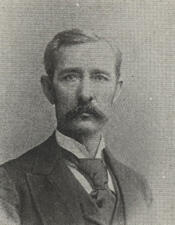
Here you will find contact information for Representative Daniel Webster Waugh, including email address, phone number, and mailing address.
| Name | Daniel Webster Waugh |
| Position | Representative |
| State | Indiana |
| District | 9 |
| Party | Republican |
| Status | Former Representative |
| Term Start | December 7, 1891 |
| Term End | March 3, 1895 |
| Terms Served | 2 |
| Born | March 7, 1842 |
| Gender | Male |
| Bioguide ID | W000214 |
About Representative Daniel Webster Waugh
Daniel Webster Waugh (March 7, 1842 – March 14, 1921) was an American lawyer, Civil War veteran, and Republican politician who served two terms as a U.S. Representative from Indiana from 1891 to 1895. During his tenure in Congress, he represented the interests of his constituents and contributed to the legislative process at a time of significant political and economic change in the United States.
Waugh was born on March 7, 1842. Details of his early life and family background are not extensively documented in the available sources, but he came of age in the antebellum period, in a nation increasingly divided over issues of slavery, states’ rights, and national expansion. This environment, and the onset of the Civil War during his youth, shaped the formative context in which he would later serve both in the military and in public office.
As a young man, Waugh served in the Civil War, an experience that marked the beginning of his public service. Like many of his generation who later entered politics, his military service provided him with a grounding in national affairs and public duty. After the war, he pursued the study of law, entering a profession that was closely tied to political life in the late nineteenth century. His legal training and practice prepared him for legislative work and gave him familiarity with the statutory and constitutional questions that came before Congress.
By the late 1880s, Waugh had established himself as a lawyer and community figure, and he entered national politics as a member of the Republican Party. Elected to the U.S. House of Representatives from Indiana, he began his congressional service in 1891. He served two consecutive terms, holding office until 1895. His service in Congress thus spanned the Fifty-second and Fifty-third Congresses, a period that included debates over tariff policy, monetary issues, and federal economic regulation in the aftermath of the Gilded Age.
During his time in the House of Representatives, Daniel Webster Waugh participated fully in the democratic process, representing the interests of his Indiana constituents and aligning with the Republican Party on the major questions of the day. He contributed to the legislative work of the chamber at a time when the country was grappling with industrialization, labor unrest, and shifting regional political alignments. Although specific committee assignments and sponsored measures are not detailed in the surviving summaries, his role as a voting member of Congress placed him within the broader national deliberations of the early 1890s.
After leaving Congress in 1895, Waugh returned to private life and to the practice of law. Like many former members of the House, he remained identified with the Republican Party and with the civic affairs of his community, drawing on his experience as both a Civil War veteran and a former legislator. He lived through the turn of the twentieth century, witnessing the transformation of the United States into a more urban, industrial, and internationally engaged nation.
Daniel Webster Waugh died on March 14, 1921, closing a life that had spanned from the antebellum era through the Civil War and Reconstruction and into the modern age. Remembered as an American lawyer, Civil War veteran, and Republican representative from Indiana, he occupied a place among those nineteenth-century legislators who helped guide the country through a period of rapid change and development.