Representative Darwin Scott Hall
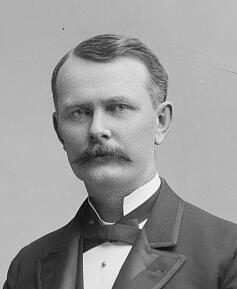
Here you will find contact information for Representative Darwin Scott Hall, including email address, phone number, and mailing address.
| Name | Darwin Scott Hall |
| Position | Representative |
| State | Minnesota |
| District | 3 |
| Party | Republican |
| Status | Former Representative |
| Term Start | December 2, 1889 |
| Term End | March 3, 1891 |
| Terms Served | 1 |
| Born | January 23, 1844 |
| Gender | Male |
| Bioguide ID | H000047 |
About Representative Darwin Scott Hall
Darwin Scott Hall (January 23, 1844 – February 23, 1919) was an American Republican politician who served one term in the United States House of Representatives, representing Minnesota’s 3rd congressional district from 1889 to 1891. Over the course of his public career he held a variety of local, state, and federal positions, including service in the Minnesota Legislature and on federal commissions, and he remained closely connected to agricultural life in Minnesota.
Hall was born on January 23, 1844, though the available records do not detail his place of birth or his early family background. Information about his formal education is likewise limited, but his subsequent professional responsibilities in land administration, legislative work, and commission service indicate that he acquired the practical and legal knowledge necessary for public office during the mid-nineteenth century, a period when such preparation often came through experience and self-directed study rather than extended formal schooling.
Before entering national office, Hall built his career in Minnesota through land administration and state politics. From 1878 to 1886 he was registered at the United States land office at Benson, Minnesota, where he was involved in the federal administration of public lands during a period of significant settlement and development in the region. His work at the land office placed him at the intersection of federal policy and local concerns, and it helped establish his reputation in public affairs. In 1886 he was elected to the Minnesota Senate, marking his formal entry into the Minnesota Legislature and giving him legislative experience at the state level.
Hall’s congressional service came during a significant period in American history, as the nation confronted issues of economic development, western expansion, and the rights of Native American communities. A member of the Republican Party, he was elected as a Republican to the Fifty-first Congress and served as a Representative from Minnesota in the United States Congress from March 4, 1889, to March 3, 1891. During this single term in office, he represented Minnesota’s 3rd congressional district and contributed to the legislative process as a member of the House of Representatives, participating in the democratic process and representing the interests of his constituents. He was not reelected in 1890 to the Fifty-second Congress, thus concluding his service in the U.S. House after one term.
After leaving Congress, Hall continued to hold important federal and party positions. In 1891 President Benjamin Harrison appointed him chairman of the Chippewa Indian Commission, a body charged with negotiating and implementing agreements related to the lands and affairs of the Chippewa (Ojibwe) people in Minnesota. He served as chairman of this commission from 1891 to 1893, and he again held the position in 1897, reflecting the administration’s continued confidence in his abilities in Indian affairs and land-related matters. In addition, Hall remained active in national party politics, serving as a delegate to the Republican National Convention in 1892, where he participated in the nomination process and broader deliberations of his party at the national level.
Hall also maintained a sustained role in Minnesota’s civic and agricultural institutions in the early twentieth century. He was a member of the board of managers of the Minnesota State Agricultural Society from 1905 to 1910, contributing to the promotion and oversight of agricultural interests in the state at a time when farming remained central to Minnesota’s economy and identity. He returned to legislative service as a member of the Minnesota Senate in 1906, adding another term in the state legislature to his record and underscoring his long-standing engagement in state governance.
In his later years, Hall devoted himself primarily to agricultural pursuits. He was engaged in farming near Olivia, in Renville County, Minnesota, where he combined his public experience with direct involvement in the agricultural life of his community. He continued to reside in the Olivia area until his death there on February 23, 1919. Darwin Scott Hall was interred in Olivia Cemetery, leaving behind a record of service that spanned local, state, and federal responsibilities during a transformative era in Minnesota and United States history.