Representative Darwin Rush James
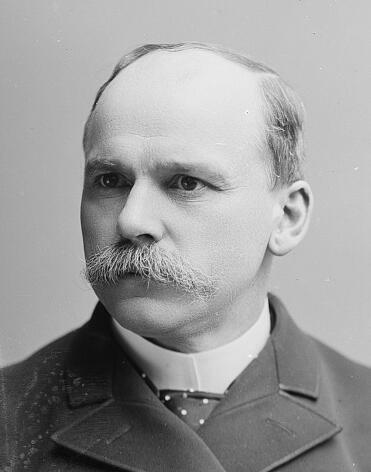
Here you will find contact information for Representative Darwin Rush James, including email address, phone number, and mailing address.
| Name | Darwin Rush James |
| Position | Representative |
| State | New York |
| District | 3 |
| Party | Republican |
| Status | Former Representative |
| Term Start | December 3, 1883 |
| Term End | March 3, 1887 |
| Terms Served | 2 |
| Born | May 14, 1834 |
| Gender | Male |
| Bioguide ID | J000048 |
About Representative Darwin Rush James
Darwin Rush James (May 14, 1834 – November 19, 1908) was a Republican member of the United States House of Representatives from New York who served two terms in Congress from 1883 to 1887. His congressional service took place during a significant period in American political and economic history in the post–Civil War era, and he was noted in particular for his advocacy of free silver and his involvement in commercial and infrastructural affairs at both the local and national levels.
James was born in Williamsburg, Hampshire County, Massachusetts, on May 14, 1834. He pursued an academic course at the Mount Pleasant Boarding School in Amherst, Massachusetts, receiving the type of education that prepared him for a career in business and public life. In 1847 he moved with his parents from Massachusetts to Williamsburg, New York, reflecting the broader mid-nineteenth-century migration toward the growing commercial centers of the state.
In 1850 James entered the mercantile business in New York City, beginning what would become a long association with trade and commercial development. His work in the mercantile sector brought him into contact with the city’s expanding business community, and he rose to positions of responsibility and influence. He became secretary of the New York Board of Trade and Transportation, an organization that represented the interests of merchants and shippers and played a role in shaping policies affecting commerce, transportation, and infrastructure in the state. In addition to his commercial activities, James was active in municipal affairs in Brooklyn, serving as a park commissioner of Brooklyn from 1876 to 1882, during a period when urban park development and public improvements were gaining prominence in American cities.
James’s experience in business and local public service provided the foundation for his entry into national politics. A member of the Republican Party, he was elected to the Forty-eighth and Forty-ninth Congresses as a Representative from New York, serving from March 4, 1883, to March 3, 1887. During his tenure in the House of Representatives, he participated in the legislative process at a time when issues of monetary policy, trade, and infrastructure were central to national debate. James became a staunch supporter of free silver, aligning himself with those who favored the expanded coinage of silver as a means of increasing the money supply. His views on this subject were reflected in his congressional speeches, including his 1886 address titled “Silver not a local issue,” in which he argued that questions of silver and currency policy had broad national implications rather than being confined to particular regions or interests.
As a Representative, James was responsible for representing the interests of his New York constituents in the House, contributing to deliberations on economic and transportation matters that were of particular concern to a rapidly industrializing state. His service coincided with ongoing national efforts to regulate commerce, improve transportation networks, and address the economic challenges of the Gilded Age. After completing two terms, he declined a renomination to Congress, choosing not to seek further electoral office at the federal level.
Following his departure from Congress, James continued to hold important public responsibilities. In 1890 he served as chairman of the United States Board of Indian Commissioners, a federal body that advised on policies affecting Native American affairs and oversaw aspects of the government’s relations with Indigenous communities. Later, in 1898, he served as a member of the New York Canal Commission, reflecting his continued engagement with transportation and infrastructure issues in a state whose economic life was closely tied to its canal and waterway systems. Alongside these public roles, he resumed his mercantile pursuits, maintaining his connection to the commercial world that had shaped his early career.
Darwin Rush James died in Brooklyn, New York, on November 19, 1908. He was interred in the City Cemetery in his native Williamsburg, Massachusetts, thus returning in death to the town where his life had begun more than seven decades earlier.