Representative Dave Camp
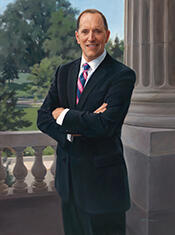
Here you will find contact information for Representative Dave Camp, including email address, phone number, and mailing address.
| Name | Dave Camp |
| Position | Representative |
| State | Michigan |
| District | 4 |
| Party | Republican |
| Status | Former Representative |
| Term Start | January 3, 1991 |
| Term End | January 3, 2015 |
| Terms Served | 12 |
| Born | July 9, 1953 |
| Gender | Male |
| Bioguide ID | C000071 |
About Representative Dave Camp
David Lee Camp (born July 9, 1953) is a former American politician and attorney who served as a member of the United States House of Representatives from Michigan from January 3, 1991, to January 3, 2015. A member of the Republican Party, he represented Michigan’s 10th congressional district for one term before representing Michigan’s 4th congressional district from 1993 until his retirement. Over 12 consecutive terms in Congress, Camp participated actively in the legislative process, rose to key leadership roles, and served as chairman of the powerful House Committee on Ways and Means from 2011 to 2015. In March 2014, he announced that he would not run for re-election, concluding a 24-year congressional career.
Camp was born in Midland, Michigan, the son of Norma L. (Nehil) and Robert D. Camp. He grew up in Midland and graduated from H.H. Dow High School in 1971. As an undergraduate, he attended the University of Sussex in Brighton, England, from 1973 to 1974, and went on to earn a Bachelor of Arts degree, magna cum laude, from Albion College in Albion, Michigan, in 1975. He then pursued legal studies at the University of San Diego School of Law, receiving his Juris Doctor in 1978. After law school, Camp returned to Michigan and from 1979 to 1991 was a partner with the law firm of Riecker, Van Dam & Barker in Midland, building a legal career that would underpin his later work in public office.
Before entering Congress, Camp was active in local and state Republican politics and public service. He served as a member of the Midland County board of canvassers and on the Midland County Republican executive committee, roles that gave him early experience in election administration and party organization. From 1980 to 1984, he worked as a special assistant to the Michigan attorney general, gaining exposure to statewide legal and policy issues. He then joined the staff of his boyhood friend, U.S. Representative Bill Schuette of Michigan, serving from 1984 to 1987. In 1988, Camp successfully ran for the Michigan House of Representatives, winning election from the 102nd District and serving one term in the state legislature, where he began to develop his legislative skills and policy interests.
Camp’s congressional career began when Representative Schuette, then representing Michigan’s 10th congressional district, decided in 1990 to run for the U.S. Senate against incumbent Senator Carl Levin. With Schuette’s endorsement, Camp sought the open House seat. In the Republican primary, he faced former U.S. Representative James Dunn, former State Senator Alan Cropsey, and other contenders. Despite trailing Dunn in early polls, Camp won the primary with a plurality of 33 percent of the vote, defeating Cropsey (30 percent), Allen (19 percent), Dunn (18 percent), and Simcox (1 percent). He then won the general election with 65 percent of the vote, entering the U.S. House of Representatives in January 1991. Following redistricting after the 1990 Census, Camp ran in the newly drawn Michigan 4th congressional district and won the general election with 62 percent of the vote. He subsequently never won re-election with less than 61 percent of the vote and never faced a primary challenge, reflecting a stable base of support in his district.
During his years in the House, Camp served on several key committees and developed a reputation as a legislator focused on tax policy, welfare reform, trade, and social services. Early in his congressional tenure, he served on the House Committee on Agriculture, where he worked on issues important to Michigan’s farming communities. In recognition of his work on agricultural policy, he received the Golden Plow Award from the American Farm Bureau Federation in 1998. In the 108th Congress, he served as a deputy majority whip and was appointed to the House Committee on Ways and Means, where he would spend much of his career. Speaker Dennis Hastert also selected him to serve on the Select Committee on Homeland Security, created on January 7, 2003, in the aftermath of the September 11, 2001, terrorist attacks. On that committee, Camp chaired the Subcommittee on Infrastructure and Border Security, helping to develop policies to secure U.S. land and maritime borders during a period of significant reorganization of federal homeland security functions.
Within the Ways and Means Committee, Camp held a series of influential subcommittee posts before rising to the chairmanship. He served as Ranking Member of the Subcommittee on Health and as chairman of the Subcommittee on Select Revenue Measures. Over seven terms he was a member of the Subcommittee on Human Resources, and for six terms he served on the Subcommittee on Trade. As a junior member of Ways and Means in 1996, he played a role in the passage of the Personal Responsibility and Work Opportunity Reconciliation Act, the major welfare reform legislation of that era. He later became Ranking Member of the full Ways and Means Committee and, following the Republican takeover of the House in the 2010 elections, was chosen as chairman of the committee, serving from 2011 to 2015. In that capacity, he also chaired the Joint Committee on Taxation and was a member of the Joint Select Committee on Deficit Reduction. In February 2010, then-Minority Leader John Boehner appointed him as one of three House Republicans to the National Commission on Fiscal Responsibility and Reform, commonly known as the Bowles–Simpson Commission, where he co-led the Tax Reform Working Group and served on the Mandatory Spending Working Group, although the commission’s recommendations were not enacted.
Camp’s legislative work extended across a range of domestic policy areas, particularly tax reform, child welfare, and health care. On February 26, 2014, he introduced the Tax Reform Act of 2014, a comprehensive tax overhaul proposal. The nonpartisan Joint Committee on Taxation estimated that the bill would allow 95 percent of filers to obtain the lowest tax rate possible by claiming the standard deduction, and projected that it could create up to 1.8 million jobs and increase gross domestic product by up to 1.4 percent in 2023. He also sponsored significant child welfare legislation. On September 27, 2013, he introduced the Promoting Adoption and Legal Guardianship for Children in Foster Care Act, which reauthorized the Adoption Incentives Program aimed at helping states find adoptive parents for children in foster care; the bill passed the House on October 22, 2013. He subsequently introduced the Preventing Sex Trafficking and Strengthening Families Act (H.R. 4980; 113th Congress), which passed the House on July 23, 2014, addressing both child welfare and efforts to combat sex trafficking. On June 26, 2014, he introduced the Improving Medicare Post-Acute Care Transformation (IMPACT) Act of 2014 (H.R. 4994), intended to change and improve Medicare’s post-acute care services and the way they are reported, reflecting his long-standing involvement in health policy through the Ways and Means Committee.
Throughout his congressional service, Camp participated in a number of caucuses that reflected his policy interests, including the Building a Better America Caucus, the International Conservation Caucus, the Life Insurance Caucus, the Sportsmen’s Caucus, the Zero Capital Gains Tax Caucus, and the Congressional Cement Caucus. Ideologically, he described himself in 2006 to Congressional Quarterly as “a conservative on fiscal policy” but “a moderate on some other issues.” In 2007, he told National Review that he felt “more at home” with the conservative Republican Steering Committee, yet he was also associated with the moderate bloc of the party through his participation in the Main Street Partnership. He generally voted along party lines, siding with Republicans 93.7 percent of the time during the 111th Congress. The American Conservative Union gave him a lifetime rating of 89 percent, while his score with the Club for Growth was considerably lower, reflecting occasional differences with more hard-line fiscal conservatives. He supported major trade agreements, voting in favor of both the North American Free Trade Agreement (NAFTA) and the Central American Free Trade Agreement (CAFTA). In August 2013, he announced his support for cutting benefits to the Temporary Assistance for Needy Families (TANF) program, consistent with his long-standing emphasis on welfare reform and deficit reduction.
Camp’s tenure was not without controversy. When the Chicago regional office of the Environmental Protection Agency took action against Dow Chemical Company regarding dioxin pollution of waterways leading into the Saginaw River, he was involved in efforts that resulted in the firing of regional EPA director Mary Gade in 2008. The episode has been cited as contributing to a reluctance within that EPA regional office to take aggressive action on major environmental issues, and this hesitancy has been linked by some observers to the office’s inaction during the Flint water crisis. At the time, Camp’s wife was an attorney for Dow Chemical, a fact that drew additional scrutiny to his role in the matter.
During his later years in Congress, Camp faced significant personal health challenges. In 2012, he was diagnosed with early-stage non-Hodgkin’s large B-cell lymphoma. He underwent several months of chemotherapy and announced in December 2012 that he was cancer-free. Despite his recovery, he chose not to seek another term in the House and in March 2014 publicly declared that he would retire at the end of the 113th Congress. He left office on January 3, 2015, concluding a lengthy career in public service that spanned local, state, and national politics and included a central role in shaping tax, welfare, and health policy in the early twenty-first century.