Representative David Wyatt Aiken
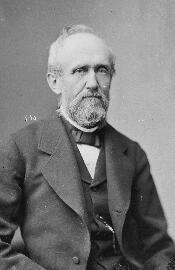
Here you will find contact information for Representative David Wyatt Aiken, including email address, phone number, and mailing address.
| Name | David Wyatt Aiken |
| Position | Representative |
| State | South Carolina |
| District | 3 |
| Party | Democratic |
| Status | Former Representative |
| Term Start | October 15, 1877 |
| Term End | March 3, 1887 |
| Terms Served | 5 |
| Born | March 17, 1828 |
| Gender | Male |
| Bioguide ID | A000061 |
About Representative David Wyatt Aiken
David Wyatt Aiken (March 17, 1828 – April 6, 1887) was a slave owner, Confederate army officer during the American Civil War, and a Reconstruction-era five-term United States Congressman from South Carolina. A member of the Democratic Party, he represented South Carolina in the United States House of Representatives from 1877 to 1887, contributing to the legislative process during a significant period in American history and participating in the democratic process on behalf of his constituents.
Aiken was born on March 17, 1828, in Winnsboro, Fairfield District, South Carolina. He grew up in the antebellum South in a slaveholding society that shaped his later political and military allegiances. As a young man he became involved in agricultural pursuits, eventually becoming a planter and slave owner. His early life and work in agriculture helped establish his reputation among South Carolina’s agrarian community, a base of support that would later underpin his public career.
Educated in South Carolina, Aiken attended local schools and pursued studies that prepared him for both planting and public life. Although detailed records of his formal education are limited, he emerged as a well-known agriculturalist and commentator on farming practices. His engagement with agricultural issues and rural interests would remain a defining feature of his public identity, informing his views on economic policy and regional development.
During the American Civil War, Aiken served as a Confederate army officer, aligning himself with the secessionist cause of the Southern states. His service in the Confederate forces reflected his background as a slaveholding planter and his commitment to the Confederacy’s political and social order. The defeat of the Confederacy and the subsequent Reconstruction era placed Aiken, like many former Confederate officers, in a transformed political landscape in which questions of federal authority, civil rights, and the reintegration of Southern states dominated public life.
In the years following the war, Aiken became active in South Carolina politics during Reconstruction. As federal authority and Reconstruction policies reshaped the South, he joined the Democratic Party, which opposed many of the Republican-led Reconstruction measures. Drawing on his prominence among planters and agricultural interests, he emerged as a spokesman for white Southern Democrats seeking to restore local control and limit the gains of Reconstruction. His political activity during this period laid the groundwork for his election to national office.
Aiken was elected as a Democrat to the United States House of Representatives and served five consecutive terms from March 4, 1877, to March 3, 1887. His tenure in Congress coincided with the end of formal Reconstruction and the consolidation of Democratic control in the South. As a member of the House of Representatives, David Wyatt Aiken participated in the democratic process and represented the interests of his South Carolina constituents, particularly those tied to agriculture and the postwar Southern economy. Over the course of his ten years in office, he contributed to legislative debates during a period marked by disputes over federal power, economic policy, and the legacy of the Civil War.
Aiken’s congressional service ended in 1887, the same year as his death. He died on April 6, 1887, while still a sitting member of Congress, bringing to a close a public career that had spanned the antebellum, Civil War, and Reconstruction eras. His life and service, preserved in part through collections such as the David Wyatt Aiken Papers at the South Carolina Digital Library and in the records of the United States Congress, reflect the trajectory of a Southern slaveholding planter who became a Confederate officer and later a Reconstruction-era Democratic congressman from South Carolina.