Representative David Demerest Aitken
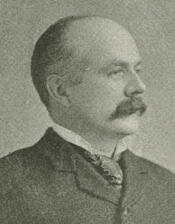
Here you will find contact information for Representative David Demerest Aitken, including email address, phone number, and mailing address.
| Name | David Demerest Aitken |
| Position | Representative |
| State | Michigan |
| District | 6 |
| Party | Republican |
| Status | Former Representative |
| Term Start | August 7, 1893 |
| Term End | March 3, 1897 |
| Terms Served | 2 |
| Born | September 5, 1853 |
| Gender | Male |
| Bioguide ID | A000068 |
About Representative David Demerest Aitken
David Demerest Aitken (September 5, 1853 – May 26, 1930) was an American lawyer, accountant, and politician who served two terms as a U.S. Representative from the state of Michigan from 1893 to 1897. A member of the Republican Party, he represented Michigan’s 6th Congressional District in the 53rd and 54th Congresses and contributed to the legislative process during a significant period in American history. He also served as mayor of Flint, Michigan, and held several important local offices earlier in his career.
Aitken was born on a farm in Flint Township, Genesee County, Michigan, on September 5, 1853. He grew up in a politically engaged household; his father, Robert P. Aitken, served in the Michigan House of Representatives from 1865 to 1868. His boyhood home at 1110 North Linden Road in Flint Township, known as the Robert P. Aitken House and built circa 1843, later gained recognition on the National Register of Historic Places. Raised in a rural setting but close to the developing city of Flint, Aitken’s early life combined farm work with exposure to public affairs through his father’s legislative service.
Aitken attended the district schools of Flint Township and the local high school in Flint, receiving the basic education typical of mid-19th-century Michigan. After completing his schooling, he taught in a district school in Genesee County from 1871 to 1872, an early indication of his interest in public service and community life. In 1872 he moved to New Jersey, where he was employed as a bookkeeper, gaining practical experience in business and accounting that would later complement his legal and political careers.
While working in the East, Aitken pursued legal studies in New York City. He studied law there and was admitted to the bar in 1878. Following his admission, he returned to Michigan and commenced the practice of law in Flint. His legal work, combined with his earlier experience as a bookkeeper, established him as both a lawyer and accountant in his community. These professional roles provided the foundation for his entry into local politics and municipal administration.
Aitken’s public career began at the city level in Flint. He served as Flint city clerk from 1883 to 1886, a position that involved oversight of municipal records and administrative functions. He then served as city attorney from 1886 to 1890, acting as the chief legal officer for the city and advising on ordinances, contracts, and other legal matters. These posts increased his visibility and influence in local affairs and prepared him for higher office.
In 1892 Aitken was elected as a Republican to the U.S. House of Representatives from Michigan’s 6th District. He served in the 53rd and 54th Congresses from March 4, 1893, to March 3, 1897. During his two terms in Congress, he participated in the democratic process and represented the interests of his constituents during a period marked by economic and political change, including the aftermath of the Panic of 1893. In the 54th Congress he served as chairman of the House Committee on Mines and Mining, a role that placed him at the center of legislative deliberations on issues affecting the nation’s mining industries. After two terms, he chose not to be a candidate for renomination to the House in 1896, instead seeking higher statewide office.
In 1896 Aitken ran for Governor of Michigan as the Republican nominee, but he was defeated by Hazen S. Pingree, the reform-minded mayor of Detroit. Following his unsuccessful gubernatorial campaign, Aitken resumed the practice of law in Flint and also engaged in banking, continuing to play a role in the economic life of his community. He later returned to elective office at the municipal level, serving as mayor of the City of Flint in 1905 and 1906, where he again took part in guiding the city’s development during a period of industrial growth.
David Demerest Aitken remained a prominent figure in Flint until his death. He died in Flint on May 26, 1930, and was interred in his family’s plot at historic Glenwood Cemetery in Flint. His boyhood home, the Robert P. Aitken House at 1110 North Linden Road in Flint Township, stands as a recognized historic site on the National Register of Historic Places, reflecting both the family’s long-standing presence in the area and his own place in Michigan’s political history.