Senator David Jewett Baker
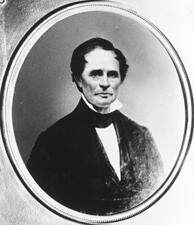
Here you will find contact information for Senator David Jewett Baker, including email address, phone number, and mailing address.
| Name | David Jewett Baker |
| Position | Senator |
| State | Illinois |
| Party | Jackson |
| Status | Former Representative |
| Term Start | January 1, 1830 |
| Term End | March 3, 1831 |
| Terms Served | 1 |
| Born | September 7, 1792 |
| Gender | Male |
| Bioguide ID | B000058 |
About Senator David Jewett Baker
David Jewett Baker (September 7, 1792 – August 6, 1869) was an American politician and lawyer from Illinois who briefly served as a United States Senator from Illinois in 1830. A member of the Jackson Party, later identified with the Democratic Party, he contributed to the legislative process during one short term in office during a significant period in American history, representing the interests of his constituents in the early Jacksonian era.
Baker was born on September 7, 1792, in East Haddam, Connecticut, the son of Joanna (Minor) Baker and Bayze Baker. During his childhood he moved with his parents to Ontario County, New York, where he was raised and attended the common schools. Demonstrating early academic promise, he pursued higher education in New York State and enrolled at Hamilton College in Clinton, New York. He graduated from Hamilton College in 1816, receiving the classical education that underpinned his later legal and political career.
After completing his formal education, Baker studied law and prepared for admission to the bar. Seeking opportunity on the expanding western frontier, he moved to the Illinois Territory and was admitted to the Illinois bar in 1819. He began the practice of law in Kaskaskia, Illinois, then the territorial and early state capital, where he established himself as a practicing attorney. His legal work in Kaskaskia brought him into contact with the developing institutions of the new state and laid the foundation for his entry into public service.
Baker’s public career in Illinois included service in various local and judicial positions. He was appointed probate judge of Randolph County, Illinois, in August 1827, a role in which he oversaw matters relating to estates and guardianships in one of the state’s early settled regions. He held this judicial office until December 6, 1830, when he resigned in anticipation of his elevation to the United States Senate. His judicial service helped establish his reputation as a capable lawyer and public official in the young state.
Baker was appointed as a member of the Jackson Party, identified in national politics as a Democrat, to the United States Senate from Illinois to fill the vacancy caused by the death of Senator John McLean. His senatorial service began on November 12, 1830, and continued until December 11, 1830, when a successor was elected and qualified. Although his tenure extended only from 1829 to 1831 in the broader congressional period in which he was associated and he briefly served as a U.S. Senator in 1830, his formal service in the Senate lasted less than a month, making him one of the few individuals in American history to have served in Congress for such a short duration. During this time he participated in the democratic process and contributed to the legislative work of the Senate at a moment of growing partisan alignment under President Andrew Jackson.
Baker was not a candidate in the 1830 election to fill the Senate vacancy on a permanent basis, and he returned to Illinois political and legal life after his brief service in Congress. In 1833 he was appointed United States Attorney for the District of Illinois, a federal prosecutorial post he held until 1841. In this capacity he represented the federal government in legal matters within the state during a period of rapid growth and increasing complexity in Illinois’s legal and economic affairs. After completing his term as United States Attorney, he resumed the private practice of law, continuing his long association with the Illinois bar.
In his later years, Baker remained in Illinois, where he had spent the bulk of his professional life. He died in Alton, Illinois, on August 6, 1869. He was interred in City Cemetery in Alton. His career, though marked at the national level by an unusually brief tenure in the United States Senate, encompassed decades of legal practice and public service in Illinois during the state’s formative years.