Representative David B. Brunner
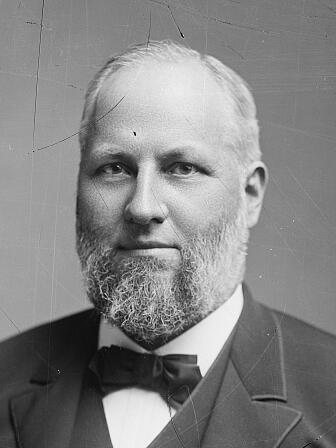
Here you will find contact information for Representative David B. Brunner, including email address, phone number, and mailing address.
| Name | David B. Brunner |
| Position | Representative |
| State | Pennsylvania |
| District | 9 |
| Party | Democratic |
| Status | Former Representative |
| Term Start | December 2, 1889 |
| Term End | March 3, 1893 |
| Terms Served | 2 |
| Born | March 7, 1835 |
| Gender | Male |
| Bioguide ID | B000980 |
About Representative David B. Brunner
David B. Brunner (March 7, 1835 – November 29, 1903) was a Democratic member of the U.S. House of Representatives from Pennsylvania who served two terms in Congress from 1889 to 1893. Over the course of his public career, he represented the interests of his constituents during a significant period in American history and contributed to the legislative process as a member of the House of Representatives.
Brunner was born on March 7, 1835, and came of age in the decades preceding the Civil War, a time of rapid political, social, and economic change in the United States. His early life in Pennsylvania exposed him to the concerns of a growing and diversifying state, where questions of industry, transportation, and the balance between rural and urban interests were increasingly prominent. These formative experiences helped shape his understanding of public affairs and the needs of local communities, laying the groundwork for his later political involvement.
As a young man, Brunner pursued an education that prepared him for professional and civic engagement. In an era when formal schooling was expanding but still not universal, his commitment to learning reflected broader national trends toward improved public education and professionalization. His educational background, combined with his familiarity with local issues in Pennsylvania, positioned him to participate effectively in public life and to understand both the practical and policy dimensions of governance.
Before entering Congress, Brunner developed a career that connected him closely with the people he would later represent. Living and working in Pennsylvania, he witnessed firsthand the challenges facing his state, including the growth of industry, the development of transportation networks, and the evolving needs of workers, farmers, and small businesses. This experience informed his perspective as he moved into elective office, giving him a grounded sense of the economic and social conditions that federal legislation could influence.
Brunner was elected as a Democrat to the U.S. House of Representatives and served from 1889 to 1893, encompassing the Fifty-first and Fifty-second Congresses. His tenure coincided with a period marked by debates over tariffs, monetary policy, and federal regulation, as well as the continuing adjustment to the post–Civil War and Reconstruction order. As a member of the House of Representatives, David B. Brunner participated in the democratic process and represented the interests of his Pennsylvania constituents, contributing to deliberations on national policy and the direction of the federal government during the late nineteenth century. A member of the Democratic Party, he worked within a political environment characterized by sharp partisan divisions over economic and regional issues.
During his two terms in office, Brunner’s service in Congress occurred against the backdrop of significant national developments, including industrial expansion, labor unrest, and growing public debate over the role of government in regulating commerce and supporting infrastructure. Within this context, he took part in the legislative process that shaped federal responses to these challenges. His work in Congress reflected both the priorities of his party and the particular concerns of his district, which was affected by the broader economic transformations of the Gilded Age.
After leaving Congress in 1893, Brunner returned to private life in Pennsylvania. His post-congressional years were spent in the community whose interests he had represented at the national level, and he remained identified with the Democratic Party and with the civic life of his state. He lived through the turn of the century, witnessing the early stages of the Progressive Era and the continued evolution of American political and economic institutions.
David B. Brunner died on November 29, 1903. His career as a two-term Democratic Representative from Pennsylvania placed him among the many late nineteenth-century legislators who helped guide the United States through a period of rapid change, and his service in the House of Representatives from 1889 to 1893 stands as the central achievement of his public life.