Representative David Kellogg Cartter
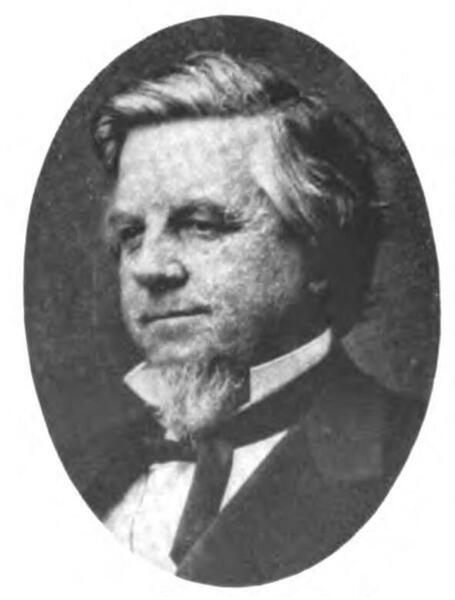
Here you will find contact information for Representative David Kellogg Cartter, including email address, phone number, and mailing address.
| Name | David Kellogg Cartter |
| Position | Representative |
| State | Ohio |
| District | 18 |
| Party | Democratic |
| Status | Former Representative |
| Term Start | December 3, 1849 |
| Term End | March 3, 1853 |
| Terms Served | 2 |
| Born | June 22, 1812 |
| Gender | Male |
| Bioguide ID | C000206 |
About Representative David Kellogg Cartter
David Kellogg Cartter (June 22, 1812 – April 16, 1887) was an American lawyer, jurist, and politician who served as a United States Representative from Ohio, Minister Resident of the United States to Bolivia, and Chief Justice of the Supreme Court of the District of Columbia. He was born on June 22, 1812, in Jefferson County, New York. Cartter pursued a legal career by reading law, completing his legal studies in 1832. That same year he was admitted to the bar and began a professional life that would combine private practice, public service, and judicial leadership over the course of more than five decades.
Cartter commenced his legal practice in Rochester, New York, where he practiced law from 1832 to 1836. During his years in Rochester, he developed an interest in local history and later authored an early history of the city covering the period from 1810 to 1827. A copy of this work was deposited in the cornerstone of the then-new Rochester City Hall in 1873, reflecting the lasting value attributed to his historical account. In 1836 he moved west to Ohio, part of a broader migration of professionals to the developing communities of the Western Reserve, and established himself in Akron, where he practiced law from 1836 to 1845. He then relocated to Massillon, Ohio, continuing in private practice there from 1845 until 1849, building the legal and political reputation that would support his entry into national politics.
As a member of the Democratic Party representing Ohio, Cartter contributed to the legislative process during two terms in the United States House of Representatives. He was elected as a Democrat from Ohio’s 18th congressional district to the 31st and 32nd Congresses, serving from March 4, 1849, to March 3, 1853. His service in Congress occurred during a significant period in American history marked by sectional tensions and debates over slavery and territorial expansion. During the 32nd Congress he served as Chairman of the Committee on Patents, a position that placed him at the center of legislative consideration of issues related to innovation, intellectual property, and the growing industrial economy. In these roles he participated in the democratic process and represented the interests of his Ohio constituents in the national legislature.
After leaving Congress in 1853, Cartter resumed the practice of law in Massillon, where he remained in private practice until 1856. He then moved to Cleveland, Ohio, continuing his legal career there from 1856 to 1861. During this period, his political alignment shifted in response to the realignments of the 1850s, and he became associated with the emerging Republican Party. Reflecting his prominence in his adopted party, he served as a delegate to the 1860 Republican National Convention, which nominated Abraham Lincoln for the presidency. His participation in that convention underscored his engagement with the central political issues of the era, including the future of slavery and the preservation of the Union.
With the advent of the Lincoln administration and the onset of the Civil War, Cartter entered the field of diplomacy. He was appointed Minister Resident of the United States to Bolivia and served in that capacity from March 27, 1861, to March 10, 1862. His tenure as Minister Resident came at a time when the United States sought to maintain and strengthen its relations with Latin American nations while confronting internal conflict at home. After roughly a year in La Paz, he left the diplomatic post and returned to the United States, where his legal and political experience soon led to a major judicial appointment.
On March 10, 1863, President Abraham Lincoln nominated Cartter to serve as Chief Justice of the newly organized Supreme Court of the District of Columbia (now the United States District Court for the District of Columbia), to a new Chief Justice seat authorized by 12 Stat. 762. The United States Senate confirmed his nomination on March 11, 1863, and he received his commission the same day. As Chief Justice, he presided over the principal trial court for the nation’s capital during and after the Civil War, a period that encompassed complex questions of wartime authority, Reconstruction, and the administration of justice in the federal district. He remained in this position for more than two decades, his service on the court continuing uninterrupted until his death.
Cartter’s tenure as Chief Justice of the Supreme Court of the District of Columbia extended from March 11, 1863, until April 16, 1887, when his service terminated due to his death in Washington, D.C. Over the course of his long judicial career, he became a central figure in the legal life of the capital, overseeing a wide range of civil and criminal matters that reflected the growth and transformation of the federal city. Following his death on April 16, 1887, he was interred in Lake View Cemetery in Cleveland, Ohio, a city closely associated with his mid-career legal practice and political activity. His life and work spanned the formative decades of the nineteenth century, linking the legal and political cultures of New York, Ohio, and the District of Columbia.