Representative David Alan Curson
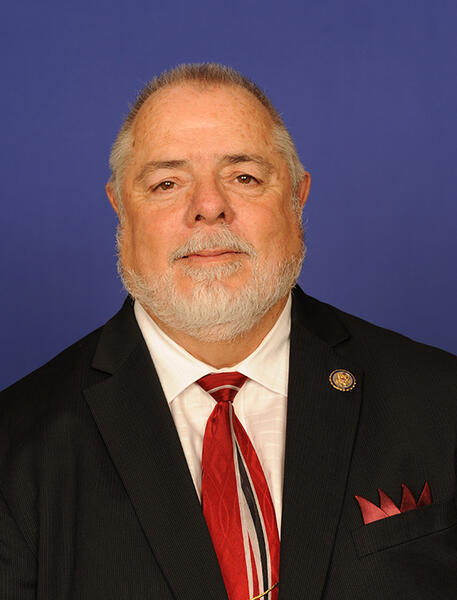
Here you will find contact information for Representative David Alan Curson, including email address, phone number, and mailing address.
| Name | David Alan Curson |
| Position | Representative |
| State | Michigan |
| District | 11 |
| Party | Democratic |
| Status | Former Representative |
| Term Start | November 13, 2012 |
| Term End | January 3, 2013 |
| Terms Served | 1 |
| Born | November 4, 1948 |
| Gender | Male |
| Bioguide ID | C001089 |
About Representative David Alan Curson
David Alan Curson (November 4, 1948 – September 23, 2024) was an American union representative and politician who served as a Representative from Michigan in the United States Congress from 2012 to 2013. A member of the Democratic Party, he represented Michigan’s 11th congressional district in the House of Representatives and is known for having one of the shortest terms in congressional history, serving less than two months. Over the course of his career, Curson became a prominent figure in the United Auto Workers (UAW) and played a significant role in labor negotiations and the American automotive industry.
Curson was born in Toledo, Ohio, to George Curson, a heavy equipment operator for Washington Township in Lucas County, Ohio. The youngest of six children, he grew up in a working-class family that shaped his later commitment to organized labor and economic justice. After graduating from high school in 1966, he followed in the footsteps of his mother by working at the Libby-Owens-Ford Glass Company in Toledo. During this period he attended the University of Toledo, but left before completing a degree in order to enlist in the United States Marine Corps, reflecting both a sense of duty and a willingness to interrupt his own plans for national service.
Following his service in the Marine Corps, Curson moved to Michigan and began work at the Ford Rawsonville Plant in Ypsilanti. Immersed in the industrial and labor environment of the auto industry, he quickly became involved with the United Auto Workers. His experience on the factory floor and his background in a union household informed his approach to labor relations and worker advocacy, and he soon emerged as a respected voice among his colleagues.
Curson’s involvement with the UAW deepened as he was elected a representative for the organization and joined the International Union staff. Over the years he held several senior positions within the union, including director of special projects and economic analysis, executive assistant to UAW Vice President Ron Gettelfinger, executive assistant to UAW President Steve Yokich, and executive assistant to UAW Secretary-Treasurer Dennis Williams. Beginning in 1982, he participated in negotiating contracts with the “Big Three” automakers—Ford, General Motors, and Chrysler—during a period of intense economic pressure and restructuring in the auto industry. His expertise in economic analysis and labor negotiations later led him to testify on behalf of Chrysler and General Motors during their bankruptcy proceedings following President Barack Obama’s automotive bailouts, where he advocated for the preservation of jobs and the long-term viability of the companies.
Curson entered electoral politics in 2012 under unusual circumstances. Former Representative Thaddeus McCotter resigned from Congress in the summer of 2012 after it was revealed that a majority of the petition signatures submitted to place him on the ballot for the August primary were fraudulent. A special election was called to fill the remainder of McCotter’s term in the 112th United States Congress for Michigan’s 11th congressional district. Curson became the Democratic candidate in that special election, while the Democratic nominee for the regular general election, Syed Taj, did not run in the special contest. In November 2012, Curson defeated Republican Kerry Bentivolio in the special election to complete McCotter’s term. He took office later that month and served from 2012 to 2013, participating in the legislative process and representing the interests of his constituents during a significant period in American political and economic history.
During his brief tenure in Congress, Curson emphasized economic issues and job creation as central to his agenda. He argued that the key to economic success was the creation and protection of good-paying jobs, particularly in manufacturing and related sectors. His campaign goals included increasing taxes on the wealthy and securing additional funding for infrastructure such as roads, schools, and energy systems. He supported policies to allow United States employers to more easily and safely hire foreign workers and opposed the deportation of children brought to the United States by undocumented immigrants. Curson also backed the Affordable Care Act and supported Planned Parenthood, aligning himself with mainstream Democratic positions on health care and reproductive rights. After fulfilling his pledge to serve only the remainder of McCotter’s term, Curson retired from politics at the conclusion of his approximately six-week service and returned to private life. He was succeeded in January 2013 by Kerry Bentivolio, whom he had defeated in the special election.
In later years, Curson remained identified with the labor movement and his long association with the UAW, reflecting a career defined more by union advocacy than by electoral office. He died on September 23, 2024, at the age of 75. His life and career spanned the shop floor, the union hall, and the halls of Congress, marking him as a figure who bridged working-class experience and national policymaking during a transformative era for the American auto industry and organized labor.