Senator David Daggett
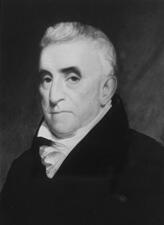
Here you will find contact information for Senator David Daggett, including email address, phone number, and mailing address.
| Name | David Daggett |
| Position | Senator |
| State | Connecticut |
| Party | Federalist |
| Status | Former Representative |
| Term Start | May 24, 1813 |
| Term End | March 3, 1819 |
| Terms Served | 1 |
| Born | December 31, 1764 |
| Gender | Male |
| Bioguide ID | D000002 |
About Senator David Daggett
David Daggett (December 31, 1764 – April 12, 1851) was a United States senator from Connecticut, mayor of New Haven, judge and later chief justice of the Connecticut Supreme Court of Errors, and a founder and early law professor of what became Yale Law School. A prominent Federalist, he played an influential role in Connecticut and national politics in the early republic, while also becoming a leading legal and political opponent of Black education and abolitionism in the 1830s. He served one term in the United States Senate from 1813 to 1819, during a significant period in American history marked by the War of 1812 and the decline of the Federalist Party.
Daggett was born in Attleboro, Massachusetts, on December 31, 1764, the son of Thomas Daggett. He came from a long-established New England family; the first American ancestor, John Daggett, had arrived from England with John Winthrop’s company in 1630 and settled in Watertown, Massachusetts. At the age of sixteen, David Daggett enrolled at Yale College, entering the junior class two years early, likely influenced by the fact that his father’s cousin had been an officer at Yale. He graduated with high honors in 1783 and subsequently received a master’s degree from Yale. His classmates included Samuel Austin, Abiel Holmes, and future Connecticut governor John Cotton Smith. Upon receiving his master’s degree, he was accorded the unusual distinction of having his commencement oration published, an early indication of his reputation as a powerful and effective public speaker.
After leaving Yale, Daggett studied law under Charles Chauncey of New Haven, who would later become a judge of the Connecticut Superior Court. To support himself during his legal studies, he worked as a butler and as a preceptor at Hopkins Grammar School in New Haven. In January 1786, at the age of twenty-one, he was admitted to the bar of New Haven County and immediately opened his own law practice, declining an offer to serve as a tutor at Yale. During his twenties he also engaged in legal and popular publishing, including the widely circulated “confession” of Joseph Mountain, an African American man publicly executed in New Haven for rape before an estimated crowd of 10,000. On June 20, 1786, he married Ann Munson of New Haven. The couple were married for fifty-three years, until her death in July 1839 at the age of seventy-two. They had nineteen children, of whom only fourteen lived for any considerable time and only three survived him. One son, Oliver Ellsworth Daggett, became a clergyman, and a daughter, Susan Edwards Daggett, married the Reverend Sereno Edwards Dwight, chaplain of the United States Senate and son of Yale president Timothy Dwight IV. In May 1840, Daggett married his second wife, Mary Lines, who survived him and was with him at the time of his death.
Daggett entered public life in Connecticut two years before the adoption of the United States Constitution. Like most New Englanders of his era, he aligned himself with the Federalist Party. In 1791 he was chosen to represent the town of New Haven in the Connecticut General Assembly (the State House of Representatives) and was annually re-elected for six years, serving until 1797. Though one of the youngest members, he quickly became one of the most influential, and in 1794, only three years after entering the House, he was elected Speaker at the age of twenty-nine. In 1797 he was elected to the Connecticut State Council, or upper house, where he served until his resignation in 1804. He returned to the lower house for a one-year term in 1805 and rejoined the State Council in 1809, remaining there until his election to the United States Senate in 1813. Concurrently, he was appointed state’s attorney for New Haven County in June 1811, a position he held until he resigned upon entering the Senate. His prominence in legal and intellectual circles was recognized nationally when he was elected a member of the American Antiquarian Society in 1815.
Daggett was elected to the United States Senate as a Federalist to fill the vacancy caused by the resignation of Senator Chauncey Goodrich. He served from May 13, 1813, to March 3, 1819, representing Connecticut during the War of 1812 and the subsequent postwar period. His tenure coincided with the waning influence of the Federalist Party at the national level, but he remained an active participant in the legislative process and represented the interests of his Connecticut constituents during one full term in office. After leaving the Senate, he continued to seek high political office; in 1825 and 1826 he was the Federalist nominee for governor of Connecticut but was decisively defeated both times by the incumbent, Oliver Wolcott Jr.
In addition to his legislative and prosecutorial work, Daggett pursued a distinguished judicial and academic career. In November 1824 he became an associate instructor at the New Haven Law School under Samuel Johnson Hitchcock. In 1826 he was appointed Kent Professor of Law at Yale, a position that made him one of the founders of what would become Yale Law School. That same year, in the autumn of 1826, Yale awarded him the honorary degree of Doctor of Laws (LL.D.). In May 1826, at age sixty-two, he was chosen an associate judge of the Connecticut Supreme Court of Errors. Notably, he was appointed by a legislature in which a clear majority opposed his political views, a mark of the professional respect he had earned as a lawyer and public official. He served as mayor of New Haven from 1828 to 1829, further cementing his influence in the city’s civic life. In May 1832 he was elevated to chief justice of the Connecticut Supreme Court of Errors. He continued in that office until December 31, 1834, when he reached the constitutional age limit of seventy for judicial service; in May 1834 the governor had formally notified the state senate that Daggett would become ineligible to continue on the court upon his seventieth birthday.
Daggett’s later career was marked by his prominent opposition to Black education, abolitionism, and the recognition of African Americans as citizens, even as he remained a central figure in Connecticut’s legal and academic institutions. In 1831, when Simeon Jocelyn and others proposed establishing a college for African Americans in New Haven—the first such institution in the United States—Daggett led the opposition. At a town meeting, a resolution he helped draft against the proposed “Negro college” passed by a vote of approximately 700 to 4, effectively scuttling the plan. At the same meeting, another resolution he helped frame condemned abolitionist efforts, declaring that the propagation of sentiments favoring immediate emancipation of enslaved people, and the founding of colleges for educating Black people as an auxiliary to that goal, constituted “unwarrantable and dangerous interference” with the internal concerns of other states and “ought to be discouraged.” After this episode, Daggett continued to oppose the expansion of education for African Americans. In 1833, when Prudence Crandall admitted a Black student to her female academy in Canterbury, Connecticut, local citizens pressured her to withdraw the student and, when she refused, the town secured passage of a law requiring selectmen’s approval for any out-of-state students of color. Crandall reopened her school exclusively for Black women and was arrested under the new statute. As chief justice, Daggett presided over the case and ruled in 1833 that free Black people were not citizens of the United States and therefore could be barred from education under Connecticut law. Throughout the 1830s he consistently opposed Black education and advocated colonization of free African Americans to Africa, while also participating in a major New Haven town meeting on September 9, 1835, that produced resolutions—drafted with figures such as Noah Webster and Simeon Baldwin—condemning any interference by Congress with slavery in the states, opposing the use of the mails for “incendiary” abolitionist literature, and endorsing African colonization for the free Black population. Although he maintained these positions for much of his public life, in a state referendum in 1844 he voted to restore the franchise to Black men in Connecticut.
Daggett remained associated with Yale as its only full professor of law during much of the 1830s, even as his judicial and political stances on race and citizenship drew increasing controversy. His health eventually forced him to resign his academic duties, and in his final years he lived quietly in New Haven with his second wife, Mary Lines. He died in New Haven on April 12, 1851, and was interred in Grove Street Cemetery. His papers are preserved in the Manuscripts and Archives division of the Yale University Library, and his published works and legal writings remain accessible through various archival and digital collections.