Representative David Dreier
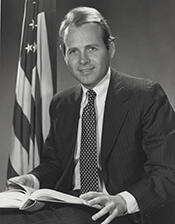
Here you will find contact information for Representative David Dreier, including email address, phone number, and mailing address.
| Name | David Dreier |
| Position | Representative |
| State | California |
| District | 26 |
| Party | Republican |
| Status | Former Representative |
| Term Start | January 5, 1981 |
| Term End | January 3, 2013 |
| Terms Served | 16 |
| Born | July 5, 1952 |
| Gender | Male |
| Bioguide ID | D000492 |
About Representative David Dreier
David Timothy Dreier (born July 5, 1952) is an American businessman, philanthropist, and politician who served as a Republican member of the United States House of Representatives from California from January 3, 1981, to January 3, 2013. Over 16 consecutive terms in Congress, he became one of the youngest members ever elected to the House and later the youngest chairman of the House Rules Committee in U.S. history. A prominent advocate of free trade, he played a key role in the creation and passage of the North American Free Trade Agreement (NAFTA) in 1993 and emerged as an influential figure in both domestic legislative procedure and U.S. engagement with Latin America.
Dreier was born in Kansas City, Missouri, and raised in the Midwest before moving to Southern California. He attended Claremont Men’s College (now Claremont McKenna College) in Claremont, California, where he earned a Bachelor of Arts degree in 1975. He later pursued graduate studies at Claremont Graduate School (now Claremont Graduate University), receiving a Master of Arts degree in 1976. While at Claremont, he developed an interest in politics and public policy that led him to become active in Republican politics in California. Before entering Congress, he worked in the private sector and as a political consultant, gaining experience in campaign strategy and public affairs that would inform his later legislative career.
In 1978, at age 25, Dreier made his first bid for elective office, running for the United States House of Representatives in a Republican-leaning Southern California district against incumbent Democrat James Fredrick Lloyd, who had first won the seat in the post-Watergate election of 1974. Though relatively unknown and still living in Phillips Hall at Claremont McKenna College, Dreier mounted a competitive campaign and lost by a narrower-than-expected margin, 54 percent to 46 percent. He ran again in 1980 and, benefiting in part from former California Governor Ronald Reagan’s presidential victory, defeated Lloyd by a margin of 52 percent to 45 percent. Sworn into office on January 3, 1981, Dreier entered the House as one of the youngest members in its history and quickly became identified with the new generation of Reagan-era Republicans.
Dreier’s congressional career spanned a period of significant change in both California and national politics. After the 1980 United States census, his district was renumbered as the 33rd, and in 1982 he defeated incumbent Republican Congressman Wayne Grisham in the primary by 57 percent to 43 percent, making him the first person to defeat two incumbent members of Congress in back-to-back elections. He then won the 1982 general election with 65 percent of the vote. Following subsequent redistricting, his district was renumbered as the 28th after the 1990 census and as the 26th after the 2000 census. Dreier won reelection every two years with at least 57 percent of the vote until 2004, reflecting a durable base of support in the San Gabriel Valley and surrounding areas. In 2004 he faced strong criticism from Republican challenger Cynthia Matthews and several talk radio hosts who argued he was not sufficiently tough on illegal immigration, but he prevailed with 54 percent of the vote. He defeated Matthews again in 2006 by 57 percent to 38 percent, even as Republicans lost control of the House that year. In 2008 he won reelection against Democrat Russ Warner with 53 percent of the vote and defeated Warner again in 2010 with 54 percent, although he had ceased all campaign fundraising for more than a year, prompting speculation that he might retire.
Within the House, Dreier developed a reputation as a skilled legislator and procedural strategist. He initially served on the Committee on Government Operations (January 1981–July 1981), the Committee on Small Business (1981–1991), and the Committee on Banking, Finance and Urban Affairs (July 1981–1991). In 1991 he joined the powerful Committee on Rules, which sets the terms for debate on most legislation considered by the House. In 1999 he became chairman of the Rules Committee, the youngest person ever to hold that post and the only Californian to do so. He served as chairman from 1999 to 2007 and again from 2011 to 2013, making him the third-longest-serving chairman of the committee and its longest-serving leader since 1967. When Democrats controlled the House from 2007 to 2011, he served as ranking member for the 110th and 111th Congresses. Beginning with his chairmanship in 1999, the Rules Committee chair became part of the nine-member elected Republican leadership, underscoring his central role in managing the House floor agenda. He also served as parliamentarian for four Republican National Conventions, further reflecting his expertise in legislative procedure.
Dreier’s policy interests were particularly focused on trade, economic growth, and democratic governance abroad. Along with House colleagues Jim Kolbe and Jerry Lewis, he was among the first members of Congress to propose a North American free trade agreement in 1987. He was instrumental in the creation and passage of NAFTA in 1993, and during the signing ceremony President Bill Clinton publicly acknowledged Dreier’s contribution to the agreement’s success. Over the course of his career, Dreier founded the bipartisan House Trade Working Group and worked closely with five American presidents of both parties on every free trade agreement into which the United States entered. A longstanding supporter of closer ties between the United States and Latin American nations, he frequently met with executive and legislative leaders throughout the region and received some of the highest national honors from the presidents of Colombia, Mexico, and Nicaragua. On August 28, 2007, while advocating for the United States–Colombia Free Trade Agreement, he addressed the Colombian parliament; he later apologized after some opposition lawmakers criticized his informal posture—sitting on the edge of the podium—as disrespectful, explaining that he had intended to convey warmth and affection.
As chairman of the Rules Committee and a member of the Republican Main Street Partnership, Dreier was generally aligned with the House Republican leadership but was sometimes viewed by conservative colleagues as relatively moderate. Following the indictment of House Majority Leader Tom DeLay on September 28, 2005, Speaker Dennis Hastert initially asked Dreier to assume the majority leader’s duties on a temporary basis, in part because of his loyalty to leadership positions. Rank-and-file Republicans, however, expressed reservations, reportedly considering him too moderate, and the role instead went to then-Majority Whip Roy Blunt of Missouri, with Dreier and Deputy Majority Whip Eric Cantor of Virginia sharing some responsibilities. In his district, Dreier supported infrastructure and transportation projects, securing federal funding for the Metro Gold Line light rail, which connects Downtown Los Angeles and Pasadena, reflecting his interest in regional mobility and economic development.
Dreier’s positions on social issues evolved over time, particularly with respect to LGBT rights. He initially supported the bipartisan Defense of Marriage Act (DOMA), signed into law by President Bill Clinton in 1996, and voted against the Matthew Shepard Act, which expanded federal hate-crimes law to cover crimes motivated by a victim’s actual or perceived gender, sexual orientation, gender identity, or disability. He also initially supported the “Don’t ask, don’t tell” policy that barred LGBT members of the armed forces from serving openly. By the end of his congressional career, however, he had shifted on some of these issues: in December 2010 he voted in favor of legislation repealing “Don’t ask, don’t tell,” and he opposed a proposed constitutional amendment to ban same-sex marriage.
Dreier was active in foreign affairs and democracy promotion during his time in Congress. He attended and led numerous congressional delegations (CODELs) to countries around the world and founded the House Democracy Partnership (HDP), serving as its first chairman. Through HDP, he worked to strengthen parliaments in new and re-emerging democracies on six continents, emphasizing legislative capacity-building, transparency, and the rule of law. His international work complemented his trade agenda and reinforced his belief in the link between open markets and democratic governance.
After the 2010 United States census, the voter-created California Citizens Redistricting Commission renumbered Dreier’s district as the 31st and reconfigured it into a Democratic-leaning, majority-Latino district centered in the Inland Empire. Facing a significantly altered political landscape, Dreier chose not to run for reelection in 2012. He encouraged his Republican colleague Gary Miller to move into the new 31st District after Miller’s previous district was merged with that of another Republican, Ed Royce. Dreier’s service in Congress concluded on January 3, 2013, marking the end of a 32-year tenure during which he participated in and helped shape the legislative process during a transformative period in American politics.
Following his departure from Congress, Dreier remained active in public policy, international affairs, and the private sector. He served on the Foreign Affairs Policy Board under President Barack Obama, advising the Department of State on long-term strategic issues in U.S. foreign policy. In the business world, he joined corporate boards and, from 2019 to 2020, served as chairman of Tribune Publishing Company, one of the nation’s major newspaper publishers. Reflecting his ongoing commitment to journalism and democratic institutions, he founded and chairs the Fallen Journalists Memorial Foundation, which is dedicated to establishing a national memorial in Washington, D.C., honoring journalists who have lost their lives in the line of duty. Through these roles, Dreier has continued to engage in civic and philanthropic endeavors, extending his influence beyond his long career in the House of Representatives.