Senator Dave Durenberger
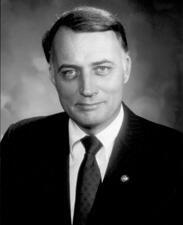
Here you will find contact information for Senator Dave Durenberger, including email address, phone number, and mailing address.
| Name | Dave Durenberger |
| Position | Senator |
| State | Minnesota |
| Party | Republican |
| Status | Former Representative |
| Term Start | January 3, 1977 |
| Term End | January 3, 1995 |
| Terms Served | 9 |
| Born | August 19, 1934 |
| Gender | Male |
| Bioguide ID | D000566 |
About Senator Dave Durenberger
David Ferdinand Durenberger (August 19, 1934 – January 31, 2023) was an American politician and attorney from Minnesota who served as a Republican member of the United States Senate from 1978 to 1995. Over the course of three terms in office, he represented Minnesota during a significant period in American history, participating actively in the legislative process and the broader democratic system. Although long identified with the Republican Party during his Senate career, he left the party in 2005 and later became a prominent critic of it, ultimately endorsing Democratic presidential nominees Hillary Clinton in 2016 and Joe Biden in 2020.
Durenberger was born on August 19, 1934, in St. Cloud, Minnesota, and grew up in a family with deep roots in the state. His early years in central Minnesota helped shape his understanding of Midwestern communities and their economic and social concerns. He attended local schools before pursuing higher education, laying the groundwork for a career that would combine law, public policy, and electoral politics. His upbringing in Minnesota remained a central element of his public identity and informed his approach to representing the state in national affairs.
After completing his early education, Durenberger attended Saint John’s University in Collegeville, Minnesota, where he earned his undergraduate degree. He then studied law at the University of Minnesota Law School, receiving his law degree and qualifying for the practice of law in the state. Trained as an attorney, he entered the legal profession and developed expertise that would later prove central to his work on complex legislative and regulatory issues. His legal background, combined with his Minnesota roots, positioned him to move into public service and policy-making at the national level.
Durenberger’s national political career began with his election to the United States Senate from Minnesota, where he served as a Republican senator from 1978 to 1995. (His service is sometimes dated from 1977 in reference to the period in which he first assumed senatorial responsibilities, but his formal tenure is recorded from 1978.) Over three terms in office, he contributed to the legislative process on a wide range of issues, representing the interests of his Minnesota constituents while engaging in national debates during a transformative era in American politics. As a member of the Senate, he participated in committee work, floor deliberations, and bipartisan negotiations that shaped federal policy in areas such as health care, social programs, and economic development.
During his Senate years, Durenberger became particularly associated with health policy, an area that would remain central to his public work after leaving office. He was involved in efforts to improve the quality, accessibility, and financing of health care, and he developed a reputation as a legislator willing to engage with complex policy details. His tenure coincided with shifting partisan alignments and evolving debates over the role of the federal government, and he often approached these questions with an emphasis on pragmatic solutions and institutional reform. Through these activities, he helped to define Minnesota’s voice in the Senate during the late 20th century.
After leaving the Senate in 1995, Durenberger continued to play a significant role in national health policy and public affairs. He chaired the National Institute of Health Policy (NIHP) and served as a Senior Health Policy Fellow at the University of St. Thomas in Saint Paul, Minnesota, where he worked on research, teaching, and advocacy related to health system reform. He served on the board of the National Coalition on HealthCare and participated in several national health commissions and boards, including the Medicare Payment Advisory Commission, the Board of the National Commission on Quality Assurance (NCQA), and the Kaiser Commission on Medicaid and the Uninsured. Through these positions, he remained an influential voice in debates over Medicare, Medicaid, quality assurance, and coverage for the uninsured.
In a 2005 interview, Durenberger publicly distanced himself from the Republican Party, stating that he no longer supported it but did not fully align himself with the Democratic Party either. He argued that Democrats were better equipped to handle health care policy and criticized President George W. Bush’s decision to go to war in Iraq, reflecting his growing disillusionment with the direction of his former party. In 2010, he endorsed his former chief of staff, Tom Horner, then a member of the Independence-Alliance Party, for governor of Minnesota, underscoring his support for centrist and reform-oriented politics. He later joined the ReFormers Caucus of Issue One, a bipartisan group of former elected officials focused on political and electoral reform.
In his later years, Durenberger’s political endorsements further illustrated his break with the contemporary Republican Party. He endorsed former Secretary of State Hillary Clinton for president in 2016 and former Vice President Joe Biden for president in 2020, citing concerns about governance, national unity, and policy direction. These endorsements, along with his ongoing work in health policy and government reform, marked him as a prominent elder statesman who sought to influence public debate beyond partisan lines. David Ferdinand Durenberger died on January 31, 2023, leaving a legacy as a long-serving senator, health policy leader, and independent-minded public figure from Minnesota.